Amydria effrentella
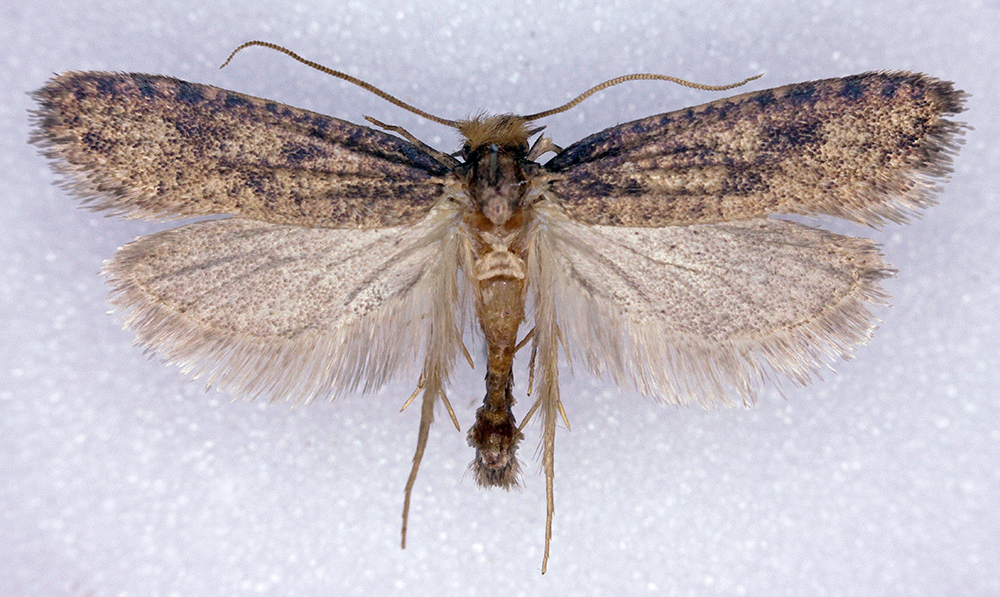
(c) Dave, some rights reserved (CC BY) · licence
Family: Tineidae · Class: Insecta · Order: Lepidoptera
Amydria effrentella is a California animal in the Tineidae family.
Amydria effrentella is a small moth in the family Tineidae, commonly known as fungus moths or tineid moths. This species represents one of the lesser-documented members of California's diverse lepidopteran fauna. Adults are characterized by the typical tineid moth morphology, with narrow forewings and reduced hindwings. The wingspan typically measures 8 to 12 mm, making this a micro-moth species. Coloration is generally subdued, with forewings displaying mottled brown and gray patterns that provide effective camouflage against bark and fungal substrates. The antennae are filiform in both sexes, and the head bears a distinctive tuft of scales characteristic of the Tineidae family. The range and distribution of Amydria effrentella in California remains poorly documented in current literature. Available records suggest the species occurs in forested regions of the state, though specific county-level distribution data is limited. The genus Amydria is represented by several species across North America, with individual species often having restricted ranges tied to specific ecological conditions and host associations. Habitat preferences for A. effrentella likely align with those of related tineid species, which typically inhabit areas with abundant fungal growth and decaying organic matter. The species probably occurs in forest understories where moisture levels support fungal communities on dead wood, leaf litter, and other decomposing plant material. Elevation range and specific microhabitat requirements have not been well-documented for this species. Like other members of the Tineidae family, Amydria effrentella larvae are presumed to be saprophagous, feeding on fungi, decaying organic matter, and possibly detritus. The larval stage likely develops within or beneath fungal fruiting bodies, rotting wood, or accumulated organic debris. Adult moths are typically crepuscular or nocturnal, with flight periods likely occurring during warmer months when fungal activity is highest. Reproductive biology, including mating behavior, oviposition preferences, and generation number per year, remains undocumented for this species. The cryptic nature and small size of these moths makes field observation challenging. The conservation status of Amydria effrentella has not been formally assessed by state or federal agencies. The species lacks federal or state listing status, and no population monitoring data is available. Given the general lack of survey effort for micro-lepidoptera species and the specialized habitat requirements typical of fungus moths, the true conservation status remains uncertain. Potential threats may include habitat alteration affecting fungal communities, forest management practices that remove dead wood and organic debris, and climate change impacts on moisture regimes necessary for fungal host communities. The species would benefit from targeted surveys to better understand its distribution, abundance, and ecological requirements within California's forest ecosystems.
Classification
Class: Insecta · Order: Lepidoptera · Family: Tineidae
Frequently asked questions
How is Amydria effrentella classified?
Amydria effrentella belongs to class Insecta, order Lepidoptera, family Tineidae.
What family does Amydria effrentella belong to?
Amydria effrentella is in the Tineidae family.
What is Amydria effrentella?
Amydria effrentella is a small moth in the family Tineidae, commonly known as fungus moths or tineid moths.
Is Amydria effrentella found in California?
Yes. Amydria effrentella is recorded in California in The California Species Project's catalogue.
Related species
Other California species in the same genus, family, or bioregion.
Data from The California Species Project — 14,000+ California species with verified data from CNPS, CDFW, USFWS, and more.