Anacampsis lacteusochrella
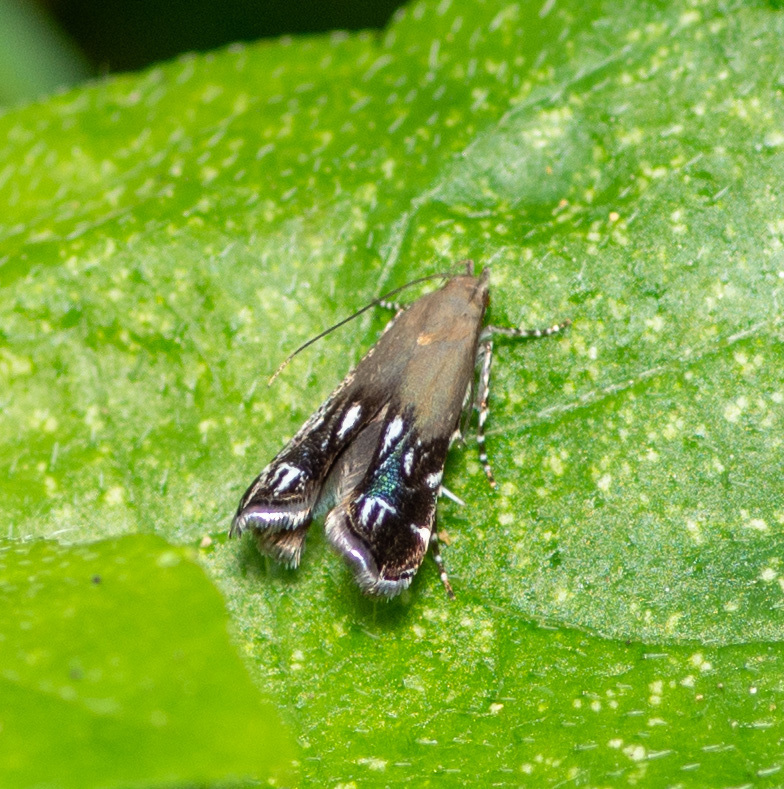
(c) Justin Williams, some rights reserved (CC BY) · licence
Family: Gelechiidae · Class: Insecta · Order: Lepidoptera
Anacampsis lacteusochrella is a California animal in the Gelechiidae family.
Anacampsis lacteusochrella is a small moth in the family Gelechiidae, one of California's lesser-documented microlepidoptera species. Adults display a wingspan of approximately 12.3 mm, as documented from specimens collected in California (BugGuide 2021). The forewings typically exhibit pale yellowish-white coloration with subtle markings, consistent with the species' Latin name 'lacteusochrella' meaning 'milky white.' The moths have the characteristic twirler moth body plan with narrow forewings and reduced hindwings typical of the Gelechiidae family. This species is endemic to California, with documented occurrences in the central and southern portions of the state. Specific collection records include Madera County at O'Neals at 1,500 feet elevation, where specimens were collected in May 2009 (Lepidopterists' Society 2010). Additional records exist from live oak and chaparral habitats in California, with moths documented coming to black light and mercury vapor traps in October (BugGuide 2021). Anacampsis lacteusochrella inhabits foothill and montane environments, particularly areas dominated by live oak woodlands and chaparral vegetation communities. The elevation range appears to span from approximately 1,500 feet in the central Sierra Nevada foothills, though the full elevational distribution remains incompletely documented. The species shows an association with Mediterranean climate zones characterized by dry summers and mild, wet winters typical of California's oak woodland ecosystems. Like other Gelechiidae moths, A. lacteusochrella is nocturnal and attracted to artificial lights, suggesting typical moth behavior patterns. Adults have been documented flying in both spring and fall months, with records from May and October, indicating either an extended flight period or potentially multiple generations per year. The larval biology and host plant relationships remain undocumented in available scientific literature. Many Gelechiidae species have larvae that feed as leaf miners, stem borers, or seed feeders on specific plant families, but the specific ecological relationships for this species require further research. The conservation status of Anacampsis lacteusochrella has not been formally assessed by state or federal agencies. As a microlepidopteran species with limited documentation, it likely faces similar pressures to other California endemic insects, including habitat loss from development and altered fire regimes in oak woodland and chaparral systems. The species' apparent restriction to California's Mediterranean climate habitats may make it vulnerable to climate change impacts, particularly shifts in precipitation patterns and increased fire frequency that affect oak woodland ecosystems. Scientific documentation for this species remains limited. The information presented here is based on available sources including BugGuide community observations and Lepidopterists' Society records. Detailed ecological studies, including larval host plants, life cycle timing, and population assessments, are lacking. We welcome contributions of verified scientific data, photographs, or field observations to enhance this species account.
Classification
Class: Insecta · Order: Lepidoptera · Family: Gelechiidae
Frequently asked questions
How is Anacampsis lacteusochrella classified?
Anacampsis lacteusochrella belongs to class Insecta, order Lepidoptera, family Gelechiidae.
What family does Anacampsis lacteusochrella belong to?
Anacampsis lacteusochrella is in the Gelechiidae family.
What is Anacampsis lacteusochrella?
Anacampsis lacteusochrella is a small moth in the family Gelechiidae, one of California's lesser-documented microlepidoptera species.
Is Anacampsis lacteusochrella found in California?
Yes. Anacampsis lacteusochrella is recorded in California in The California Species Project's catalogue.
Related species
Other California species in the same genus, family, or bioregion.
Data from The California Species Project — 14,000+ California species with verified data from CNPS, CDFW, USFWS, and more.