Anania tertialis
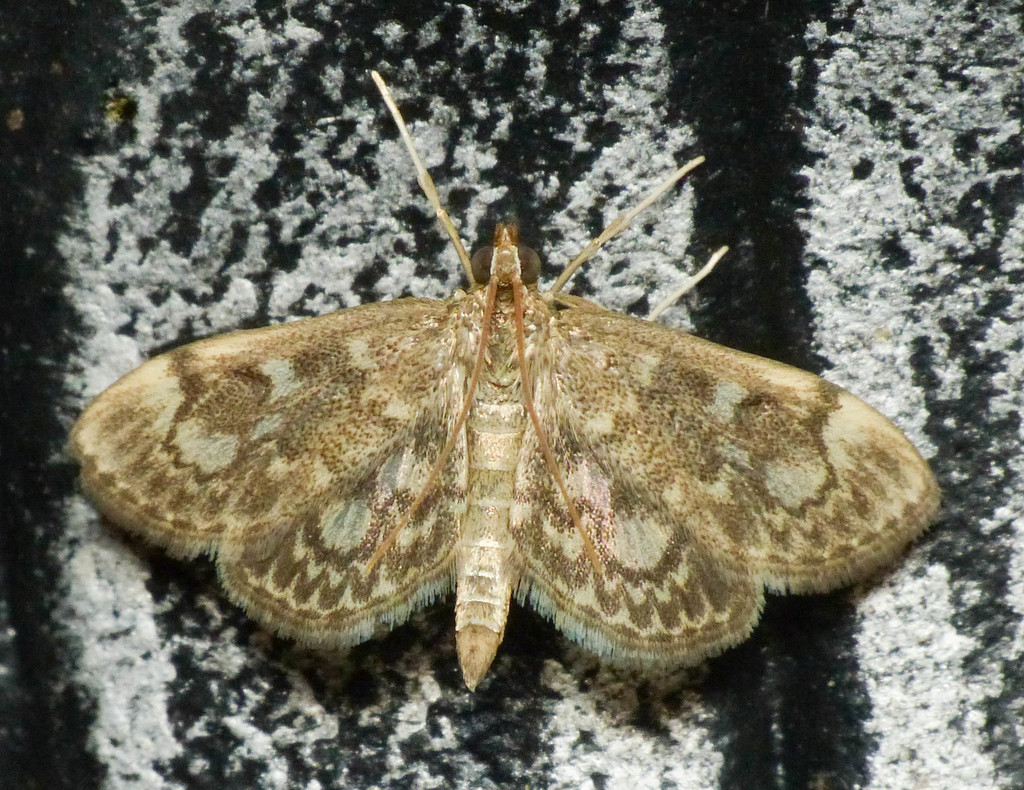
(c) CatherineK, some rights reserved (CC BY-SA) · licence
Family: Crambidae · Class: Insecta · Order: Lepidoptera
Anania tertialis is a California animal in the Crambidae family.
Anania tertialis is a small moth in the family Crambidae, commonly known as grass moths or crambid snout moths. This species belongs to a group of closely related North American moths that includes A. plectilis and A. tennesseensis, distinguished from the European A. coronata (NatureServe Explorer). Physical characteristics specific to A. tertialis have not been well documented in available literature, though members of the genus Anania typically display relatively small wingspans and cryptic coloration patterns consistent with their grass-dwelling habits. The geographic range of A. tertialis within California has not been comprehensively documented. The species occurs in North America, but specific distribution data for California counties or regions requires further field survey work. Many Anania species have localized distributions tied to specific host plant communities, suggesting that A. tertialis may have a similarly restricted range within the state. Habitat requirements for A. tertialis remain poorly characterized in scientific literature. Based on the ecology of related Anania species, this moth likely inhabits grasslands, meadows, or other open areas where suitable host plants occur. Members of the Crambidae family typically prefer habitats with abundant graminoid vegetation, including native grass communities and herbaceous openings. Elevation ranges and specific microhabitat preferences have not been established for this species. The life history and behavioral ecology of A. tertialis have received limited scientific attention. Like other crambid moths, this species likely undergoes complete metamorphosis with distinct egg, larval, pupal, and adult stages. Larval host plants have not been definitively identified, though many Anania species feed on grasses and herbaceous plants during their caterpillar stage. Adult flight periods, mating behaviors, and seasonal activity patterns require further documentation through systematic field studies. A. tertialis does not appear on federal or California state threatened and endangered species lists as of December 2025. The species' conservation status remains unclear due to insufficient population data and limited knowledge of its distribution and habitat requirements. According to NatureServe Explorer, conservation status information is available but requires further assessment. Primary threats to this species, if any, have not been identified in available literature. The lack of comprehensive survey data makes it difficult to assess population trends or conservation needs. Many small moth species face potential threats from habitat loss, pesticide use, and climate change, but specific impacts on A. tertialis populations have not been studied. Scientific documentation for this species remains extremely limited. The information presented here synthesizes available data from NatureServe Explorer and taxonomic databases. Detailed ecological studies, population assessments, and distribution mapping are needed to better understand this species' status in California. Field biologists and lepidopterists are encouraged to report verified sightings and contribute observational data to improve knowledge of A. tertialis distribution, habitat associations, and conservation needs.
Classification
Class: Insecta · Order: Lepidoptera · Family: Crambidae
Frequently asked questions
How is Anania tertialis classified?
Anania tertialis belongs to class Insecta, order Lepidoptera, family Crambidae.
What family does Anania tertialis belong to?
Anania tertialis is in the Crambidae family.
What is Anania tertialis?
Anania tertialis is a small moth in the family Crambidae, commonly known as grass moths or crambid snout moths.
Is Anania tertialis found in California?
Yes. Anania tertialis is recorded in California in The California Species Project's catalogue.
Related species
Other California species in the same genus, family, or bioregion.
Data from The California Species Project — 14,000+ California species with verified data from CNPS, CDFW, USFWS, and more.