Anas acuta
Northern Pintail
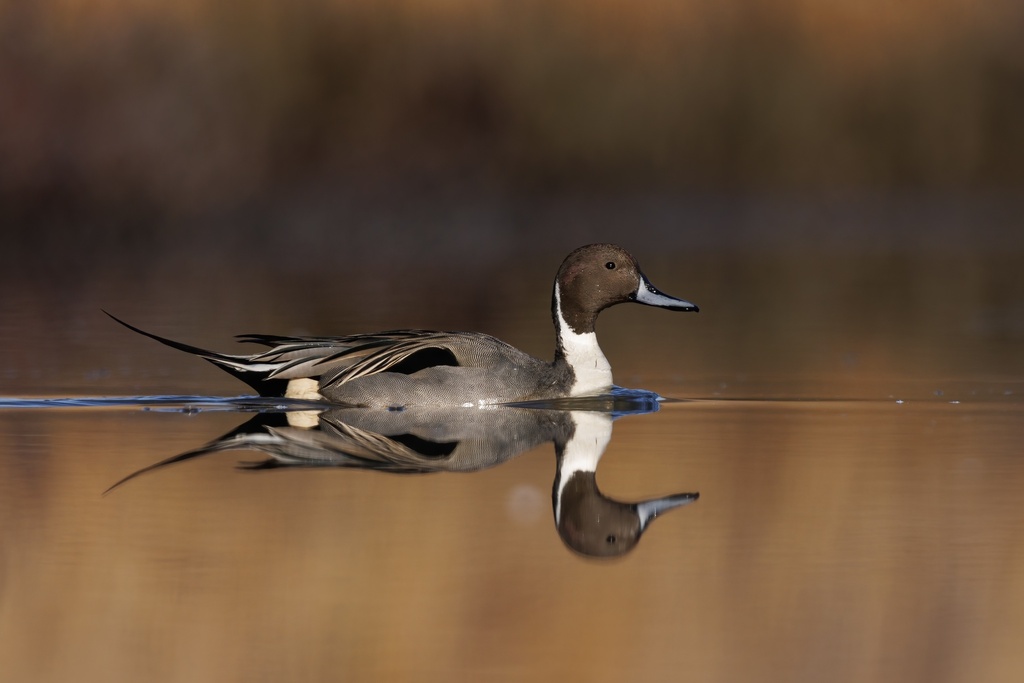
(c) Matt Felperin, some rights reserved (CC BY) · licence
Family: Anatidae · Class: Aves · Order: Anseriformes
Anas acuta (Northern Pintail) is a California animal in the Anatidae family.
The Northern Pintail is a large dabbling duck characterized by its elongated neck and distinctive pointed tail feathers. Adult males measure 51-66 cm (20-26 inches) in length with a wingspan of 80-95 cm (31-37 inches), while females are slightly smaller at 46-56 cm (18-22 inches). Breeding males display a chocolate-brown head with a white stripe extending down the neck, gray body with fine barring, and black undertail coverts. The elongated central tail feathers, which give the species its name, can extend up to 10 cm beyond the other tail feathers. Females and non-breeding males are mottled brown with a more subdued appearance, though both sexes retain the characteristic long neck and relatively pointed tail profile. Northern Pintails have a nearly global distribution, breeding across northern regions of North America, Europe, and Asia. In North America, the breeding range extends from Alaska and northern Canada south to the northern United States, with the core breeding area concentrated in the prairie pothole region. In California, Northern Pintails are primarily winter residents and migrants, arriving in large numbers from September through March. The Central Valley serves as critical wintering habitat, particularly the Sacramento Valley rice fields and managed wetlands of the San Francisco Bay Delta. The species inhabits shallow wetlands, flooded agricultural fields, mudflats, and coastal estuaries. During winter in California, Northern Pintails heavily utilize flooded rice fields, which provide abundant waste grain and invertebrate prey. They also frequent managed seasonal wetlands, permanent ponds, and tidal marshes. Breeding habitat in northern regions consists of shallow prairie wetlands, seasonal ponds, and grasslands adjacent to water sources. The species shows strong site fidelity to productive wintering areas. Northern Pintails are highly gregarious outside the breeding season, forming flocks that can number in the thousands. Their diet consists primarily of seeds, aquatic vegetation, and invertebrates. In California's Central Valley, they consume waste rice, watergrass seeds, and small invertebrates gleaned from shallow water or mud surfaces. The species employs both dabbling and upending feeding behaviors, with their long necks allowing access to submerged food sources. Breeding occurs on northern prairies from April through July, with females laying 6-9 eggs in ground nests lined with down and concealed in dense vegetation. Northern Pintails are not federally or state-listed but have experienced significant population declines. North American breeding population estimates have declined from approximately 10 million birds in the 1970s to 3-4 million in recent surveys, representing a 60-70% decrease. Primary threats include loss of prairie breeding habitat to agricultural conversion, drought conditions affecting wetland availability, and degradation of wintering habitat. Climate change poses additional challenges through altered precipitation patterns and increased temperatures affecting both breeding and wintering grounds. Conservation efforts focus on habitat protection and restoration through programs like the North American Waterfowl Management Plan and California's Central Valley Joint Venture, which work to maintain and enhance critical wetland habitats.
Classification
Class: Aves · Order: Anseriformes · Family: Anatidae
Frequently asked questions
How is Anas acuta classified?
Anas acuta belongs to class Aves, order Anseriformes, family Anatidae.
What family does Anas acuta belong to?
Anas acuta is in the Anatidae family.
What is Anas acuta?
The Northern Pintail is a large dabbling duck characterized by its elongated neck and distinctive pointed tail feathers.
Is Anas acuta found in California?
Yes. Anas acuta is recorded in California in The California Species Project's catalogue.
Related species
Other California species in the same genus, family, or bioregion.
Data from The California Species Project — 14,000+ California species with verified data from CNPS, CDFW, USFWS, and more.