Anas crecca
Green-winged Teal
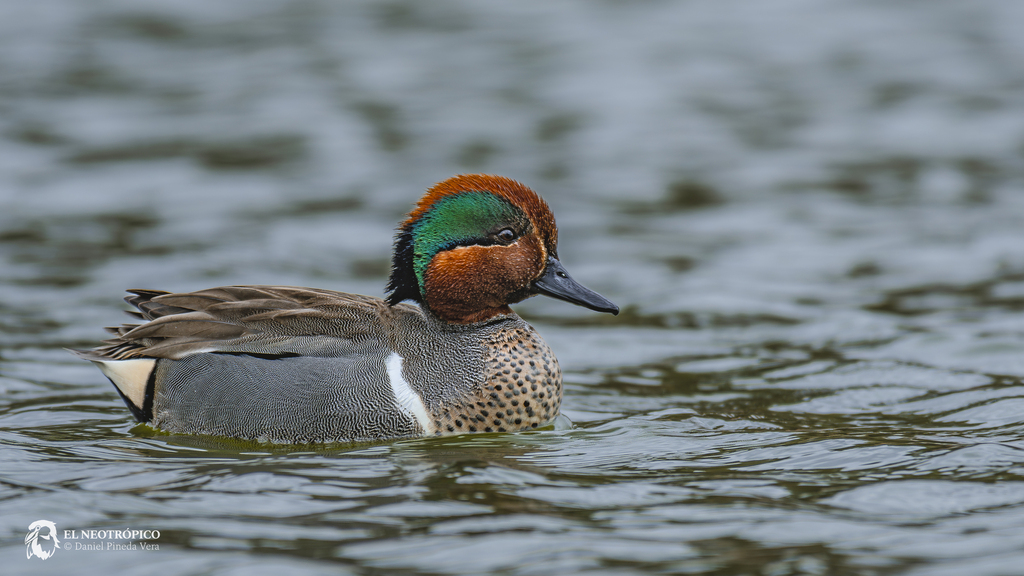
(c) Daniel Pineda Vera, some rights reserved (CC BY) · licence
Family: Anatidae · Class: Aves · Order: Anseriformes
Anas crecca (Green-winged Teal) is a California animal in the Anatidae family.
The Green-winged Teal (Anas carolinensis) is the smallest dabbling duck in North America, with adult males measuring 31-39 cm (12-15 inches) in length and weighing 240-360 grams (0.5-0.8 pounds). Females are slightly smaller, typically weighing 230-320 grams. During breeding season, males display distinctive plumage with a chestnut-colored head marked by a metallic green patch extending from the eye to the nape. The breast is buff-colored with dark spots, while the body shows gray vermiculated sides and a prominent white vertical stripe along the shoulder. Both sexes exhibit bright green speculums bordered by white bars on the trailing edge, which are visible in flight. Females and non-breeding males appear mottled brown overall with the characteristic green speculum. Green-winged Teal breed across northern Canada and Alaska, with the breeding range extending south into the northern United States including northern California, Nevada, and parts of the Rocky Mountain region. During migration and winter months, the species occurs throughout most of California. According to eBird data, the species is commonly observed in the Central Valley, San Francisco Bay Area, and coastal regions from October through March. Small numbers remain year-round in suitable habitat in northern California. The species inhabits shallow freshwater wetlands including ponds, marshes, seasonal wetlands, flooded agricultural fields, and slow-moving streams. During winter in California, Green-winged Teal utilize managed wetlands, rice fields, and natural seasonal pools. They prefer areas with emergent vegetation and mudflats for foraging. Water depths of 15-25 cm (6-10 inches) are optimal for feeding behavior. Green-winged Teal are omnivorous, feeding primarily on seeds of aquatic plants, particularly sedges, pondweeds, and smartweeds. The diet also includes small invertebrates such as midges, mosquito larvae, and snails, especially during breeding season when protein requirements are elevated. Feeding occurs through dabbling at the water surface and by tipping forward to reach submerged vegetation. The species exhibits strong site fidelity to wintering areas. Breeding occurs from May through July in northern habitats. Females construct nests on dry ground near water, typically concealed under vegetation or shrubs. Clutch size ranges from 6-12 eggs, with incubation lasting 20-23 days. Ducklings fledge at 34-35 days of age. Migration timing varies by population, with peak fall migration through California occurring from September through November. The Green-winged Teal is not federally listed under the Endangered Species Act but is protected under the Migratory Bird Treaty Act. The species is managed as a game bird with regulated hunting seasons established by state and federal agencies. The North American Breeding Bird Survey indicates relatively stable long-term population trends. However, the species faces ongoing challenges from wetland habitat loss, drought conditions affecting seasonal wetlands, and degradation of wintering habitat. Climate change may alter precipitation patterns affecting seasonal wetland availability. Conservation efforts focus on wetland protection and restoration through programs such as the North American Waterfowl Management Plan and California's Central Valley Joint Venture.
Classification
Class: Aves · Order: Anseriformes · Family: Anatidae
Frequently asked questions
How is Anas crecca classified?
Anas crecca belongs to class Aves, order Anseriformes, family Anatidae.
What family does Anas crecca belong to?
Anas crecca is in the Anatidae family.
What is Anas crecca?
The Green-winged Teal (Anas carolinensis) is the smallest dabbling duck in North America, with adult males measuring 31-39 cm (12-15 inches) in length and weighing 240-360 grams (0.5-0.8 pounds).
Is Anas crecca found in California?
Yes. Anas crecca is recorded in California in The California Species Project's catalogue.
Related species
Other California species in the same genus, family, or bioregion.
Data from The California Species Project — 14,000+ California species with verified data from CNPS, CDFW, USFWS, and more.