Anas platyrhynchos
Mallard
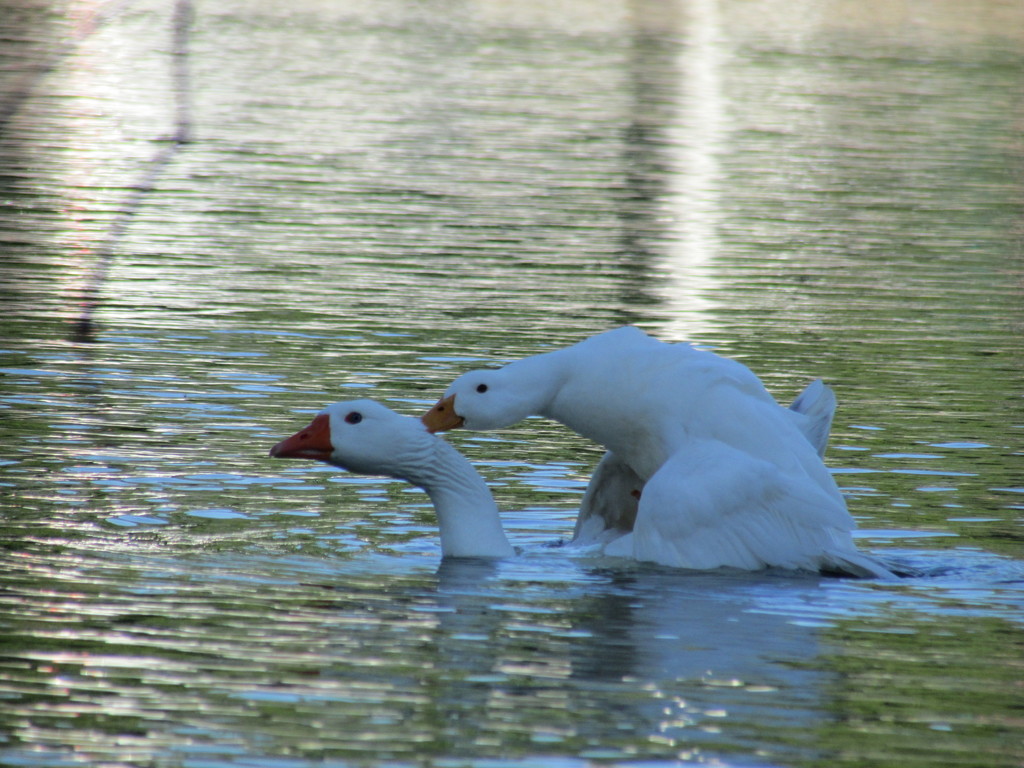
no rights reserved · CC0
Family: Anatidae · Class: Aves · Order: Anseriformes
Anas platyrhynchos (Mallard) is a California animal in the Anatidae family.
The mallard is a large dabbling duck measuring 50-65 cm (20-26 inches) in length with a wingspan of 81-98 cm (32-39 inches). Adult males weigh 0.9-1.4 kg (2-3 lbs), while females are slightly smaller at 0.7-1.1 kg (1.5-2.4 lbs). Breeding males display iridescent green heads, white neck collars, chestnut breasts, and curled black tail feathers. Both sexes have distinctive blue speculum patches bordered by white on the wings. Females and non-breeding males exhibit mottled brown plumage with orange and brown bills. The species shows considerable size variation across its range, with northern populations generally larger than southern ones. Mallards have the most extensive distribution of any duck species globally. In North America, they breed from Alaska and northern Canada south to Mexico and from the Atlantic to the Pacific coasts. In California, mallards are year-round residents throughout most of the state, with populations supplemented by winter migrants from northern breeding areas. They occur in all 58 counties, from sea level to montane lakes above 2,400 meters (8,000 feet) elevation. The species occupies diverse aquatic habitats including freshwater marshes, ponds, lakes, rivers, agricultural flooded fields, urban parks, and coastal estuaries. Mallards prefer shallow wetlands with emergent vegetation for nesting and feeding. They utilize both natural and artificial water bodies, adapting readily to human-modified environments. Optimal breeding habitat includes wetlands with 25-75% emergent cover and nearby upland nesting sites. Mallards are omnivorous, consuming aquatic invertebrates, seeds, grains, and vegetation. Diet varies seasonally, with protein-rich invertebrates important during breeding and plant materials dominating in fall and winter. Breeding begins in March through July, with peak nesting in April and May. Females construct ground nests in dense vegetation, typically within 150 meters of water. Clutch size averages 8-10 eggs with 28-day incubation periods. Ducklings fledge at 50-60 days of age. Mallards are highly social outside breeding season, forming flocks of hundreds to thousands of individuals. Mallards are not federally or state listed and maintain stable global populations estimated at 7-10 million breeding pairs in North America. The species benefits from extensive waterfowl management programs including habitat restoration, hunting regulations, and the North American Waterfowl Management Plan. In California, populations are supported by flooded agricultural fields, particularly rice cultivation. Primary threats include habitat loss from wetland drainage, drought conditions affecting water availability, and lead poisoning from spent ammunition in some areas. Climate change may alter precipitation patterns affecting breeding habitat availability, though mallards demonstrate high adaptability to changing conditions. The species' generalist habitat requirements and behavioral flexibility contribute to its conservation success.
Classification
Class: Aves · Order: Anseriformes · Family: Anatidae
Frequently asked questions
How is Anas platyrhynchos classified?
Anas platyrhynchos belongs to class Aves, order Anseriformes, family Anatidae.
What family does Anas platyrhynchos belong to?
Anas platyrhynchos is in the Anatidae family.
What is Anas platyrhynchos?
The mallard is a large dabbling duck measuring 50-65 cm (20-26 inches) in length with a wingspan of 81-98 cm (32-39 inches).
Is Anas platyrhynchos found in California?
Yes. Anas platyrhynchos is recorded in California in The California Species Project's catalogue.
Related species
Other California species in the same genus, family, or bioregion.
Data from The California Species Project — 14,000+ California species with verified data from CNPS, CDFW, USFWS, and more.