Anastrangalia laetifica
Dimorphic Flower Longhorn Beetle
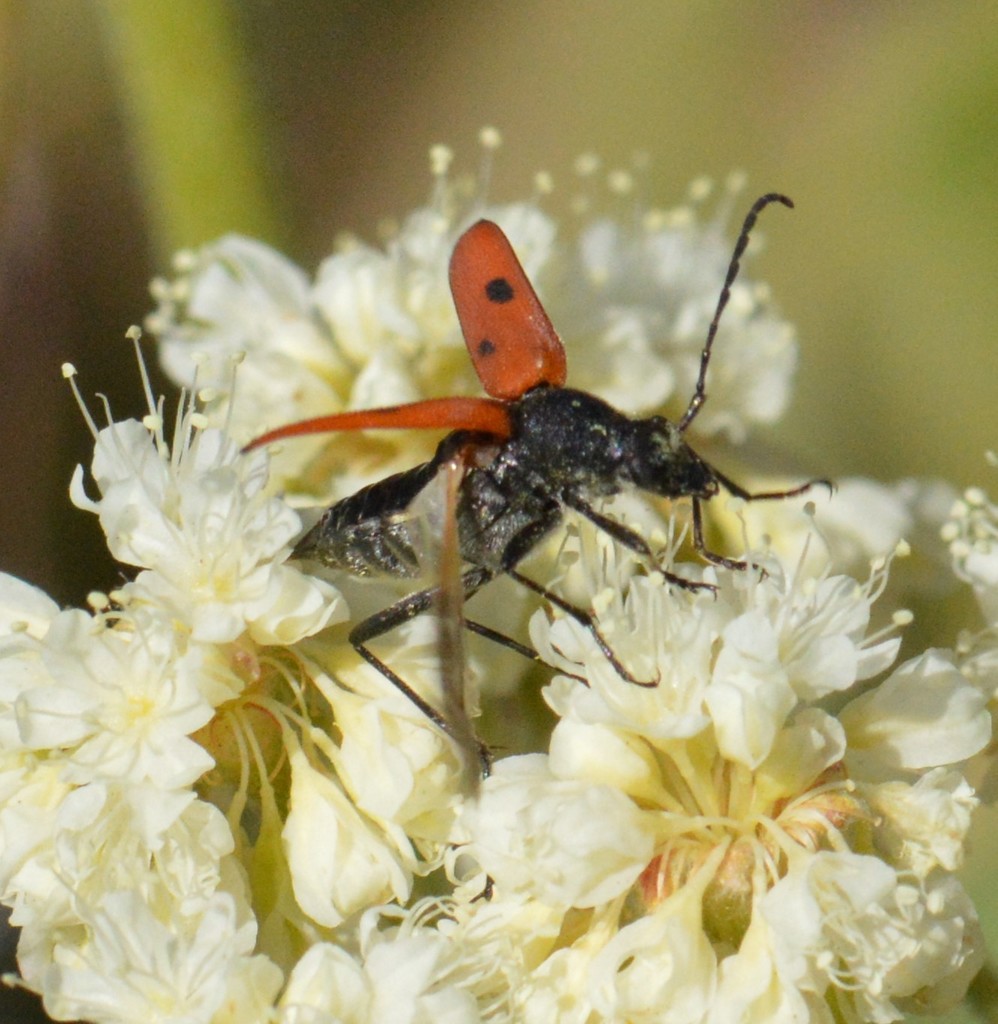
(c) David Anderson, some rights reserved (CC BY) · licence
Family: Cerambycidae · Class: Insecta · Order: Coleoptera
Anastrangalia laetifica (Dimorphic Flower Longhorn Beetle) is a California animal in the Cerambycidae family.
The Dimorphic Flower Longhorn Beetle (Anastrangalia laetifica) is a member of the family Cerambycidae, subfamily Lepturinae. As the common name suggests, this species exhibits sexual dimorphism in coloration and morphology, though detailed morphological descriptions are not well documented in the scientific literature. Like other members of the genus Anastrangalia, adults are likely medium-sized longhorn beetles with elongated bodies and prominent antennae. The distribution and range of A. laetifica across North America requires further documentation. According to BugGuide, the species has been recorded in Arkansas, where it was included on the state's Species of Greatest Conservation Need list in 2006. The species appears to have a broader distribution across temperate regions of North America, but specific range limits and county-level occurrence data have not been comprehensively mapped. Habitat requirements for this species remain poorly understood. Like other flower longhorn beetles in the subfamily Lepturinae, A. laetifica likely inhabits forested areas where adults visit flowers for nectar and pollen feeding. The larval stages presumably develop in decaying or dead wood, as is typical for most cerambycid beetles, but specific host tree species and habitat preferences have not been documented in published literature. Ecological information for A. laetifica is extremely limited. Adults are presumed to be active during warmer months when flowers are available, following the general pattern of other Anastrangalia species. The beetles likely serve as pollinators for various flowering plants while feeding on nectar and pollen. Larval development presumably occurs in deadwood or dying trees, where larvae feed on decomposing wood tissues over one or more years before pupating and emerging as adults. Specific details about breeding behavior, host plant relationships, seasonal activity patterns, and life cycle duration have not been scientifically documented. The conservation status of the Dimorphic Flower Longhorn Beetle reflects the limited knowledge available about this species. NatureServe lists the global status as GNR (Global Not Ranked), indicating insufficient information to assign a conservation rank (NatureServe 2025). The species was designated as a Species of Greatest Conservation Need in Arkansas due to uncertainty about its taxonomic status, life history, and conservation needs rather than evidence of population decline (BugGuide). This classification does not confer regulatory protection but recognizes the need for additional research and monitoring. The lack of comprehensive biological and ecological data for A. laetifica represents a significant knowledge gap common among many North American longhorn beetles. Current taxonomic understanding, distribution mapping, habitat requirements, and population status all require further scientific investigation. Conservation efforts for this species would benefit from systematic surveys to determine current distribution, habitat associations, and population trends. The species' inclusion on state conservation lists highlights the importance of documenting and protecting lesser-known invertebrate species that may face threats from habitat loss and environmental change.
Classification
Class: Insecta · Order: Coleoptera · Family: Cerambycidae
Frequently asked questions
How is Anastrangalia laetifica classified?
Anastrangalia laetifica belongs to class Insecta, order Coleoptera, family Cerambycidae.
What family does Anastrangalia laetifica belong to?
Anastrangalia laetifica is in the Cerambycidae family.
What is Anastrangalia laetifica?
The Dimorphic Flower Longhorn Beetle (Anastrangalia laetifica) is a member of the family Cerambycidae, subfamily Lepturinae.
Is Anastrangalia laetifica found in California?
Yes. Anastrangalia laetifica is recorded in California in The California Species Project's catalogue.
Related species
Other California species in the same genus, family, or bioregion.
Data from The California Species Project — 14,000+ California species with verified data from CNPS, CDFW, USFWS, and more.