Anavitrinella pampinaria
Common Gray
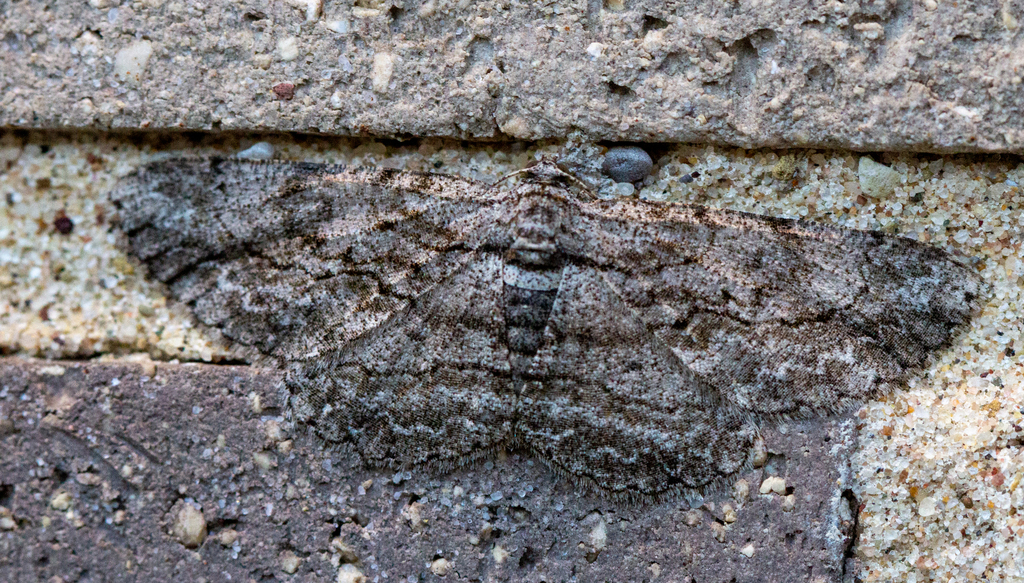
(c) threelark, some rights reserved (CC BY) · licence
Family: Geometridae · Class: Insecta · Order: Lepidoptera
Anavitrinella pampinaria (Common Gray) is a California animal in the Geometridae family.
The Common Gray (Anavitrinella pampinaria) is a moth in the family Geometridae, commonly known as inchworms or geometrids. This species exhibits the typical slender build characteristic of geometrid moths, with adults displaying predominantly gray coloration that gives the species its common name. The wingspan and specific morphological details have not been extensively documented in scientific literature. Anavitrinella pampinaria has one of the broadest distributions among North American geometrid moths, occurring throughout most of North America except arctic regions, with its range extending south into Mexico. The species is found across the continental United States and southern Canada, making it one of the most widespread members of its genus. In California, the species occurs throughout suitable habitat from coastal areas to inland regions. The habitat preferences of the Common Gray have not been thoroughly documented in the literature. Like many geometrid moths, adults are typically found in areas with diverse vegetation that can support larval development. The species appears to be adaptable to various habitat types across its extensive range, though specific microhabitat requirements and elevation preferences remain poorly studied. Adult Common Gray moths are attracted to artificial lights and have been documented engaging in soil-visiting and puddle-visiting behavior, a phenomenon observed in numerous moth species where individuals drink from damp soil, puddles, and pond edges (Adler 1982). This behavior, sometimes called "pumping," involves the intake and discharge of liquid and likely serves multiple physiological functions including water intake and mineral acquisition. The species' flight period, reproductive biology, and larval host plants have not been well documented in available scientific literature. Larval stages presumably feed on vegetation as caterpillars, developing through the characteristic looping locomotion that gives geometrids their "inchworm" name. However, specific host plant relationships and larval ecology for A. pampinaria remain largely undocumented. Adult moths likely have multiple broods per year across their range, though seasonal activity patterns vary by geographic location and local climate conditions. The Common Gray currently has no federal or state conservation listing status. Given its wide distribution across North America and apparent adaptability to various habitats, the species does not appear to face immediate conservation concerns. However, like many lepidopteran species, populations may be affected by habitat loss, pesticide use, and climate change impacts on host plant communities and seasonal activity patterns. Scientific documentation for this species remains limited despite its wide distribution. The information presented here is based on available sources including BugGuide, iNaturalist, and published literature on moth ecology. If you have additional verified information about this species' biology, distribution, or ecology, please contact us to help improve this species account.
Classification
Class: Insecta · Order: Lepidoptera · Family: Geometridae
Frequently asked questions
How is Anavitrinella pampinaria classified?
Anavitrinella pampinaria belongs to class Insecta, order Lepidoptera, family Geometridae.
What family does Anavitrinella pampinaria belong to?
Anavitrinella pampinaria is in the Geometridae family.
What is Anavitrinella pampinaria?
The Common Gray (Anavitrinella pampinaria) is a moth in the family Geometridae, commonly known as inchworms or geometrids.
Is Anavitrinella pampinaria found in California?
Yes. Anavitrinella pampinaria is recorded in California in The California Species Project's catalogue.
Related species
Other California species in the same genus, family, or bioregion.
Data from The California Species Project — 14,000+ California species with verified data from CNPS, CDFW, USFWS, and more.