Anaxyrus boreas
Western Toad
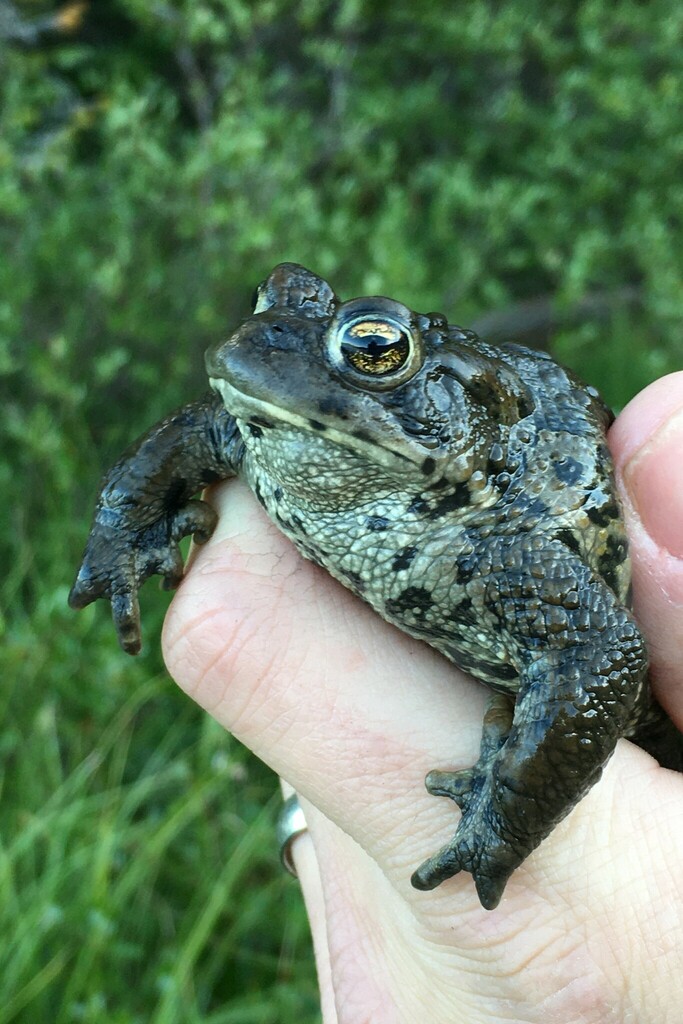
no rights reserved · CC0
Family: Bufonidae · Class: Amphibia · Order: Anura
Anaxyrus boreas (Western Toad) is a California animal in the Bufonidae family.
The Western Toad (Anaxyrus boreas) is a robust anuran amphibian measuring 56 to 130 mm (2.2 to 5.1 inches) in snout-vent length, with females typically larger than males. Adults display highly variable coloration ranging from gray, brown, olive, or greenish dorsally, often with darker blotches or mottling. The dorsal surface is covered with prominent tubercles (warty projections), while the ventral surface is cream to pale yellow with dark spotting. A distinctive light-colored dorsal stripe extends from the snout to the vent in many individuals, though this feature may be absent. The parotoid glands behind the eyes are oval-shaped and prominent, secreting bufotoxins as a defense mechanism. Historically, Western Toads ranged throughout much of western North America from sea level to elevations exceeding 3,500 meters (11,500 feet). In California, populations occur in the Sierra Nevada, Cascade Range, Coast Ranges, and select areas of the Central Valley and southern California mountains. According to AmphibiaWeb, significant population declines have been documented across portions of the species' range, particularly in the Sierra Nevada where entire populations have disappeared from previously occupied watersheds. Western Toads inhabit diverse habitats including grasslands, woodlands, forests, and alpine meadows. They require access to permanent or semi-permanent water bodies for breeding, including ponds, lakes, slow-moving streams, and beaver ponds. Adults are terrestrial outside the breeding season, utilizing burrows, rock crevices, and fallen logs for shelter. The species demonstrates broad elevational tolerance, with populations documented from coastal areas to subalpine zones above treeline. Breeding typically occurs from February through July, depending on elevation and local climate conditions. Males gather at breeding sites and produce soft, melodic trills to attract females. Females deposit long strings of eggs in shallow water, with clutch sizes ranging from 5,000 to 16,500 eggs. Tadpoles are small, dark, and often form dense schools in shallow areas. Metamorphosis occurs after 45 to 110 days, with timing influenced by water temperature and food availability. Adults are primarily nocturnal, feeding on insects, spiders, worms, and other invertebrates. During winter, Western Toads hibernate in underground burrows or beneath deep organic debris. While not federally listed, Western Toad populations have experienced significant declines throughout portions of their range. The species is considered a Species of Special Concern by the California Department of Fish and Wildlife due to documented population reductions and local extirpations. Primary threats include habitat loss, water diversion and management practices that alter hydroperiods, disease (particularly chytridiomycosis caused by Batrachochytrium dendrobatidis), invasive species, and climate change effects on montane breeding habitats. Conservation efforts focus on habitat protection, water management coordination, and disease monitoring programs to track population trends and health status.
Classification
Class: Amphibia · Order: Anura · Family: Bufonidae
Frequently asked questions
How is Anaxyrus boreas classified?
Anaxyrus boreas belongs to class Amphibia, order Anura, family Bufonidae.
What family does Anaxyrus boreas belong to?
Anaxyrus boreas is in the Bufonidae family.
What is Anaxyrus boreas?
The Western Toad (Anaxyrus boreas) is a robust anuran amphibian measuring 56 to 130 mm (2.2 to 5.1 inches) in snout-vent length, with females typically larger than males.
Is Anaxyrus boreas found in California?
Yes. Anaxyrus boreas is recorded in California in The California Species Project's catalogue.
Related species
Other California species in the same genus, family, or bioregion.
Data from The California Species Project — 14,000+ California species with verified data from CNPS, CDFW, USFWS, and more.