Anaxyrus californicus
Arroyo toad
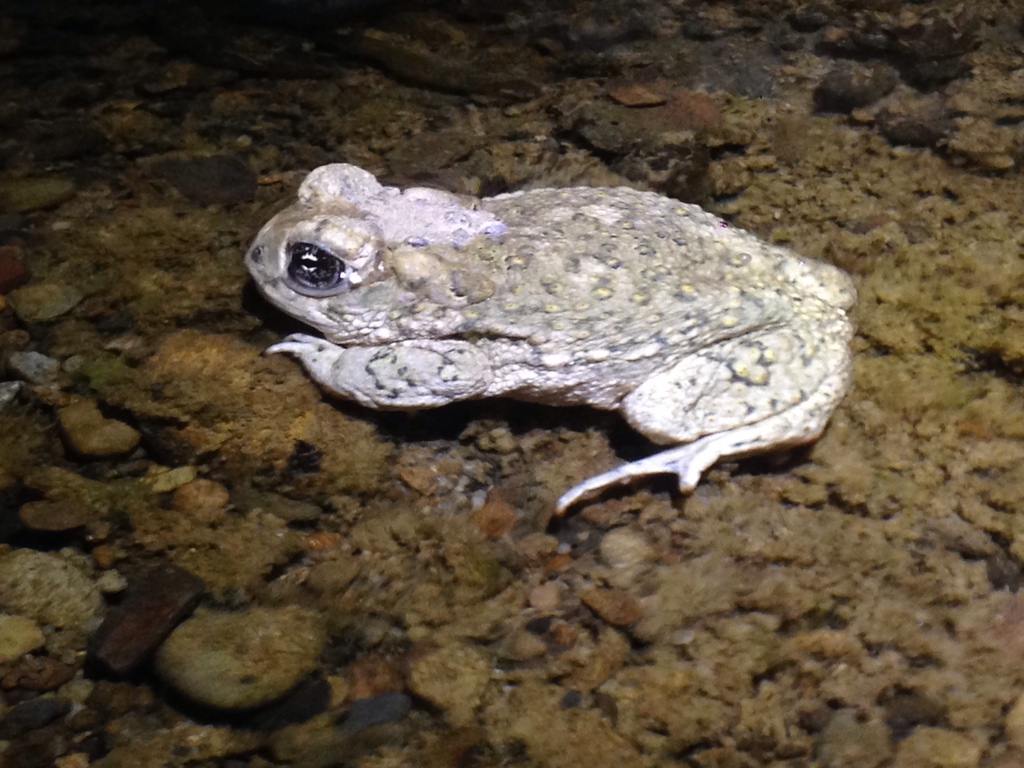
(c) Adam J. Searcy, some rights reserved (CC BY) · licence
Family: Bufonidae · Class: Amphibia · Order: Anura
Conservation status: Endangered · G2G3 S2
Anaxyrus californicus (Arroyo toad) is a California animal in the Bufonidae family.
The arroyo toad is a medium-sized anuran endemic to coastal southern California and northwestern Baja California, Mexico. Adults measure 50 to 95 mm (2.0 to 3.7 inches) in snout-vent length, with females typically larger than males. The dorsal surface exhibits variable coloration ranging from gray to olive-brown, often with dark blotches or reticulated patterns. A distinctive light-colored dorsal stripe may be present. The ventral surface is cream to white with minimal spotting. During breeding season, males develop dark nuptial pads on their thumbs and may display yellowish throat coloration. Historically, arroyo toads occurred from Monterey County south through the coastal ranges of southern California, extending into northwestern Baja California, Mexico. According to the California Department of Fish and Wildlife, the species currently persists in scattered populations within the Coast Ranges from Santa Barbara County south to San Diego County, primarily in the Transverse and Peninsular Mountain ranges. The U.S. Fish and Wildlife Service estimates that the species has been extirpated from approximately 76% of its historical range, with fewer than 3,000 adults remaining across all known populations. Arroyo toads inhabit stream channels, adjacent terraces, and upland areas within coastal sage scrub, chaparral, oak woodland, and riparian communities. The species requires sandy or gravelly substrates along intermittent or perennial streams with rocky pools and relatively quiet water for breeding. Adults utilize upland areas within 2 kilometers of breeding sites, occupying mammal burrows, rock crevices, and spaces beneath vegetation. Elevation ranges from sea level to approximately 1,400 meters (4,600 feet) in mountainous regions. Breeding occurs primarily from late winter through early summer, typically from March to July depending on local conditions and water availability. Males establish territories in shallow pools or slow-moving stream sections, calling from exposed positions. Females deposit 4,500 to 10,000 eggs in long strings attached to vegetation or rocks in quiet water. Tadpoles require 2 to 4 months to metamorphose, depending on water temperature and food availability. Adults are nocturnal, emerging from daytime retreats to forage on insects, spiders, and other arthropods. The species demonstrates strong site fidelity, with adults returning to the same breeding locations across multiple seasons. The arroyo toad was listed as endangered by the U.S. Fish and Wildlife Service in 1994, with critical habitat designated in 2001 and revised in 2013. Population decline results primarily from habitat loss due to urbanization, water diversions, and stream channelization. Additional threats include non-native predators such as bullfrogs and crayfish, livestock grazing, recreational activities, and altered flood regimes. Climate change poses increasing risks through drought intensification and habitat fragmentation. Recovery efforts focus on habitat restoration, invasive species control, and captive breeding programs managed by institutions including the San Diego Zoo.
Classification
Class: Amphibia · Order: Anura · Family: Bufonidae
Conservation status
Endangered · G2G3 S2
Frequently asked questions
How is Anaxyrus californicus classified?
Anaxyrus californicus belongs to class Amphibia, order Anura, family Bufonidae.
What family does Anaxyrus californicus belong to?
Anaxyrus californicus is in the Bufonidae family.
Is Anaxyrus californicus protected or of conservation concern?
Anaxyrus californicus carries the following status: Endangered · G2G3 S2.
What is Anaxyrus californicus?
The arroyo toad is a medium-sized anuran endemic to coastal southern California and northwestern Baja California, Mexico.
Is Anaxyrus californicus found in California?
Yes. Anaxyrus californicus is recorded in California in The California Species Project's catalogue.
Related species
Other California species in the same genus, family, or bioregion.
Data from The California Species Project — 14,000+ California species with verified data from CNPS, CDFW, USFWS, and more.