Anaxyrus canorus
Yosemite toad
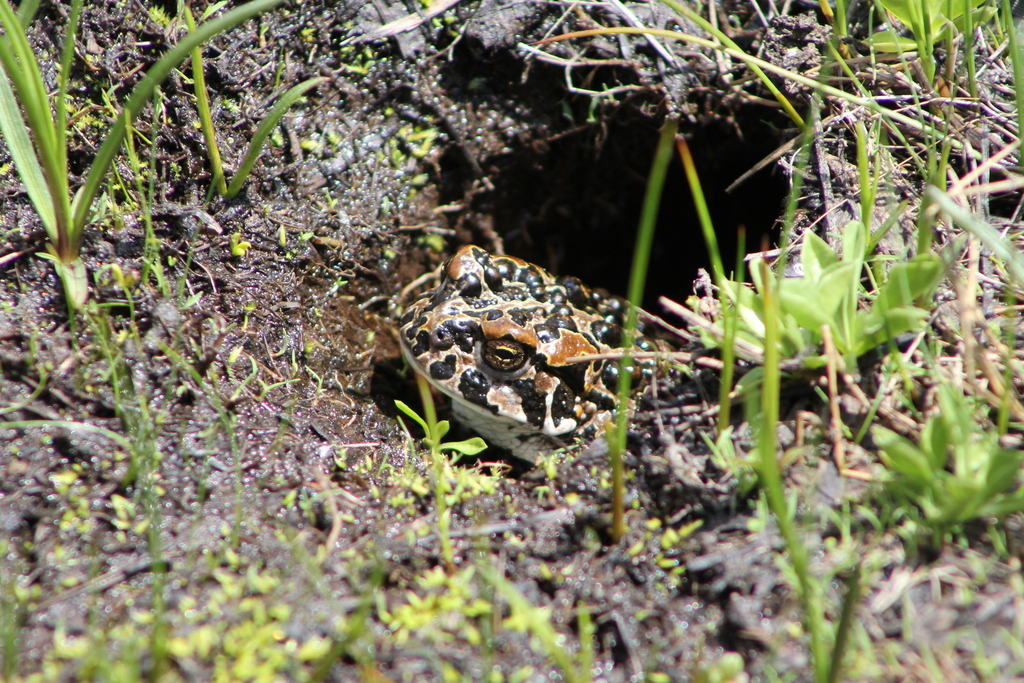
(c) Ryan Donnelly, some rights reserved (CC BY) · licence
Family: Bufonidae · Class: Amphibia · Order: Anura
Conservation status: Threatened · G2 S2
Anaxyrus canorus (Yosemite toad) is a California animal in the Bufonidae family.
The Yosemite toad is a medium-sized anuran endemic to the high-elevation areas of California's Sierra Nevada mountain range. Adult females measure 52 to 86 mm (2.0 to 3.4 inches) in snout-vent length, while males are smaller, ranging from 42 to 64 mm (1.7 to 2.5 inches). During the breeding season, males develop dark nuptial pads on their thumbs and display a greenish coloration. Females and non-breeding males exhibit a mottled brown, gray, and olive pattern with darker spots and patches. Both sexes have relatively smooth skin compared to other toad species, with scattered small warts and parotoid glands behind the eyes. According to the SummitWest Environmental Database, the Yosemite toad occurs exclusively in the Sierra Nevada of California. The species' range extends from the Ebbetts Pass area in Alpine County south to Evolution Basin in Fresno County. Historically, populations were documented at elevations ranging from 1,950 to 3,445 meters (6,400 to 11,300 feet), though most current populations occur above 2,400 meters (7,900 feet). The species is named after Yosemite National Park, where it was first scientifically described. Yosemite toads inhabit montane and subalpine ecosystems characterized by shallow ponds, lake margins, wet meadows, and slow-moving streams. The species requires aquatic breeding sites that remain ice-free for sufficient periods to allow larval development, typically from snowmelt through late summer. Adults utilize adjacent terrestrial habitats including talus slopes, rock crevices, and areas under logs or boulders for shelter and overwintering sites. Vegetation associations include lodgepole pine, red fir, and subalpine meadow communities. Breeding occurs from late April through July, depending on elevation and snowmelt timing. Males call from shallow water with a distinctive musical trill lasting 10 to 20 seconds. Females deposit 1,500 to 5,000 eggs in long strings attached to submerged vegetation or debris. Tadpoles require 6 to 10 weeks to complete metamorphosis, emerging as juveniles from July through September. Adults are active primarily during daylight hours and feed on a variety of terrestrial invertebrates including beetles, flies, ants, and spiders. The species exhibits strong site fidelity, with individuals often returning to the same breeding ponds annually. The U.S. Fish and Wildlife Service listed the Yosemite toad as threatened under the Endangered Species Act in 2014. The species has experienced significant population declines, with surveys indicating disappearances from approximately 50% of historically occupied sites. Primary threats include the amphibian chytrid fungus (Batrachochytrium dendrobatidis), which has caused severe mortality in Sierra Nevada populations. Additional threats include habitat degradation from livestock grazing, recreational activities, climate change effects on snowpack and hydroperiods, introduced fish predation on larvae, and air pollution impacts on high-elevation ecosystems. Recovery efforts focus on population monitoring, disease research, habitat protection, and reduction of human disturbances in occupied habitats.
Classification
Class: Amphibia · Order: Anura · Family: Bufonidae
Conservation status
Threatened · G2 S2
Frequently asked questions
How is Anaxyrus canorus classified?
Anaxyrus canorus belongs to class Amphibia, order Anura, family Bufonidae.
What family does Anaxyrus canorus belong to?
Anaxyrus canorus is in the Bufonidae family.
Is Anaxyrus canorus protected or of conservation concern?
Anaxyrus canorus carries the following status: Threatened · G2 S2.
What is Anaxyrus canorus?
The Yosemite toad is a medium-sized anuran endemic to the high-elevation areas of California's Sierra Nevada mountain range.
Is Anaxyrus canorus found in California?
Yes. Anaxyrus canorus is recorded in California in The California Species Project's catalogue.
Related species
Other California species in the same genus, family, or bioregion.
Data from The California Species Project — 14,000+ California species with verified data from CNPS, CDFW, USFWS, and more.