Anaxyrus cognatus
Great Plains Toad
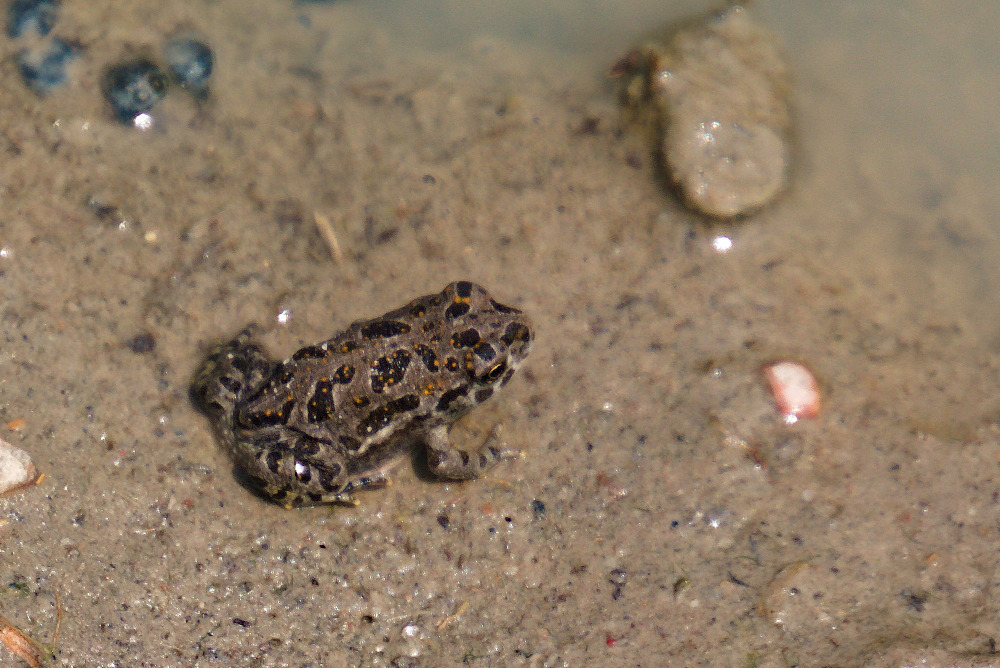
(c) psweet, some rights reserved (CC BY-SA) · licence
Family: Bufonidae · Class: Amphibia · Order: Anura
Anaxyrus cognatus (Great Plains Toad) is a California animal in the Bufonidae family.
The Great Plains toad (Anaxyrus cognatus) is a medium-sized anuran native to the central Great Plains region of North America. Adults typically measure 51 to 114 mm (2.0 to 4.5 inches) in snout-vent length, with females generally larger than males. The dorsal surface displays a distinctive pattern of large, dark green or brown blotches outlined by light-colored borders against a gray, tan, or yellowish background. These paired dorsal spots are the species' most diagnostic feature, often forming symmetrical patterns along the back. The ventral surface is cream to white, typically unmarked. A prominent cranial crest extends between the eyes, and parotoid glands are large and kidney-shaped. Historically, the Great Plains toad ranged from southern Alberta and Saskatchewan south through the Great Plains to northern Mexico, extending from western Minnesota to eastern Colorado and New Mexico. The species' range includes portions of North Dakota, South Dakota, Nebraska, Kansas, Oklahoma, Texas, Wyoming, Colorado, and New Mexico. In California, the species is not naturally occurring, as the state lies outside the historical range of A. cognatus. Any records from California would represent introduced populations or misidentifications. Great Plains toads inhabit short-grass prairies, agricultural areas, and semi-arid regions with sandy or loose soils suitable for burrowing. The species occurs from near sea level to approximately 1,500 meters (4,900 feet) in elevation. Adults require temporary or permanent water bodies for reproduction, including prairie ponds, stock tanks, irrigation ditches, and flooded fields. Outside the breeding season, individuals shelter in self-excavated burrows up to 1 meter deep, often beneath shrubs or in open areas with suitable soil conditions. This fossorial species exhibits explosive breeding behavior triggered by warm spring and summer rains. Breeding occurs from March through September, with peak activity during warm, humid nights following precipitation events. Males produce a loud, metallic trill lasting 5 to 50 seconds to attract females. Females deposit 1,100 to 45,000 eggs in temporary pools, with clutch size varying based on female body size and environmental conditions. Tadpoles develop rapidly, typically metamorphosing within 17 to 49 days depending on water temperature and pond permanence. Adults feed primarily on invertebrates, including beetles, ants, moths, and grasshoppers, captured during nocturnal foraging activities. The Great Plains toad is not federally listed under the Endangered Species Act, and NatureServe ranks the species as G5 (globally secure). However, regional populations face threats from habitat conversion, agricultural intensification, and altered hydrology affecting breeding sites. Climate change may impact the species through changes in precipitation patterns that affect breeding pool availability. In some areas, populations have declined due to drought conditions and the loss of temporary wetlands. Conservation efforts focus on maintaining grassland habitats and protecting seasonal wetlands critical for reproduction.
Classification
Class: Amphibia · Order: Anura · Family: Bufonidae
Frequently asked questions
How is Anaxyrus cognatus classified?
Anaxyrus cognatus belongs to class Amphibia, order Anura, family Bufonidae.
What family does Anaxyrus cognatus belong to?
Anaxyrus cognatus is in the Bufonidae family.
What is Anaxyrus cognatus?
The Great Plains toad (Anaxyrus cognatus) is a medium-sized anuran native to the central Great Plains region of North America.
Is Anaxyrus cognatus found in California?
Yes. Anaxyrus cognatus is recorded in California in The California Species Project's catalogue.
Related species
Other California species in the same genus, family, or bioregion.
Data from The California Species Project — 14,000+ California species with verified data from CNPS, CDFW, USFWS, and more.