Anaxyrus punctatus
Red-Spotted Toad
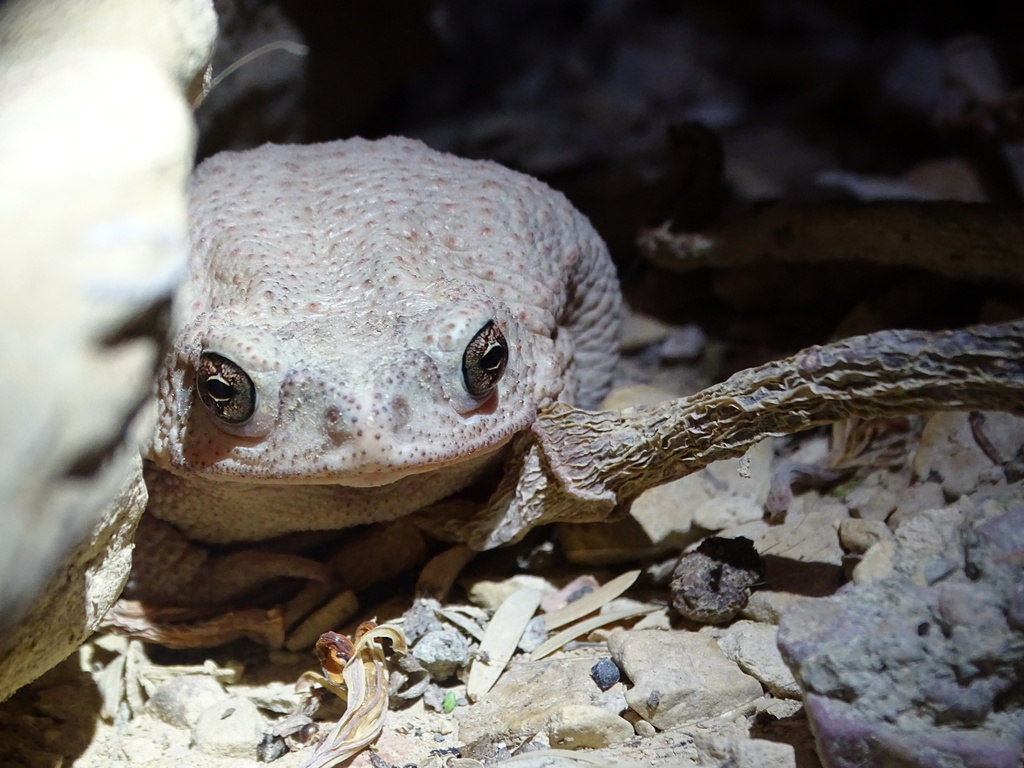
(c) Nathan May, some rights reserved (CC BY) · licence
Family: Bufonidae · Class: Amphibia · Order: Anura
Anaxyrus punctatus (Red-Spotted Toad) is a California animal in the Bufonidae family.
The red-spotted toad (Anaxyrus punctatus) is a small to medium-sized bufonid amphibian measuring 37 to 75 mm (1.5 to 3.0 inches) in snout-vent length. Adults display gray to olive-brown dorsal coloration with distinctive round, reddish-orange to salmon-colored spots or tubercles scattered across the dorsum and sides. The parotoid glands are small, round to oval, and positioned close to the head. Males develop nuptial pads during breeding season and possess a single vocal sac. The ventral surface is cream to white with occasional dark spotting. Red-spotted toads occur across the southwestern United States and northwestern Mexico. In California, the species is found primarily in the southeastern desert regions, including the Mojave and Sonoran deserts. Populations are documented in Imperial, Riverside, San Bernardino, and Inyo counties, with scattered records extending north along the eastern Sierra Nevada and White Mountains. The species reaches elevations up to 2,000 meters (6,560 feet) in montane areas. This species inhabits arid and semi-arid environments, showing strong association with rocky terrain and permanent or semi-permanent water sources. Red-spotted toads are typically found near springs, seeps, streams, and artificial water sources including cattle tanks and irrigation ditches. Preferred microhabitats include boulder piles, rock crevices, and canyon bottoms where moisture retention is enhanced. The species demonstrates tolerance for alkaline and saline water conditions that would be unsuitable for many amphibian species. Red-spotted toads are primarily nocturnal, emerging after dark to forage for small invertebrates including beetles, ants, flies, and spiders. Breeding occurs from March through September, triggered by rainfall events and warming temperatures. Males establish territories near water sources and produce a musical trill lasting 4 to 10 seconds to attract females. Females deposit 300 to 5,000 eggs in shallow water, typically attached to vegetation or rocks. Tadpoles develop rapidly, metamorphosing in 6 to 10 weeks depending on water temperature and availability. The species exhibits extended drought tolerance, with adults capable of remaining inactive in rock crevices during extended dry periods. The red-spotted toad is not federally listed and appears to maintain stable populations across much of its California range. However, localized threats include habitat modification from development, water diversions affecting breeding sites, and potential impacts from climate change affecting precipitation patterns in desert ecosystems. The species benefits from its association with permanent spring systems that provide refuge during drought conditions. Monitoring efforts by the California Department of Fish and Wildlife focus on tracking population trends at key breeding localities, particularly those near urban development or water extraction activities.
Classification
Class: Amphibia · Order: Anura · Family: Bufonidae
Frequently asked questions
How is Anaxyrus punctatus classified?
Anaxyrus punctatus belongs to class Amphibia, order Anura, family Bufonidae.
What family does Anaxyrus punctatus belong to?
Anaxyrus punctatus is in the Bufonidae family.
What is Anaxyrus punctatus?
The red-spotted toad (Anaxyrus punctatus) is a small to medium-sized bufonid amphibian measuring 37 to 75 mm (1.5 to 3.0 inches) in snout-vent length.
Is Anaxyrus punctatus found in California?
Yes. Anaxyrus punctatus is recorded in California in The California Species Project's catalogue.
Related species
Other California species in the same genus, family, or bioregion.
Data from The California Species Project — 14,000+ California species with verified data from CNPS, CDFW, USFWS, and more.