Anaxyrus williamsi
Dixie Valley Toad
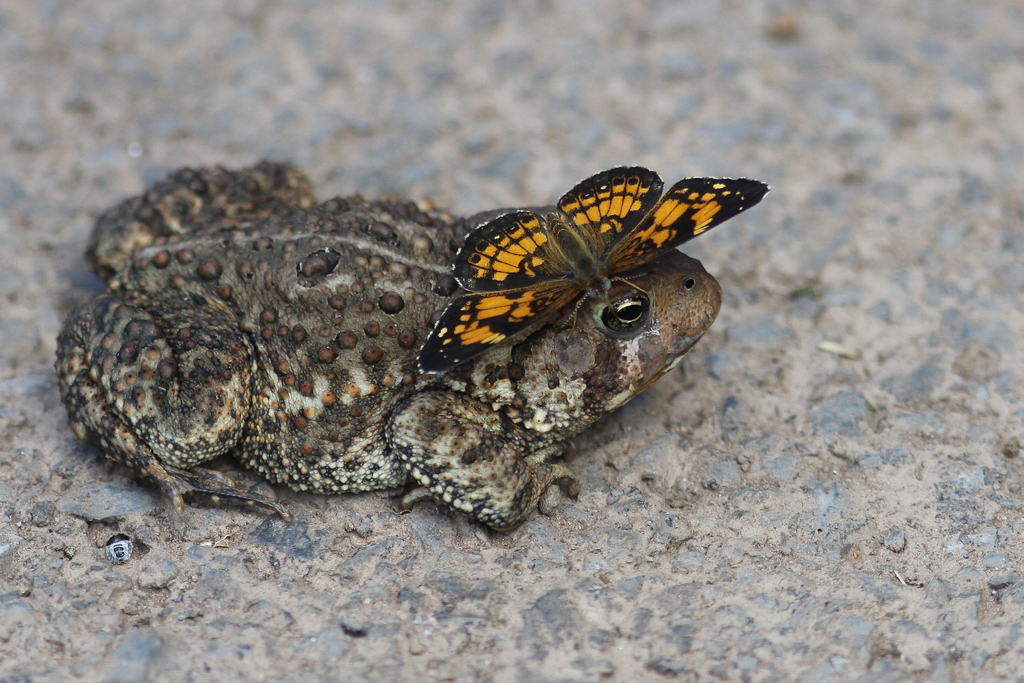
no rights reserved · CC0
Family: Bufonidae · Class: Amphibia · Order: Anura
Conservation status: Endangered
Anaxyrus williamsi (Dixie Valley Toad) is a California animal in the Bufonidae family.
The Dixie Valley toad is a small, robust amphibian endemic to the geothermal wetlands of Dixie Valley, Nevada. Adults measure 44.01 to 69.97 mm (1.7 to 2.8 inches) in snout-vent length, making it the smallest species within the Anaxyrus boreas species complex (Gordon et al. 2017). The species displays a distinctive broken cream stripe along the dorsum and irregularly distributed rust-colored tubercles with black margins. The dorsal ground color contains olive hues with small irregular black specks, while the face is heavily speckled and the parotoid glands are tan. The throat appears immaculate white, contrasting with the white venter that is heavily mottled with black. The head is slightly shorter than wide, with a truncated snout interrupted only by protruding eyes. The Dixie Valley toad occurs exclusively in Dixie Valley, Churchill County, Nevada, representing one of the most geographically restricted amphibian species in North America. The species occupies approximately 307.6 hectares (760 acres) of wetlands within Dixie Meadows, with a potential area of occupancy estimated at 146 hectares (360 acres) based on wetland-associated vegetation extent. Approximately 90 percent of the occupied habitat occurs on Department of Defense lands (Fallon Naval Air Station), with the remaining 10 percent on Bureau of Land Management lands. The species inhabits geothermal spring-fed wetlands and associated vegetation communities in the Great Basin desert. These wetlands are sustained by natural hot springs that maintain relatively constant water temperatures year-round. The toad is rarely encountered more than 14 meters from wetland edges, demonstrating its complete dependence on this specialized habitat. The surrounding landscape consists of desert shrublands typical of the Great Basin region at approximately 1,158 meters (3,800 feet) elevation. Dixie Valley toads are closely associated with emergent vegetation and shallow water areas within the geothermal wetlands. Like other members of the Anaxyrus boreas complex, they likely feed on small invertebrates including insects, spiders, and other arthropods found within their wetland habitat. Breeding behavior and specific ecological requirements remain understudied due to the species' recent taxonomic description in 2017 and restricted distribution. The Dixie Valley toad was emergency-listed as federally endangered in April 2022 due to imminent threats from geothermal development projects in Dixie Meadows (USFWS 2022). The species faces significant risk from proposed geothermal energy development that could alter or eliminate the natural hot springs essential for its survival. The emergency listing provided 240 days of federal protection, followed by formal endangered species listing. Climate change poses additional long-term threats through potential alterations to the hydrological processes maintaining the geothermal springs. The species' extremely limited range and specialized habitat requirements make it particularly vulnerable to any environmental disturbances. Conservation efforts focus on habitat protection and careful management of geothermal resources to ensure the continued flow and temperature of the springs that sustain this unique desert amphibian.
Classification
Class: Amphibia · Order: Anura · Family: Bufonidae
Conservation status
Endangered
Frequently asked questions
How is Anaxyrus williamsi classified?
Anaxyrus williamsi belongs to class Amphibia, order Anura, family Bufonidae.
What family does Anaxyrus williamsi belong to?
Anaxyrus williamsi is in the Bufonidae family.
Is Anaxyrus williamsi protected or of conservation concern?
Anaxyrus williamsi carries the following status: Endangered.
What is Anaxyrus williamsi?
The Dixie Valley toad is a small, robust amphibian endemic to the geothermal wetlands of Dixie Valley, Nevada.
Is Anaxyrus williamsi found in California?
Yes. Anaxyrus williamsi is recorded in California in The California Species Project's catalogue.
Related species
Other California species in the same genus, family, or bioregion.
Data from The California Species Project — 14,000+ California species with verified data from CNPS, CDFW, USFWS, and more.