Anchigarypus californicus
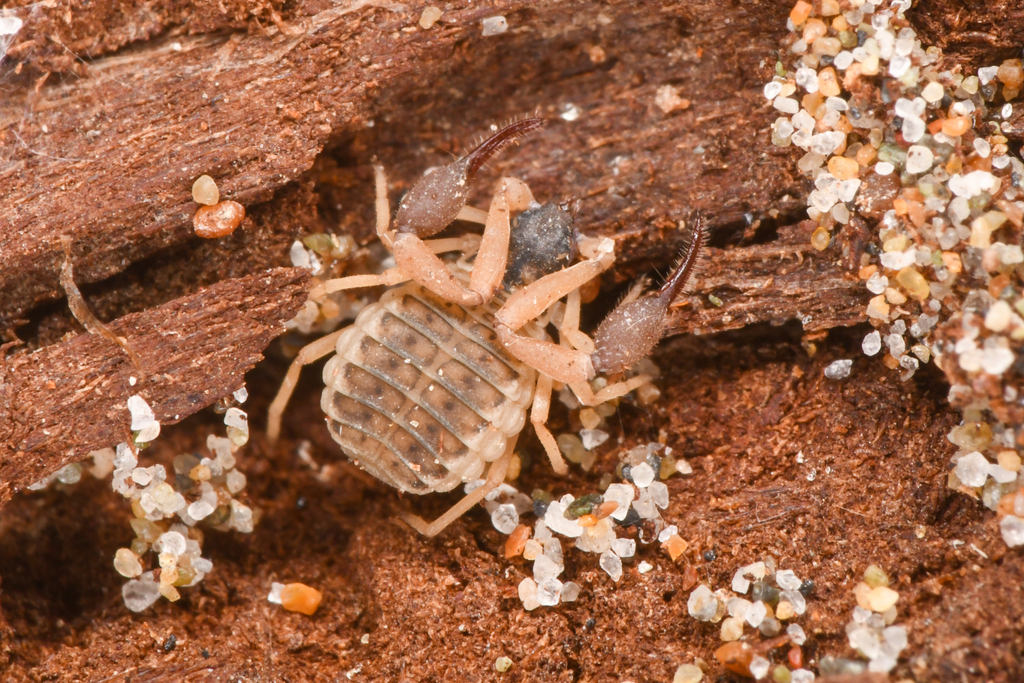
(c) Trevor Van Loon, some rights reserved (CC BY) · licence
Family: Garypidae · Class: Arachnida · Order: Pseudoscorpiones
Anchigarypus californicus is a California animal in the Garypidae family.
Anchigarypus californicus is a pseudoscorpion species belonging to the family Garypidae, subfamily Garypinae. As a member of the order Pseudoscorpiones, this arachnid possesses the characteristic pincers (chelae) of the group but lacks the stinger found in true scorpions. Like other pseudoscorpions, A. californicus is small in size, typically measuring 2-8 millimeters in body length, with a flattened, oval-shaped body and eight legs. The species exhibits the typical pseudoscorpion body plan with a prosoma (front section) and opisthosoma (rear section), both covered by chitinous plates called tergites and sternites. The geographic distribution of Anchigarypus californicus appears to be restricted to California, as indicated by its scientific name. However, specific distributional data for this species within the state remains poorly documented in the scientific literature. The genus Anchigarypus contains only three recognized species according to current taxonomic records, making A. californicus part of a small, specialized group within the Garypidae family. Habitat requirements for A. californicus have not been well documented in published studies. Most pseudoscorpions in the family Garypidae are associated with specific microhabitats, often found under bark, in leaf litter, soil crevices, or caves. Many species in this family show preferences for particular moisture levels and substrate types, but the specific ecological requirements of A. californicus remain largely unknown. The behavioral ecology and life history of A. californicus are not well documented in the available literature. Pseudoscorpions generally are predators that feed on small arthropods such as mites, springtails, and other tiny invertebrates using their chelae to capture prey. They inject digestive enzymes and consume the liquefied contents of their prey. Reproduction in pseudoscorpions typically involves complex courtship behaviors and the production of small numbers of eggs that are carried by the female in a brood pouch. Development includes several molts before reaching adulthood, but specific details for A. californicus are lacking. The conservation status of Anchigarypus californicus has not been formally assessed. The species does not appear on federal or state endangered species lists, and its population status remains unknown. Like many small arachnids, pseudoscorpions are often overlooked in biodiversity surveys and conservation planning efforts. The limited scientific information available for this species represents a significant knowledge gap in California's invertebrate fauna. Threats to the species, if any exist, are not documented, though habitat loss and fragmentation could potentially impact populations if the species has specific habitat requirements. Scientific documentation for this species remains extremely limited. The information presented here is based on taxonomic records from the U.S. Fish and Wildlife Service database and general knowledge of pseudoscorpion biology. Detailed ecological studies, population assessments, and habitat characterization are needed to better understand this California endemic arachnid. We welcome contributions of verified scientific data, field observations, or specimen records to enhance this species account.
Classification
Class: Arachnida · Order: Pseudoscorpiones · Family: Garypidae
Frequently asked questions
How is Anchigarypus californicus classified?
Anchigarypus californicus belongs to class Arachnida, order Pseudoscorpiones, family Garypidae.
What family does Anchigarypus californicus belong to?
Anchigarypus californicus is in the Garypidae family.
What is Anchigarypus californicus?
Anchigarypus californicus is a pseudoscorpion species belonging to the family Garypidae, subfamily Garypinae.
Is Anchigarypus californicus found in California?
Yes. Anchigarypus californicus is recorded in California in The California Species Project's catalogue.
Related species
Other California species in the same genus, family, or bioregion.
Data from The California Species Project — 14,000+ California species with verified data from CNPS, CDFW, USFWS, and more.