Ancylis columbiana
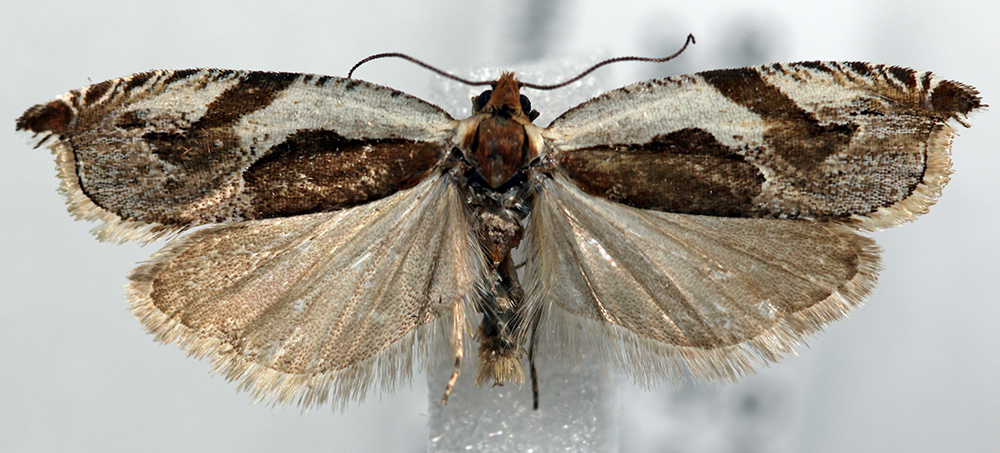
(c) Dave, some rights reserved (CC BY) · licence
Family: Tortricidae · Class: Insecta · Order: Lepidoptera
Ancylis columbiana is a California animal in the Tortricidae family.
Ancylis columbiana is a small moth in the family Tortricidae, commonly known as leafroller moths. This species belongs to a diverse group of microlepidoptera that typically measure 8-15 mm in wingspan, though specific measurements for A. columbiana have not been well documented in the literature. Adult moths in this genus are characterized by forewings that are often mottled or banded with earth tones, providing effective camouflage when at rest with wings folded roof-like over the body. The species occurs in western North America, with documented records from California, British Columbia, and other Pacific Northwest regions. In California, the species has been reported from various localities, though comprehensive distribution data remains limited. The species appears to have a relatively broad elevational range, with records from both lower elevation sites and montane areas. Ancylis columbiana inhabits diverse vegetation types typical of western North American ecosystems. Like many tortricid moths, this species likely requires specific host plants for larval development, though detailed host plant relationships have not been thoroughly documented in the scientific literature. The genus Ancylis includes species that utilize various woody and herbaceous plants, with larvae typically feeding within rolled or tied leaves, stems, or flower heads. The life cycle follows the typical tortricid pattern, with larvae creating shelters by rolling or webbing together portions of host plants. Adults are generally active during warmer months, though specific flight periods for A. columbiana have not been well established. Mating and oviposition behaviors likely follow patterns common to the genus, with females depositing eggs on or near suitable host plants. The species probably overwinters as larvae or pupae, emerging as adults the following growing season. This species does not currently hold any federal or state conservation status listings. Population trends and conservation needs have not been systematically assessed, reflecting the limited research attention given to many microlepidoptera species. Like other small moths, A. columbiana may face threats from habitat modification, pesticide applications, and climate change impacts on host plant distributions and phenology. The species' conservation status may be data deficient rather than secure, as comprehensive surveys and ecological studies of tortricid moths are often lacking. Scientific documentation for this species remains limited despite its inclusion in regional lepidoptera surveys and checklists. The information presented here synthesizes available records from lepidopterological literature and regional species lists. More detailed biological and ecological studies would enhance understanding of this species' habitat requirements, host plant associations, and conservation needs. Field observations and verified records from naturalists and lepidopterists continue to contribute valuable distribution and phenological data for this and other understudied microlepidoptera species.
Classification
Class: Insecta · Order: Lepidoptera · Family: Tortricidae
Frequently asked questions
How is Ancylis columbiana classified?
Ancylis columbiana belongs to class Insecta, order Lepidoptera, family Tortricidae.
What family does Ancylis columbiana belong to?
Ancylis columbiana is in the Tortricidae family.
What is Ancylis columbiana?
Ancylis columbiana is a small moth in the family Tortricidae, commonly known as leafroller moths.
Is Ancylis columbiana found in California?
Yes. Ancylis columbiana is recorded in California in The California Species Project's catalogue.
Related species
Other California species in the same genus, family, or bioregion.
Data from The California Species Project — 14,000+ California species with verified data from CNPS, CDFW, USFWS, and more.