Ancylis comptana
Strawberry Leafroller Moth
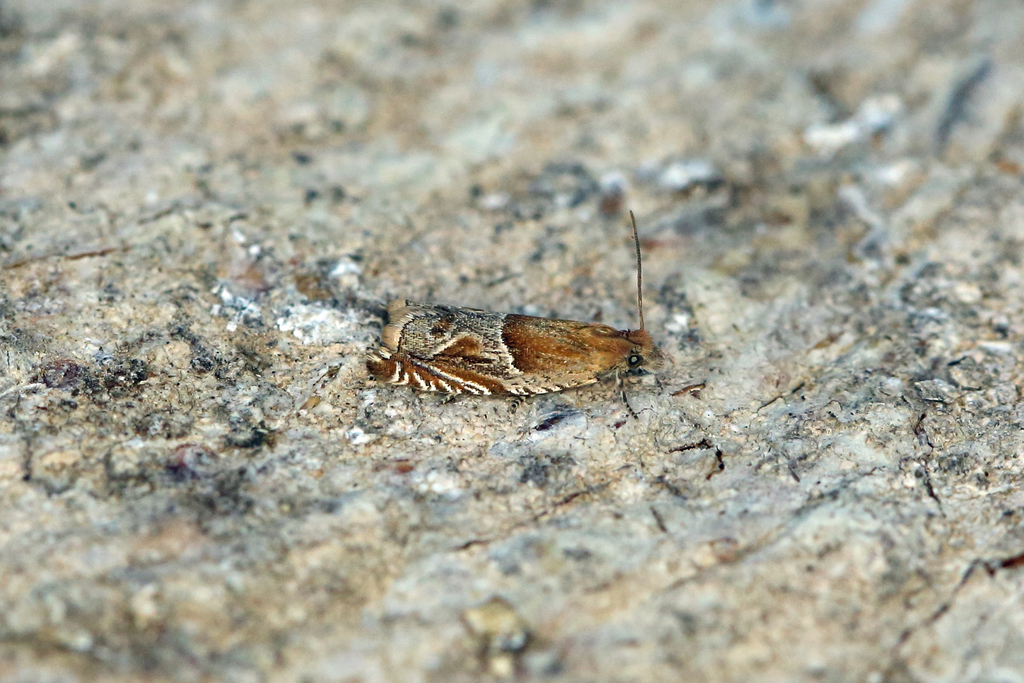
(c) Nigel Voaden, some rights reserved (CC BY) · licence
Family: Tortricidae · Class: Insecta · Order: Lepidoptera
Ancylis comptana (Strawberry Leafroller Moth) is a California animal in the Tortricidae family.
The Strawberry Leafroller Moth (Ancylis comptana) is a small tortricid moth with a wingspan of 11-12 mm and forewing length ranging from 4.5-7 mm (BugGuide). The forewings display brown and tan coloration with subtle darker markings typical of the Tortricidae family. Adults are distinguished from related species by their compact size and specific wing pattern characteristics. This species has a broad distribution across North America, with records from Illinois to Maine, extending south to Florida and Texas. In the western United States, populations occur in California, Nevada, Alberta, and Manitoba (BugGuide). The species demonstrates considerable geographic range, suggesting adaptation to diverse climatic conditions across temperate North America. Strawberry Leafroller Moths inhabit various ecosystems where their host plants occur, including cultivated areas, woodland edges, and natural meadows. The species shows flexibility in habitat selection, occurring from low elevation agricultural areas to montane environments where native Rosaceae family plants are present. Larvae are leafrollers, creating shelters by tying or rolling leaves of their host plants. The primary documented hosts include strawberry (Fragaria species), Sanguisorba minor (salad burnet), and Potentilla species (cinquefoils) (BugGuide). In California, larvae have been successfully reared on native thimbleberry (Rubus parviflorus) and cinquefoil, suggesting the species may have adopted cultivated strawberry opportunistically from native Rosaceae hosts (BugGuide). The leafrolling behavior provides protection during the vulnerable larval stage while allowing continued feeding on leaf tissue. The species appears to be primarily univoltine in most of its range. On Block Island, Rhode Island, peak adult abundance occurs in July and early August, with flight records extending from late May through late August (BugGuide). This summer flight period coincides with optimal host plant condition and favorable weather for reproduction. Adults are presumably nocturnal like most tortricids, attracted to artificial lights during evening hours. Currently, Ancylis comptana lacks federal or state conservation listing status. However, the species appears on state Species of Greatest Conservation Need lists in Louisiana and New York, indicating some level of conservation concern in portions of its range (BugGuide). These designations suggest potential population declines or habitat threats in certain regions, though comprehensive population assessments are lacking. The species' association with both wild and cultivated Rosaceae may provide some buffer against habitat loss, as strawberry cultivation maintains suitable breeding habitat. However, intensive agricultural practices, including pesticide applications in commercial strawberry operations, could pose threats to local populations. Climate change impacts on host plant phenology and distribution may also affect future population stability across the species' extensive range.
Classification
Class: Insecta · Order: Lepidoptera · Family: Tortricidae
Frequently asked questions
How is Ancylis comptana classified?
Ancylis comptana belongs to class Insecta, order Lepidoptera, family Tortricidae.
What family does Ancylis comptana belong to?
Ancylis comptana is in the Tortricidae family.
What is Ancylis comptana?
The Strawberry Leafroller Moth (Ancylis comptana) is a small tortricid moth with a wingspan of 11-12 mm and forewing length ranging from 4.5-7 mm (BugGuide).
Is Ancylis comptana found in California?
Yes. Ancylis comptana is recorded in California in The California Species Project's catalogue.
Related species
Other California species in the same genus, family, or bioregion.
Data from The California Species Project — 14,000+ California species with verified data from CNPS, CDFW, USFWS, and more.