Andrena aculeata
Mining bees
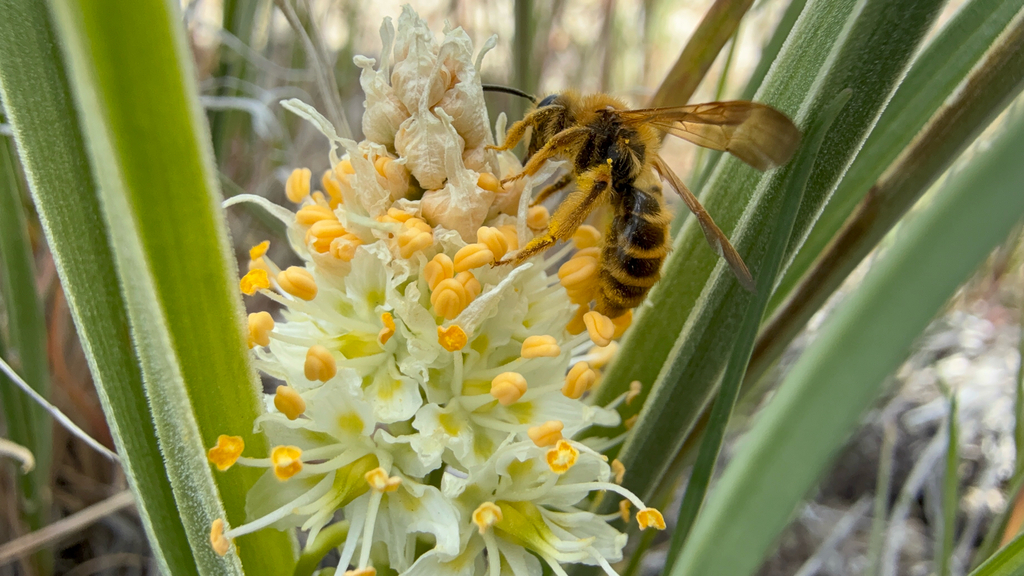
(c) Zach Earl, some rights reserved (CC BY) · licence
Family: Andrenidae · Class: Insecta · Order: Hymenoptera
Andrena aculeata (Mining bees) is a California animal in the Andrenidae family.
Andrena aculeata is a solitary mining bee in the family Andrenidae, described by LaBerge in 1980. As a member of the subgenus Andrena (Andrena), this species belongs to one of the most diverse groups of ground-nesting bees in North America. Like other Andrena species, females are robust bees with branched hairs adapted for pollen collection, though specific morphological details for A. aculeata have not been well documented in the literature. This species is endemic to the Columbia Basin region of the Pacific Northwest, where it appears to be fairly widespread despite limited collection records. The Columbia Basin encompasses portions of Washington, Oregon, and Idaho, representing a unique shrub-steppe ecosystem characterized by sagebrush communities and grasslands. According to the Xerces Society, A. aculeata has been recorded from agricultural areas, suggesting some tolerance for disturbed habitats. Like other mining bees, A. aculeata likely nests in the ground, excavating tunnels in sandy or well-drained soils where females construct individual brood cells. The species exhibits a notably long flight period and has been collected across a range of elevations within the Columbia Basin, suggesting considerable ecological flexibility. This extended activity period and elevational range indicate that A. aculeata likely forages on multiple flowering plant species throughout the growing season, though specific host plant relationships remain undocumented. Solitary mining bees typically have limited foraging ranges, with studies of related species showing maximum foraging distances of 150 to 600 meters from nest sites (Gathmann & Tscharntke 2002). Female A. aculeata likely provision their brood cells with pollen and nectar collected from various native wildflowers and possibly agricultural crops, given their documented presence in farming areas. The long flight period suggests either multivoltine reproduction or extended emergence periods adapted to the variable climate conditions of the Columbia Basin. Conservation status for A. aculeata remains uncertain due to limited biological and distributional data. The Xerces Society has classified the species as Vulnerable on their Red List, reflecting concerns about its restricted range and potential threats. Primary conservation concerns include habitat modification from agricultural intensification and land use changes within the Columbia Basin. As an endemic species already documented from disturbed agricultural habitats, A. aculeata may be particularly vulnerable to further habitat degradation and the loss of native flowering plants that likely serve as pollen sources. Research priorities for this species include comprehensive surveys to establish its current distribution and population status, identification of preferred nesting substrates and foraging plants, and assessment of threats from agricultural practices and habitat conversion. Understanding the specific ecological requirements of A. aculeata is essential for developing effective conservation strategies for this poorly known Pacific Northwest endemic. Conservation efforts should focus on maintaining diverse flowering plant communities and appropriate nesting habitats within the Columbia Basin ecosystem.
Classification
Class: Insecta · Order: Hymenoptera · Family: Andrenidae
Frequently asked questions
How is Andrena aculeata classified?
Andrena aculeata belongs to class Insecta, order Hymenoptera, family Andrenidae.
What family does Andrena aculeata belong to?
Andrena aculeata is in the Andrenidae family.
What is Andrena aculeata?
Andrena aculeata is a solitary mining bee in the family Andrenidae, described by LaBerge in 1980.
Is Andrena aculeata found in California?
Yes. Andrena aculeata is recorded in California in The California Species Project's catalogue.
Related species
Other California species in the same genus, family, or bioregion.
Data from The California Species Project — 14,000+ California species with verified data from CNPS, CDFW, USFWS, and more.