Andrena cerasifolii
Cherry Plum Mining Bee
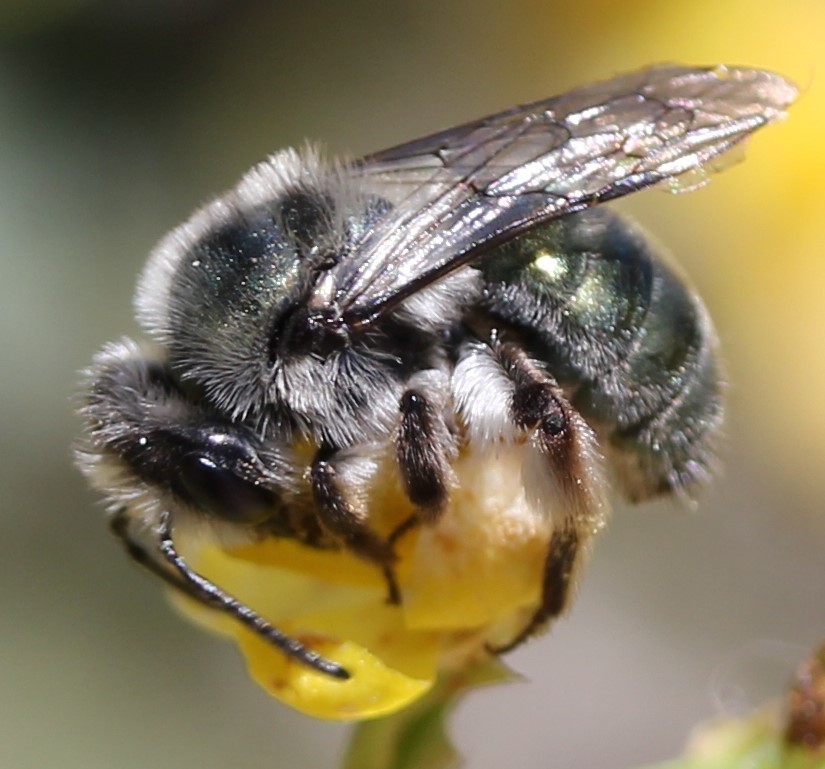
(c) Even Dankowicz, some rights reserved (CC BY) · licence
Family: Andrenidae · Class: Insecta · Order: Hymenoptera
Andrena cerasifolii (Cherry Plum Mining Bee) is a California animal in the Andrenidae family.
Andrena cerasifolii, commonly known as the cherry plum mining bee, is a solitary bee species in the family Andrenidae. This species belongs to the large genus Andrena, which comprises over 450 species of mining bees in North America. Female A. cerasifolii are typically 10-12 mm in length, with a robust, moderately hairy body characteristic of mining bees. The thorax and abdomen are covered in branched hairs (plumose setae) that aid in pollen collection. Males are generally smaller and less robust than females, with longer antennae and reduced pollen-collecting apparatus. The cherry plum mining bee occurs across western North America, with documented populations in California, Oregon, Washington, and British Columbia. In California, the species has been recorded from the Central Valley northward through the Sacramento Valley and into foothill regions. The distribution appears closely tied to areas where its primary host plants, members of the genus Prunus (cherries, plums, and related stone fruits), are present either naturally or in cultivation. This species demonstrates a strong preference for habitats supporting Prunus species, including riparian woodlands, oak woodlands with wild cherry understory, orchard edges, and suburban areas with ornamental stone fruit trees. A. cerasifolii constructs nests by excavating tunnels in well-drained soil, typically in areas with sparse vegetation or bare patches. Nesting sites are often found on gentle slopes or flat areas with sandy or loamy soil that allows for easy excavation while maintaining structural integrity (Xerces Society). As a specialist pollinator, A. cerasifolii exhibits strong fidelity to plants in the genus Prunus during its active period. Adults emerge in early spring, typically March through May, coinciding with the bloom period of wild and cultivated cherries and plums. Females collect pollen exclusively from Prunus flowers, using specialized branched hairs to gather pollen grains and pack them into scopae on their hind legs. This oligolectic behavior makes the species particularly valuable for pollinating stone fruit crops and maintaining genetic diversity in wild Prunus populations. Each female constructs individual nest tunnels 15-25 cm deep, with lateral brood cells where she deposits pollen provisions mixed with nectar and lays a single egg per cell. Like many specialist pollinators, A. cerasifolii faces conservation challenges related to habitat loss and agricultural intensification. The conversion of natural areas to development and the replacement of diverse native plant communities with monocultures reduce available nesting sites and floral resources. Pesticide use in agricultural areas poses additional threats, particularly during the spring bloom period when females are actively foraging. The species' dependence on Prunus species makes it vulnerable to changes in orchard management practices and the removal of wild cherry and plum trees from riparian and woodland areas. Conservation efforts should focus on maintaining diverse plantings of native and cultivated Prunus species and preserving suitable nesting habitat with appropriate soil conditions and minimal disturbance during the spring nesting season.
Classification
Class: Insecta · Order: Hymenoptera · Family: Andrenidae
Frequently asked questions
How is Andrena cerasifolii classified?
Andrena cerasifolii belongs to class Insecta, order Hymenoptera, family Andrenidae.
What family does Andrena cerasifolii belong to?
Andrena cerasifolii is in the Andrenidae family.
What is Andrena cerasifolii?
Andrena cerasifolii, commonly known as the cherry plum mining bee, is a solitary bee species in the family Andrenidae.
Is Andrena cerasifolii found in California?
Yes. Andrena cerasifolii is recorded in California in The California Species Project's catalogue.
Related species
Other California species in the same genus, family, or bioregion.
Data from The California Species Project — 14,000+ California species with verified data from CNPS, CDFW, USFWS, and more.