Andrena subapasta
An Andrenid Bee
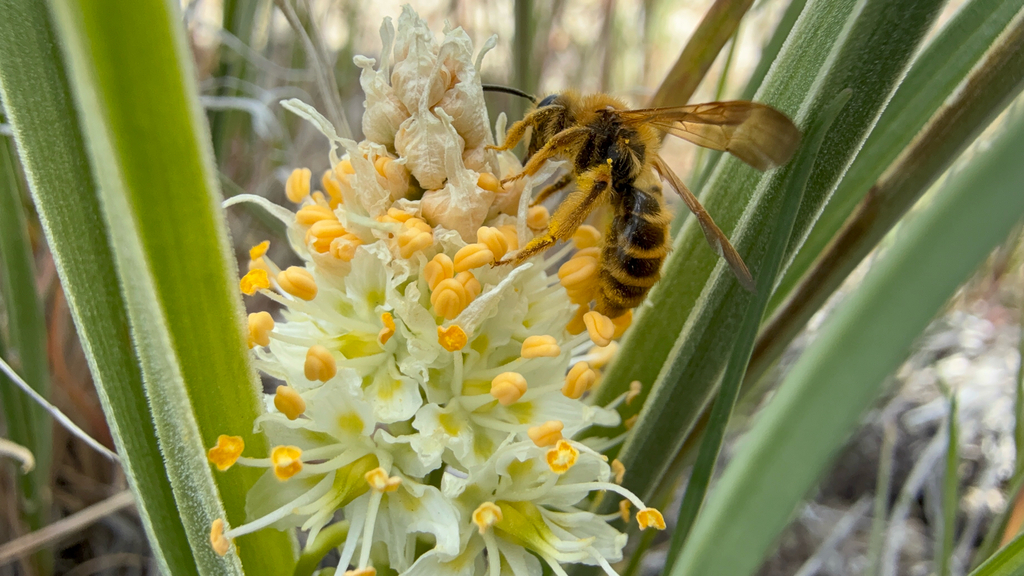
(c) Zach Earl, some rights reserved (CC BY) · licence
Family: Andrenidae · Class: Insecta · Order: Hymenoptera
Conservation status: G1G2 S1S2
Andrena subapasta (An Andrenid Bee) is a California animal in the Andrenidae family.
Andrena subapasta is a small, solitary mining bee in the family Andrenidae. As with most andrenid bees, females are the primary pollen collectors, possessing specialized branched hairs (plumose setae) on their legs and abdomen for transporting pollen. Males are typically smaller and less robust than females, with longer antennae and more slender bodies. The species exhibits the characteristic andrenid behavior of ground-nesting, with females excavating individual burrows in suitable substrate. Andrena subapasta occurs in southern California, with documented populations spanning seven counties according to the U.S. Fish and Wildlife Service: Imperial, Los Angeles, Orange, Riverside, San Bernardino, San Diego, and Ventura counties. This distribution suggests the species is adapted to the Mediterranean climate and varied topography of the region. The current range may represent either the historical distribution or a contracted range due to habitat modification. The species inhabits areas typical of southern California's diverse ecosystems, likely including coastal sage scrub, chaparral, and desert margin communities. As ground-nesting bees, Andrena subapasta females require suitable soil conditions for excavating their brood chambers. The soil must be well-drained yet stable enough to maintain tunnel integrity. Nesting sites are typically located in areas with sparse vegetation that receive adequate sun exposure for thermoregulation of developing larvae. Like other andrenid bees, Andrena subapasta is likely oligolectic or polylectic in its foraging behavior, meaning females may specialize on specific plant families or forage from a broad range of flowering plants. Based on research showing that small, short-tongued andrenid bees typically take nectar mostly from annual flowers (Xerces Society), this species likely forages on herbaceous plants rather than shrubs or trees. Females provision their underground brood cells with a mixture of pollen and nectar, creating a protein-rich food mass for developing larvae. The species probably has one generation per year, synchronized with peak flowering periods of preferred host plants. Andrena subapasta currently holds a Global/State Rank of G1G2 S1S2, indicating it is critically imperiled to imperiled both globally and within California. This ranking suggests the species faces a high risk of extinction due to extreme rarity, restricted range, or other factors. The U.S. Fish and Wildlife Service has proposed listing both Northern and Southern Distinct Population Segments as Threatened under the Endangered Species Act, though specific listing dates are pending as of December 2025. Primary threats likely include habitat loss from urbanization and agricultural conversion, particularly given the species' occurrence in rapidly developing southern California counties. Climate change may pose additional risks through altered precipitation patterns and increased temperatures affecting both the bee's biology and the flowering phenology of its host plants. The fragmentation of suitable habitat across the urbanized landscape may limit gene flow between populations and reduce the species' long-term viability.
Classification
Class: Insecta · Order: Hymenoptera · Family: Andrenidae
Conservation status
G1G2 S1S2
Frequently asked questions
How is Andrena subapasta classified?
Andrena subapasta belongs to class Insecta, order Hymenoptera, family Andrenidae.
What family does Andrena subapasta belong to?
Andrena subapasta is in the Andrenidae family.
Is Andrena subapasta protected or of conservation concern?
Andrena subapasta carries the following status: G1G2 S1S2.
What is Andrena subapasta?
Andrena subapasta is a small, solitary mining bee in the family Andrenidae.
Is Andrena subapasta found in California?
Yes. Andrena subapasta is recorded in California in The California Species Project's catalogue.
Related species
Other California species in the same genus, family, or bioregion.
Data from The California Species Project — 14,000+ California species with verified data from CNPS, CDFW, USFWS, and more.