Andricus brunneus
Clustered Gall Wasp
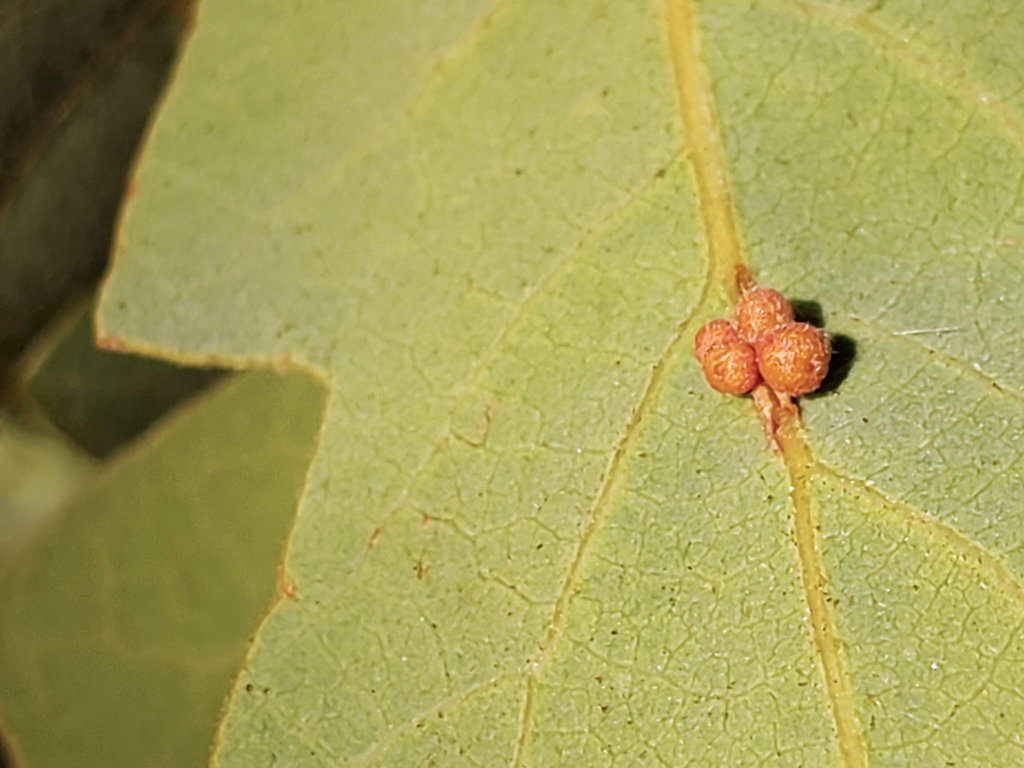
(c) Mary K. Hanson, some rights reserved (CC BY) · licence
Family: Cynipidae · Class: Insecta · Order: Hymenoptera
Andricus brunneus (Clustered Gall Wasp) is a California animal in the Cynipidae family.
Andricus brunneus is a small gall wasp in the family Cynipidae that induces distinctive galls on oak trees. Like other cynipid wasps, adults are typically 2-4 mm in length with a dark brown to black coloration and compressed body typical of the family. The species exhibits the sexual dimorphism common among gall wasps, with females possessing well-developed ovipositors for egg placement. Andricus brunneus occurs in California, where it is associated with native oak species. The species' distribution appears to be tied to the presence of suitable oak hosts, particularly in areas where Coast Live Oak (Quercus agrifolia) and Valley Oak (Quercus lobata) are present. These oak species cover much of California from coastal areas to the Sierra foothills, providing extensive potential habitat for the wasp. The species inhabits oak woodlands and mixed oak forests where host trees are present. Habitat requirements are closely linked to the distribution of compatible oak species, which thrive in Mediterranean climates with wet winters and dry summers. The wasps require healthy oak populations to complete their life cycle, as the developing larvae depend entirely on gall tissue for nutrition. Andricus brunneus exhibits the complex life cycle characteristic of cynipid gall wasps. Adult females use their specialized ovipositors to insert eggs into specific oak tissues, typically buds, stems, or developing leaves. Upon hatching, the larvae secrete chemicals that interact with plant compounds to induce gall formation (CNPS 2002). Each species of gall wasp produces a gall unique in size, shape, color, and texture, allowing for species identification based on gall morphology. The developing larvae feed on the nutritious tissue within the gall chamber, which provides both food and protection. Like many cynipids, A. brunneus may exhibit alternating sexual and asexual generations, with different generations potentially forming different gall types. The species' life cycle is intimately connected to oak phenology, with timing of egg-laying synchronized to host plant development. Adult emergence typically occurs when environmental conditions favor successful reproduction and when host plants are in appropriate developmental stages for gall induction. Andricus brunneus has no formal conservation status listing at federal or state levels. However, the species' dependence on native oak habitats means its populations may be affected by habitat loss and fragmentation that impacts California's oak woodlands. Urban development, agricultural conversion, and climate change pose ongoing challenges to oak ecosystems throughout the species' range. Conservation of oak woodlands benefits not only A. brunneus but the entire community of gall wasps and other oak-dependent species. California supports approximately 700 species of gall wasps in North America, representing a significant component of the state's biodiversity (CNPS 2021). Maintaining healthy oak populations and protecting oak woodland habitats remains important for preserving this specialized fauna.
Classification
Class: Insecta · Order: Hymenoptera · Family: Cynipidae
Frequently asked questions
How is Andricus brunneus classified?
Andricus brunneus belongs to class Insecta, order Hymenoptera, family Cynipidae.
What family does Andricus brunneus belong to?
Andricus brunneus is in the Cynipidae family.
What is Andricus brunneus?
Andricus brunneus is a small gall wasp in the family Cynipidae that induces distinctive galls on oak trees.
Is Andricus brunneus found in California?
Yes. Andricus brunneus is recorded in California in The California Species Project's catalogue.
Related species
Other California species in the same genus, family, or bioregion.
Data from The California Species Project — 14,000+ California species with verified data from CNPS, CDFW, USFWS, and more.