Andricus chrysolepidicola
Irregular Spindle Gall Wasp
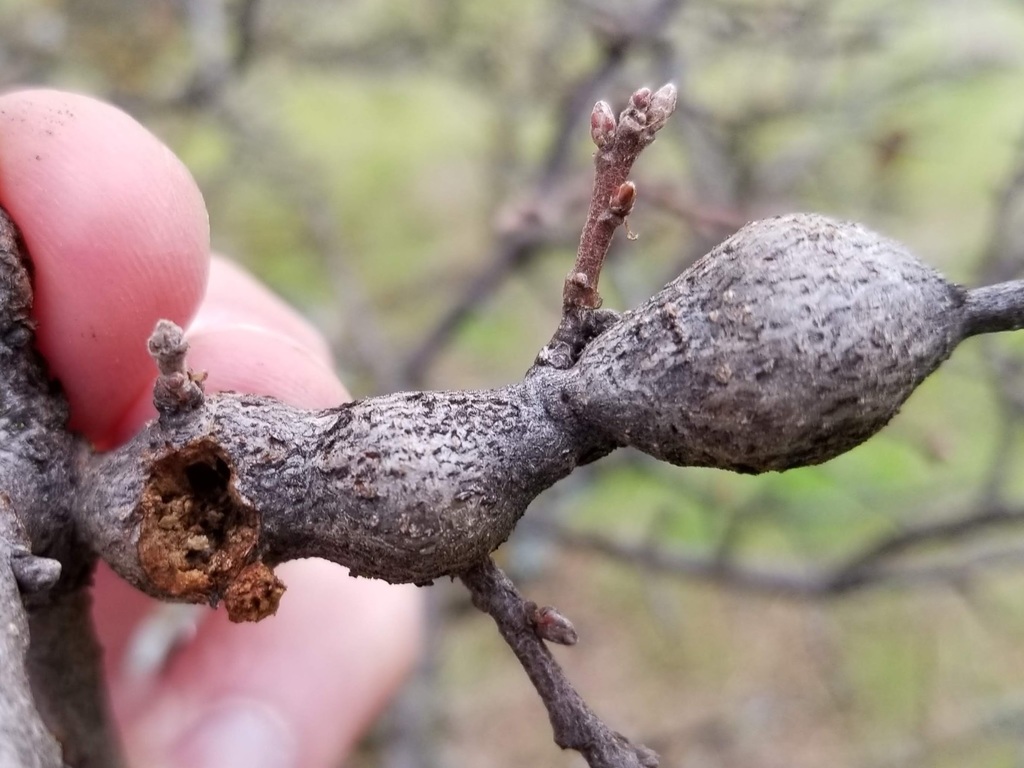
(c) Justin, some rights reserved (CC BY) · licence
Family: Cynipidae · Class: Insecta · Order: Hymenoptera
Andricus chrysolepidicola (Irregular Spindle Gall Wasp) is a California animal in the Cynipidae family.
The Irregular Spindle Gall Wasp (Andricus chrysolepidicola) is a small cynipid wasp that induces distinctive galls on California oak species. Adult wasps are typically 2-4 mm in length with the characteristic morphology of gall wasps: compact bodies, elbowed antennae, and reduced wing venation. The species exhibits sexual dimorphism, with females possessing prominent ovipositors for egg laying. This species is endemic to California, where it occurs throughout oak woodlands and chaparral habitats. The wasp has been documented in various counties across the state, from coastal ranges to interior valleys where suitable oak hosts are present. Its distribution closely follows that of its primary host plants. Andricus chrysolepidicola demonstrates strict host specificity, creating galls exclusively on California oak species. According to BugGuide, larvae have been recorded from blue oak (Quercus douglasii), valley oak (Q. lobata), scrub oak (Q. berberidifolia), and leather oak (Q. durata). The species inhabits oak woodlands, mixed evergreen forests, and chaparral communities where these oaks occur, typically at elevations ranging from sea level to approximately 1,500 meters (4,900 feet). The species exhibits a complex life cycle with two alternating generations per year: a parthenogenetic generation and a sexual generation (BugGuide). This alternating pattern, common among cynipid wasps, involves different gall morphologies and host plant locations for each generation. The irregular spindle galls that give this species its common name are typically formed on twigs or small branches of the host oak. These galls serve as both nursery and food source for developing larvae. Adult wasps emerge through small exit holes in the mature galls, with timing synchronized to host plant phenology. Females use their ovipositors to insert eggs into oak tissue, injecting chemicals that manipulate plant growth to form the characteristic galls. The developing larvae feed on nutritive tissue within the gall chamber, which the plant produces in response to wasp manipulation. This intimate plant-insect relationship represents one of the most sophisticated examples of host manipulation in the insect world. As a native California species with no federal or state conservation listing, Andricus chrysolepidicola faces typical threats associated with oak woodland habitat loss and fragmentation. Urban development, agricultural conversion, and fire management practices that reduce oak recruitment may impact local populations. However, the species' ability to utilize multiple oak hosts and its presence across diverse oak communities likely provides some resilience to localized habitat changes. Climate change impacts on oak distribution and phenology could affect this species' future distribution, particularly at the margins of its range where host plants may experience increased stress. No specific conservation measures are currently in place for this species, though oak woodland conservation efforts benefit this and many other oak-associated insects.
Classification
Class: Insecta · Order: Hymenoptera · Family: Cynipidae
Frequently asked questions
How is Andricus chrysolepidicola classified?
Andricus chrysolepidicola belongs to class Insecta, order Hymenoptera, family Cynipidae.
What family does Andricus chrysolepidicola belong to?
Andricus chrysolepidicola is in the Cynipidae family.
What is Andricus chrysolepidicola?
The Irregular Spindle Gall Wasp (Andricus chrysolepidicola) is a small cynipid wasp that induces distinctive galls on California oak species.
Is Andricus chrysolepidicola found in California?
Yes. Andricus chrysolepidicola is recorded in California in The California Species Project's catalogue.
Related species
Other California species in the same genus, family, or bioregion.
Data from The California Species Project — 14,000+ California species with verified data from CNPS, CDFW, USFWS, and more.