Andricus coquilletti
Little Oak Apple Gall Wasp
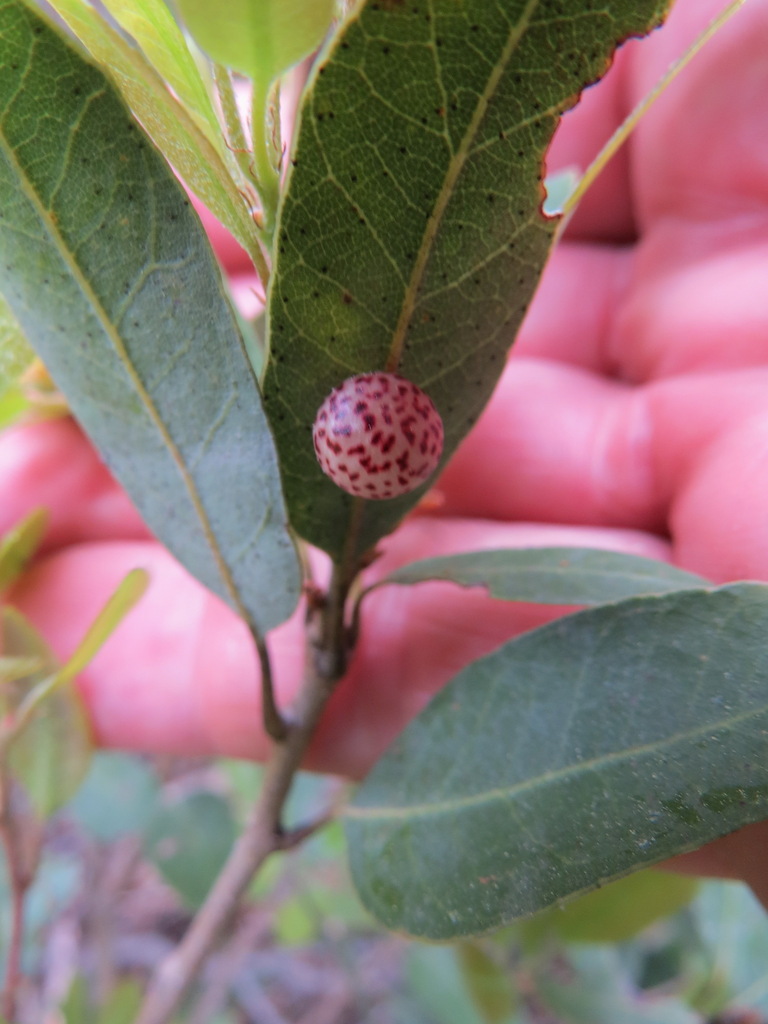
(c) Garth Harwood, some rights reserved (CC BY) · licence
Family: Cynipidae · Class: Insecta · Order: Hymenoptera
Andricus coquilletti (Little Oak Apple Gall Wasp) is a California animal in the Cynipidae family.
The little oak apple gall wasp (Andricus coquilletti) is a small parasitic wasp in the family Cynipidae that induces distinctive gall formations on oak trees. Adults are typically 2-4 mm in length with a dark brown to black body and clear wings. Females possess a prominent ovipositor used for egg deposition into oak tissue. The species exhibits sexual dimorphism, with males being smaller and less robust than females. Andricus coquilletti occurs primarily in California and the southwestern United States, with documented populations in oak woodlands throughout much of California's central and coastal regions. The species has been recorded from the Pacific Coast ranges inland to the Sierra Nevada foothills, typically at elevations below 1,500 meters. Its distribution closely follows that of its primary host plants within California's Mediterranean climate zones. This gall wasp inhabits oak woodlands and mixed oak forests, particularly areas dominated by coast live oak (Quercus agrifolia) and interior live oak (Quercus wislizeni). The species shows strong host specificity, inducing galls almost exclusively on live oak species. Suitable habitat includes both dense oak forests and more open woodland savanna environments where host oaks are present. The wasp requires healthy oak populations for successful reproduction and development. The life cycle of A. coquilletti involves the formation of characteristic small, round galls on oak leaves and young twigs. Females use their ovipositor to insert eggs into oak tissue, typically during spring months when new growth is most susceptible. The developing larvae secrete chemicals that manipulate plant growth, creating the protective gall structure that provides both shelter and nutrition. Galls appear as small, spherical swellings 3-8 mm in diameter, initially green but turning brown as they mature. Adult wasps emerge from galls in late summer or early fall, completing the annual cycle. The species exhibits typical cynipid biology, with larvae being entirely dependent on gall tissue for development. Andricus coquilletti does not appear on federal or state endangered species lists and is not considered threatened or endangered. Like many gall wasps, population dynamics are closely tied to oak forest health and availability of suitable host plants. Potential threats include habitat loss from urban development, oak woodland conversion, and climate change impacts on oak distribution. Oak sudden death syndrome and other forest pathogens could indirectly affect populations by reducing host plant availability. However, the species appears to maintain stable populations throughout much of its range where oak woodlands remain intact. Conservation of California's oak ecosystems benefits this species along with numerous other oak-associated invertebrates. The species serves as part of the complex community of gall-forming insects that contribute to oak woodland biodiversity.
Classification
Class: Insecta · Order: Hymenoptera · Family: Cynipidae
Frequently asked questions
How is Andricus coquilletti classified?
Andricus coquilletti belongs to class Insecta, order Hymenoptera, family Cynipidae.
What family does Andricus coquilletti belong to?
Andricus coquilletti is in the Cynipidae family.
What is Andricus coquilletti?
The little oak apple gall wasp (Andricus coquilletti) is a small parasitic wasp in the family Cynipidae that induces distinctive gall formations on oak trees.
Is Andricus coquilletti found in California?
Yes. Andricus coquilletti is recorded in California in The California Species Project's catalogue.
Related species
Other California species in the same genus, family, or bioregion.
Data from The California Species Project — 14,000+ California species with verified data from CNPS, CDFW, USFWS, and more.