Andricus vacciniifoliae
Golden Oak Apple Gall Wasp
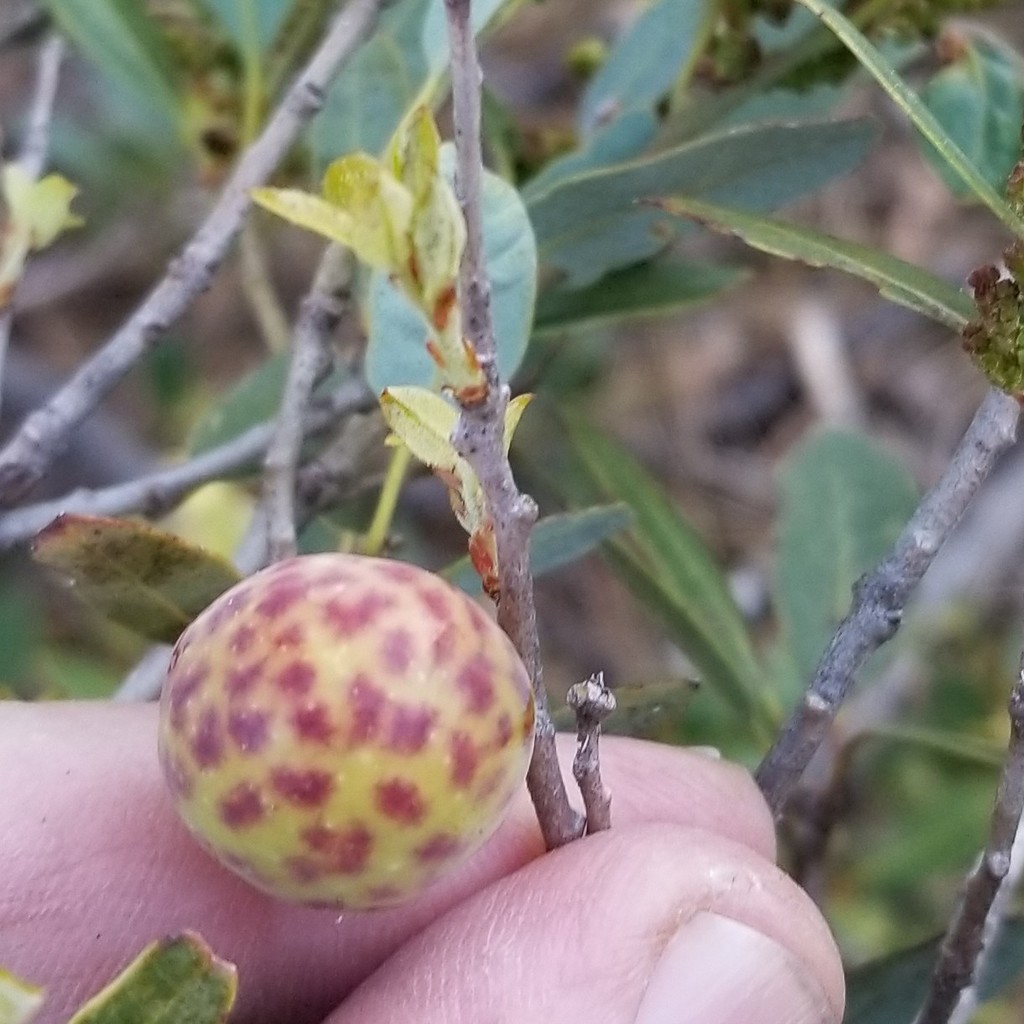
(c) Justin, some rights reserved (CC BY) · licence
Family: Cynipidae · Class: Insecta · Order: Hymenoptera
Andricus vacciniifoliae (Golden Oak Apple Gall Wasp) is a California animal in the Cynipidae family.
The Golden Oak Apple Gall Wasp (Trichoteras vacciniifoliae, formerly Andricus vacciniifoliae) is a small gall-forming hymenopteran in the family Cynipidae. This species belongs to a complex group of wasps that exhibit alternating sexual and asexual generations, with the asexual form producing the characteristic golden galls that give the species its common name. The adult wasps are small, typically measuring 2-4 mm in length, with dark bodies and clear wings. However, the species is primarily recognized by its distinctive stem galls rather than the adult insects themselves. These galls are spherical, monothalamous structures that develop on oak stems during summer months (Gallformers). The galls are bumpy, mottled, and often spotted, with a golden to reddish coloration that makes them conspicuous on the host plant. The larval chamber is located at the center of the gall, connected to the outside by a narrow channel. Trichoteras vacciniifoliae is native to the west coast of North America, with its range extending through California and potentially into adjacent western states. The species has been documented in various oak habitats throughout its range, particularly in areas supporting its specific host plants. This gall wasp demonstrates strict host specificity, creating stem galls exclusively on huckleberry oaks (Quercus vacciniifolia) and canyon live oaks (Quercus chrysolepis). The wasps carefully select specific plant tissue for oviposition, targeting young stems where the developing galls can obtain adequate nutrients from the host plant's vascular system. The galls typically appear detachable from the stem and are often mistaken for fruit due to their colorful appearance and prominent location on the plant. The species exhibits a complex life cycle characteristic of many Cynipidae, involving alternating sexual and asexual generations. Female wasps inject eggs into oak tissue using their specialized ovipositors, along with chemicals that induce the formation of the characteristic gall structure. The developing larvae feed within the protected environment of the gall, which provides both nutrition and protection from predators and environmental stressors. The galls serve as nursery chambers where the larvae complete their development before emerging as adults. Like many native gall wasps, T. vacciniifoliae plays an ecological role in oak ecosystems, though its specific conservation status has not been formally evaluated. The species appears to maintain stable populations within its natural range, though habitat loss and oak woodland fragmentation could potentially impact local populations. The wasps' strict dependence on specific oak species makes them vulnerable to changes in host plant distribution and abundance. Climate change effects on oak distribution and phenology may also influence the species' future range and population dynamics. Scientific documentation for this species remains limited compared to more extensively studied gall wasps. The information presented here is based on available sources including taxonomic databases and citizen science observations. If you have additional verified information about this species' biology, distribution, or ecology, please contact us to help improve this species account.
Classification
Class: Insecta · Order: Hymenoptera · Family: Cynipidae
Frequently asked questions
How is Andricus vacciniifoliae classified?
Andricus vacciniifoliae belongs to class Insecta, order Hymenoptera, family Cynipidae.
What family does Andricus vacciniifoliae belong to?
Andricus vacciniifoliae is in the Cynipidae family.
What is Andricus vacciniifoliae?
The Golden Oak Apple Gall Wasp (Trichoteras vacciniifoliae, formerly Andricus vacciniifoliae) is a small gall-forming hymenopteran in the family Cynipidae.
Is Andricus vacciniifoliae found in California?
Yes. Andricus vacciniifoliae is recorded in California in The California Species Project's catalogue.
Related species
Other California species in the same genus, family, or bioregion.
Data from The California Species Project — 14,000+ California species with verified data from CNPS, CDFW, USFWS, and more.