Aneflomorpha lineare
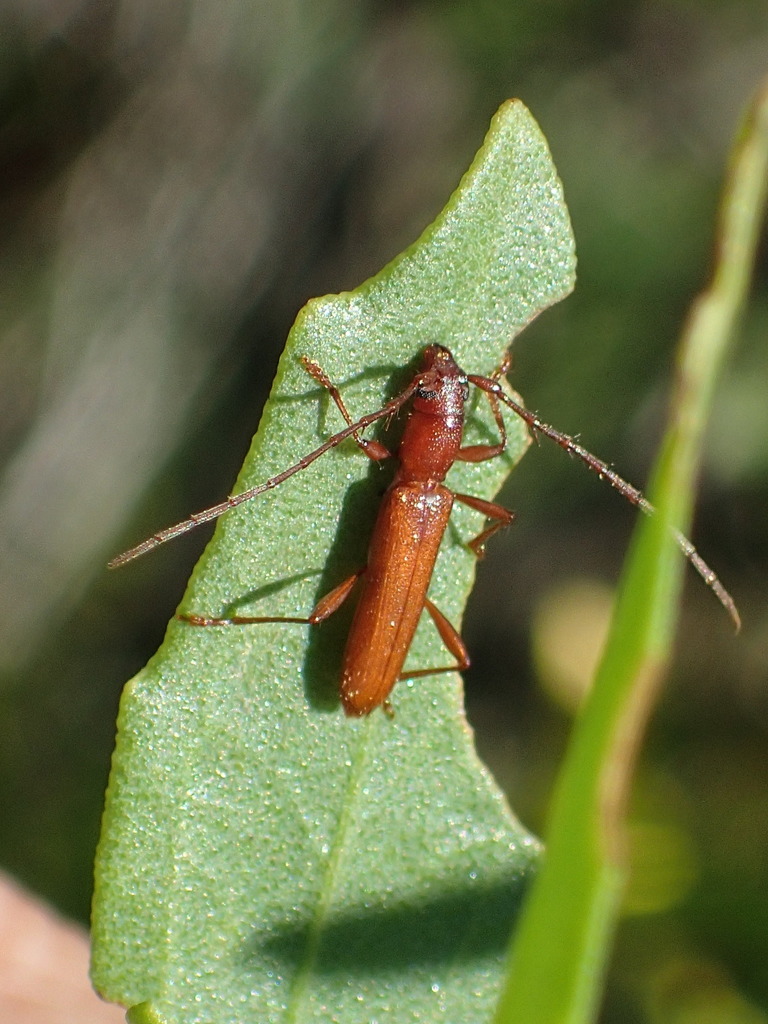
(c) John P Friel, some rights reserved (CC BY) · licence
Family: Cerambycidae · Class: Insecta · Order: Coleoptera
Aneflomorpha lineare is a California animal in the Cerambycidae family.
The antelope brush girdler (Aneflomorpha lineare) is a longhorn beetle in the family Cerambycidae, tribe Elaphidionini. As a member of the longhorn beetle family, this species likely exhibits the characteristic elongated antennae and cylindrical body typical of cerambycids, though detailed morphological descriptions are not well documented in the scientific literature. The species occurs in western North America, though specific distribution records and county-level occurrence data in California require further documentation. The common name "antelope brush girdler" suggests an association with antelope brush (Purshia tridentata), a shrub species native to the Great Basin and intermountain regions of western North America. Habitat requirements for A. lineare appear to be linked to areas supporting antelope brush communities. Antelope brush typically occurs in arid and semi-arid regions at elevations ranging from 1,200 to 2,400 meters (4,000 to 8,000 feet), in association with sagebrush steppe, pinyon-juniper woodlands, and mountain brush communities. The species likely inhabits these same ecological zones where its presumed host plant occurs. The ecology and behavior of the antelope brush girdler remain poorly studied. Based on the common name and family characteristics, larvae likely develop within the stems or branches of antelope brush, potentially girdling or creating galleries that could affect plant health. Most cerambycid beetles have wood-boring larvae that feed on living or dead plant tissues, and adults typically emerge during warmer months to mate and oviposit. Adult activity periods, mating behaviors, and specific larval development requirements have not been documented for this species. The species appears in the U.S. Fish and Wildlife Service taxonomic database, indicating it has been subject to some level of federal review or consideration. However, Aneflomorpha lineare currently has no federal listing status under the Endangered Species Act. No state-level conservation status has been assigned in California as of December 2025. The lack of comprehensive biological and ecological data makes it difficult to assess population trends or conservation needs. Primary knowledge gaps for this species include detailed morphological descriptions, precise geographic distribution, host plant relationships beyond the suggested antelope brush association, life cycle timing, and population status. The limited available information suggests this beetle may be restricted to specific habitat types that could be vulnerable to land use changes, climate change, or alterations in fire regimes that affect antelope brush communities. Scientific documentation for this species remains extremely limited despite its inclusion in federal taxonomic databases. Enhanced field surveys, taxonomic studies, and ecological research are needed to better understand the distribution, biology, and conservation status of the antelope brush girdler. We welcome contributions of verified scientific data, photographs, or field observations to improve this species account.
Classification
Class: Insecta · Order: Coleoptera · Family: Cerambycidae
Frequently asked questions
How is Aneflomorpha lineare classified?
Aneflomorpha lineare belongs to class Insecta, order Coleoptera, family Cerambycidae.
What family does Aneflomorpha lineare belong to?
Aneflomorpha lineare is in the Cerambycidae family.
What is Aneflomorpha lineare?
The antelope brush girdler (Aneflomorpha lineare) is a longhorn beetle in the family Cerambycidae, tribe Elaphidionini.
Is Aneflomorpha lineare found in California?
Yes. Aneflomorpha lineare is recorded in California in The California Species Project's catalogue.
Related species
Other California species in the same genus, family, or bioregion.
Data from The California Species Project — 14,000+ California species with verified data from CNPS, CDFW, USFWS, and more.