Annaphila astrologa
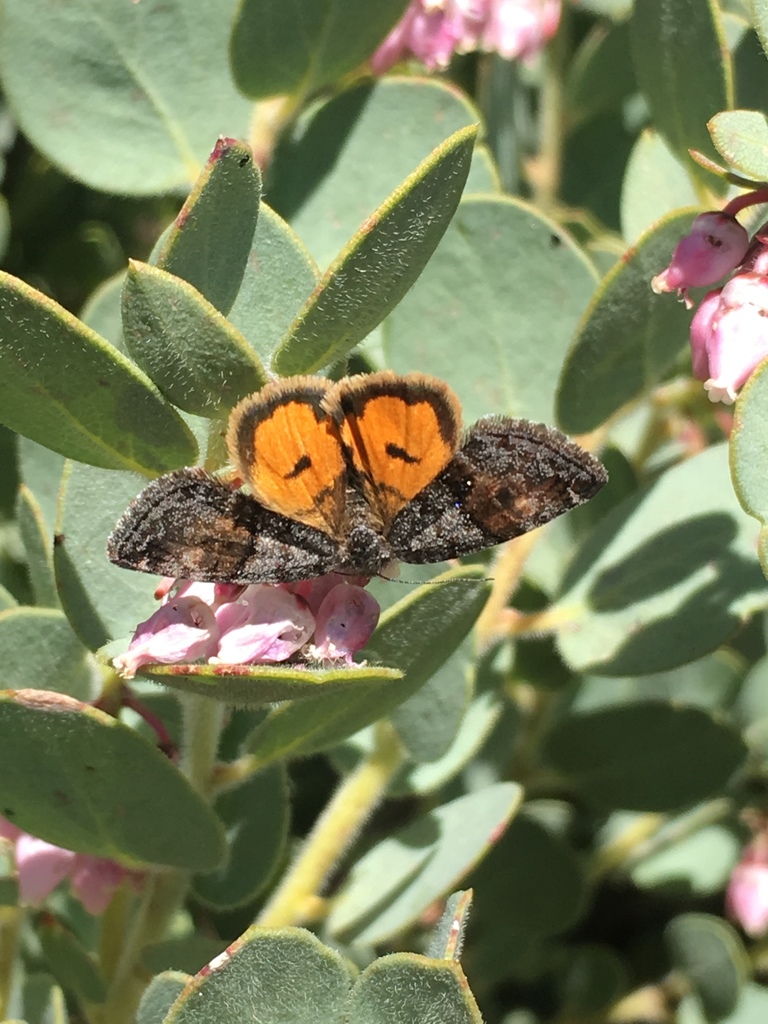
(c) Matt Berger, some rights reserved (CC BY) · licence
Family: Noctuidae · Class: Insecta · Order: Lepidoptera
Annaphila astrologa is a California animal in the Noctuidae family.
Annaphila astrologa is a moth in the family Noctuidae, commonly known as owlet moths or cutworm moths. This species belongs to a genus of noctuid moths found in western North America. Adult moths typically display the characteristic noctuidae wing pattern with forewings that are generally brownish or grayish, though specific morphological details for this species remain poorly documented in readily accessible literature. The range of Annaphila astrologa extends across southern California and southern Arizona, primarily occurring west of and above desert areas. In California, the species ranges northward to approximately the San Francisco Bay Area. This distribution pattern suggests the species occupies a transitional zone between Mediterranean climate regions and more arid desert environments, avoiding the lowest elevation desert floors while inhabiting adjacent foothills and montane areas. Habitat preferences for Annaphila astrologa likely include chaparral, oak woodlands, and mixed shrubland communities typical of the elevational zones between coastal and desert regions in southern California and Arizona. The species appears to favor areas that receive more moisture than true desert environments while remaining adapted to the semi-arid conditions characteristic of much of its range. Specific elevation ranges and microhabitat requirements have not been well-documented for this species. As with most noctuidae, Annaphila astrologa adults are likely nocturnal, with peak activity occurring during evening and nighttime hours. The moths are presumably attracted to artificial lights, a common behavior in this family. Larval stages likely feed on herbaceous plants or shrubs within their habitat, though specific host plant relationships have not been clearly established for this species. Adult flight periods and reproductive timing remain undocumented in available sources, though most noctuidae in similar climates typically have one to two generations per year, with activity peaks corresponding to favorable moisture and temperature conditions. The conservation status of Annaphila astrologa appears to be unassessed at both federal and state levels, with no current listing under the Endangered Species Act or California Endangered Species Act. The species lacks formal conservation rankings from NatureServe or the International Union for Conservation of Nature. This absence of conservation assessment may reflect either stable populations that do not warrant concern or insufficient scientific attention to evaluate population trends and threats. Given the species' range in areas subject to urban development, agriculture, and climate change impacts, population monitoring would be valuable to determine conservation needs. The moth's occurrence in both California and Arizona suggests some resilience to varying environmental conditions within its preferred habitat types, though habitat fragmentation and alteration within its range could pose potential threats to local populations.
Classification
Class: Insecta · Order: Lepidoptera · Family: Noctuidae
Frequently asked questions
How is Annaphila astrologa classified?
Annaphila astrologa belongs to class Insecta, order Lepidoptera, family Noctuidae.
What family does Annaphila astrologa belong to?
Annaphila astrologa is in the Noctuidae family.
What is Annaphila astrologa?
Annaphila astrologa is a moth in the family Noctuidae, commonly known as owlet moths or cutworm moths.
Is Annaphila astrologa found in California?
Yes. Annaphila astrologa is recorded in California in The California Species Project's catalogue.
Related species
Other California species in the same genus, family, or bioregion.
Data from The California Species Project — 14,000+ California species with verified data from CNPS, CDFW, USFWS, and more.