Anodonta oregonensis
Oregon Floater
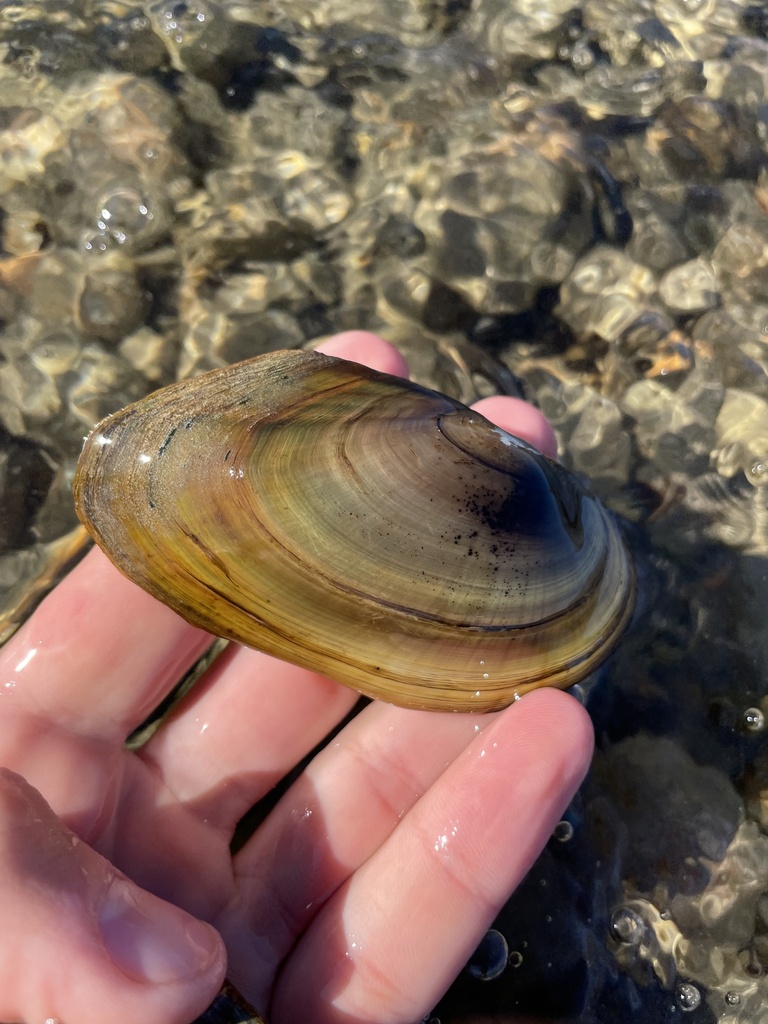
(c) Sam Turner, some rights reserved (CC BY) · licence
Family: Unionidae · Class: Bivalvia · Order: Unionoida
Conservation status: G5 S2?
Anodonta oregonensis (Oregon Floater) is a California animal in the Unionidae family.
The Oregon floater is a large freshwater mussel species native to western North America. Adult shells measure 4.75 to 7.25 inches (12 to 18.4 cm) in length, making it one of the larger freshwater mussels in the Pacific Northwest region. The shell is typically elongated and relatively thin-walled, with a smooth exterior surface that ranges from yellowish-brown to dark brown or black with age. Like other members of the genus Anodonta, the Oregon floater lacks the prominent hinge teeth found in many other mussel species, giving rise to the common name "floater." The Oregon floater occurs across multiple western states including Oregon, Washington, California, Idaho, Nevada, Utah, Arizona, and Wyoming. Within California, the species is assigned a state rank of S2?, indicating it is imperiled with 6 to 20 occurrences or few remaining individuals. The species' range includes major river systems such as the Columbia River basin, Snake River tributaries, and various coastal watersheds throughout the Pacific Northwest region. Oregon floaters inhabit fine sediment substrates in low-gradient stream reaches, lakes, reservoirs, and other still water environments. They are most commonly found buried in sand and mud bottoms where water flow is minimal or absent. On rare occasions, individuals may be encountered in streams with gravel substrates, though this habitat is less typical for the species. The mussels require stable sediment conditions and adequate water quality to support their filter-feeding lifestyle. As filter feeders, Oregon floaters obtain nutrition by drawing water through their gills and extracting suspended organic matter, phytoplankton, and detritus. Like other freshwater mussels, they have a complex reproductive cycle that involves a larval stage called glochidia, which must parasitize fish hosts to complete development. The specific fish host species utilized by Oregon floaters have not been thoroughly documented, though native fish species within their range likely serve this essential function. Adults are long-lived, potentially surviving several decades under favorable conditions. Recent taxonomic research has revealed significant genetic complexity within western Anodonta species, with DNA studies identifying multiple deeply divided lineages (Brim Box et al. 2008). The Oregon floater is now grouped with the western floater (Anodonta kennerlyi) in what researchers term "Anodonta Clade 2," distinct from the California floater and winged floater complex. According to IUCN Red List assessments, the Oregon floater clade has been assigned a status of "Least Concern," though this designation reflects limited available data rather than population abundance (Xerces Society 2020). The species faces ongoing threats from habitat modification, water diversions, dam construction, and water quality degradation. In California, the S2? ranking suggests the species may be at risk of extirpation from the state, highlighting the need for targeted surveys and conservation measures to better understand and protect remaining populations.
Classification
Class: Bivalvia · Order: Unionoida · Family: Unionidae
Conservation status
G5 S2?
Frequently asked questions
How is Anodonta oregonensis classified?
Anodonta oregonensis belongs to class Bivalvia, order Unionoida, family Unionidae.
What family does Anodonta oregonensis belong to?
Anodonta oregonensis is in the Unionidae family.
Is Anodonta oregonensis protected or of conservation concern?
Anodonta oregonensis carries the following status: G5 S2?.
What is Anodonta oregonensis?
The Oregon floater is a large freshwater mussel species native to western North America.
Is Anodonta oregonensis found in California?
Yes. Anodonta oregonensis is recorded in California in The California Species Project's catalogue.
Related species
Other California species in the same genus, family, or bioregion.
Data from The California Species Project — 14,000+ California species with verified data from CNPS, CDFW, USFWS, and more.