Anser albifrons
Greater White-fronted Goose
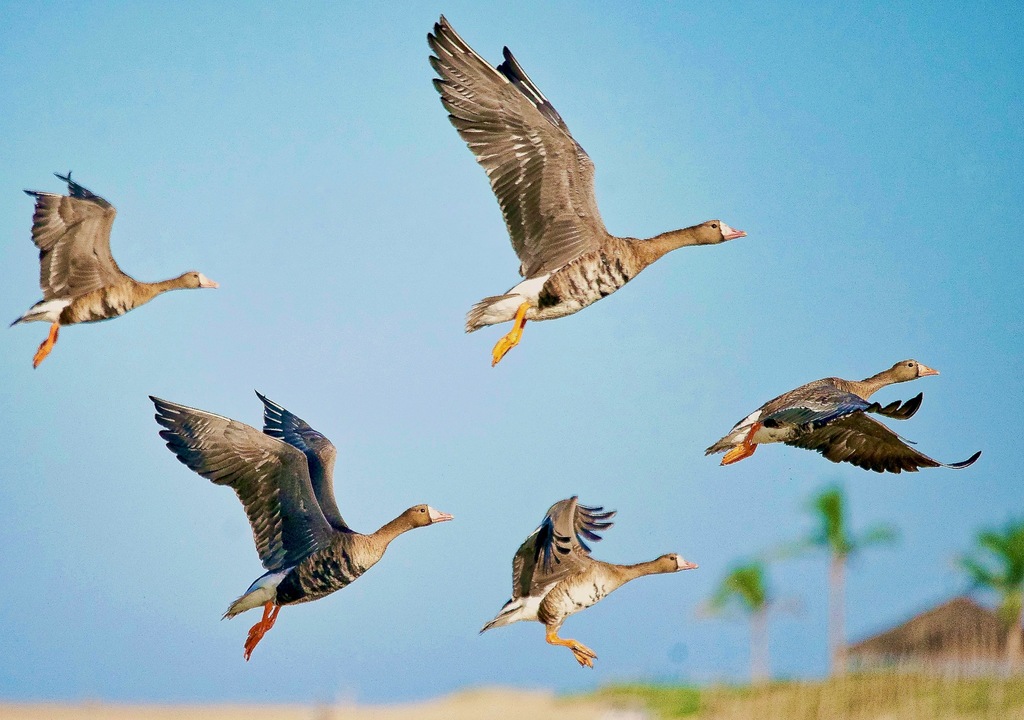
(c) Bill Levine, some rights reserved (CC BY) · licence
Family: Anatidae · Class: Aves · Order: Anseriformes
Anser albifrons (Greater White-fronted Goose) is a California animal in the Anatidae family.
The Greater White-fronted Goose (Anser albifrons) is a medium-sized waterfowl species measuring 64-81 cm (25-32 inches) in length with a wingspan of 130-165 cm (51-65 inches). Adults weigh 1.9-3.3 kg (4.2-7.3 pounds). The species is characterized by its distinctive white patch at the base of the bill, extending onto the forehead, which gives the species its common name. The bill is pink to orange-pink, and legs are orange. Adults display variable dark barring on the underparts, with irregular black patches on the belly and breast. The overall plumage is grayish-brown dorsally, with darker flight feathers visible in flight. Juveniles lack the white facial patch and ventral barring, appearing more uniformly brown. The Greater White-fronted Goose breeds across the Arctic tundra of Alaska, northern Canada, Greenland, and Eurasia. In California, the species is a common winter visitor and migrant, occurring throughout the Central Valley, coastal areas, and northeastern regions from October through March. Major wintering concentrations occur in the Sacramento Valley, San Joaquin Valley, and Imperial Valley. The species utilizes the Pacific Flyway during migration, with peak numbers typically observed in November and February. Fall migration through California begins in early October, while spring departure occurs primarily between late February and mid-March. Wintering habitat consists primarily of agricultural areas, particularly flooded rice fields, harvested grain fields, and managed wetlands. The species forages extensively in post-harvest rice fields where waste grain is abundant, and benefits from traditional flooding practices that create ideal foraging conditions. The species also utilizes shallow water areas including seasonal wetlands, ponds, and irrigation ditches. Roosting occurs on large water bodies such as reservoirs, lakes, and wildlife refuges. During migration, Greater White-fronted Geese utilize a variety of aquatic habitats from sea level to approximately 1,500 meters elevation. Greater White-fronted Geese are highly gregarious outside the breeding season, forming flocks of hundreds to thousands of individuals. The species exhibits a mixed diet, foraging on aquatic vegetation, agricultural grains (particularly rice and barley), and shoots of grasses and sedges. Foraging occurs primarily during early morning and late afternoon hours. The species typically feeds by dabbling and grazing, both in water and on land. Breeding occurs on Arctic tundra, where pairs construct nests in shallow depressions lined with down and vegetation. Females lay 3-7 eggs with an incubation period of 27-28 days. The Greater White-fronted Goose is not federally or state listed and maintains stable to increasing populations continent-wide. According to the U.S. Fish and Wildlife Service, the midcontinent population estimate exceeds 1.2 million birds. The Pacific population, which includes birds wintering in California, numbers approximately 650,000 individuals. Primary conservation concerns include habitat loss from agricultural conversion and urban development, particularly in wintering areas. Climate change may affect breeding habitat availability in Arctic regions. The species benefits from waterfowl management programs and the North American Waterfowl Management Plan, which supports habitat conservation and restoration efforts across the flyway.
Classification
Class: Aves · Order: Anseriformes · Family: Anatidae
Frequently asked questions
How is Anser albifrons classified?
Anser albifrons belongs to class Aves, order Anseriformes, family Anatidae.
What family does Anser albifrons belong to?
Anser albifrons is in the Anatidae family.
What is Anser albifrons?
The Greater White-fronted Goose (Anser albifrons) is a medium-sized waterfowl species measuring 64-81 cm (25-32 inches) in length with a wingspan of 130-165 cm (51-65 inches).
Is Anser albifrons found in California?
Yes. Anser albifrons is recorded in California in The California Species Project's catalogue.
Related species
Other California species in the same genus, family, or bioregion.
Data from The California Species Project — 14,000+ California species with verified data from CNPS, CDFW, USFWS, and more.