Anser albifrons ssp. elgasi
Tule Greater White-fronted Goose
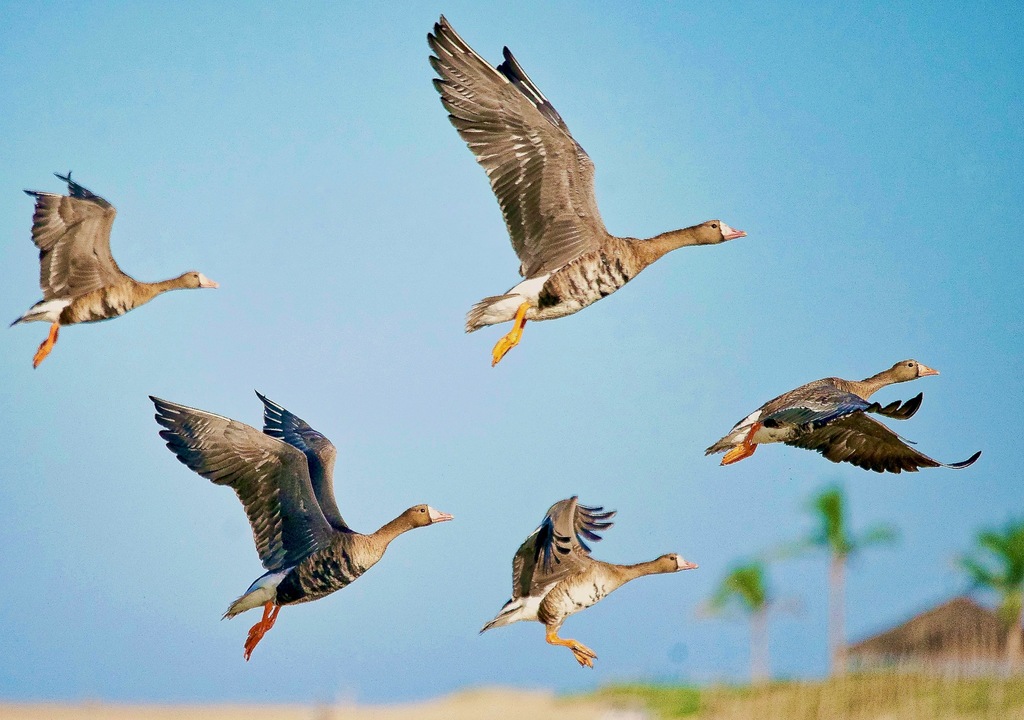
(c) Bill Levine, some rights reserved (CC BY) · licence
Family: Anatidae · Class: Aves · Order: Anseriformes
Conservation status: G5T2 S2S3
Anser albifrons ssp. elgasi (Tule Greater White-fronted Goose) is a California animal in the Anatidae family.
The Tule Greater White-fronted Goose (Anser albifrons subsp. elgasi) is a large subspecies of the Greater White-fronted Goose endemic to the Pacific Coast of North America. Adults measure 64 to 81 cm (25 to 32 inches) in length with a wingspan of 130 to 165 cm (51 to 65 inches). Body weight ranges from 1.8 to 3.2 kg (4.0 to 7.1 pounds). The subspecies is distinguished from other Greater White-fronted Goose populations by its larger size, darker plumage, and more extensive white facial patches. The bill is pink to orange with a pale tip, and adults display characteristic irregular black barring on the underparts. The white frontal patch extends higher on the forehead compared to other subspecies. The Tule Greater White-fronted Goose breeds in a limited range along the coast of western Alaska, primarily in the Yukon-Kuskokwim Delta and Bristol Bay regions. The subspecies winters almost exclusively in California's Central Valley, with the majority concentrated in the Sacramento Valley. Small numbers also winter in the San Joaquin Valley and occasionally in Oregon's Willamette Valley. According to the Pacific Flyway Management Plan, over 95% of the global population winters in California. During winter, the subspecies primarily inhabits flooded rice fields, seasonal wetlands, and managed waterfowl areas in the Central Valley. Preferred habitats include shallow flooded agricultural fields with waste grain, freshwater marshes, and adjacent grasslands used for roosting and feeding. The species requires open water for roosting and foraging areas with abundant food resources. Elevation range during winter is typically below 200 meters (656 feet). Tule Greater White-fronted Geese are herbivorous, feeding on waste rice, barley, and other grains in agricultural fields during winter. They also consume aquatic vegetation, grasses, and sedges. The breeding season occurs from May through August in Alaska, with females laying 3 to 6 eggs in ground nests lined with down and vegetation. Incubation lasts approximately 27 to 28 days. The species exhibits strong site fidelity to both breeding and wintering areas. Fall migration begins in September, with birds arriving in California from October through November. The subspecies has a NatureServe conservation rank of G5T2, indicating it is imperiled globally with a high risk of extinction. The California rank of S2S3 reflects its imperiled to vulnerable status in the state. Population surveys conducted by the California Department of Fish and Wildlife indicate the subspecies has declined significantly since the 1980s. The most recent estimates suggest a population of approximately 10,000 to 12,000 individuals. Primary threats include habitat loss from agricultural conversion, drought affecting wetland availability, and hunting pressure. Climate change poses additional risks through altered precipitation patterns and habitat degradation. Conservation efforts focus on maintaining flooded rice fields and restoring wetland habitats in the Central Valley through programs such as the North American Waterfowl Management Plan partnerships.
Classification
Class: Aves · Order: Anseriformes · Family: Anatidae
Conservation status
G5T2 S2S3
Frequently asked questions
How is Anser albifrons ssp. elgasi classified?
Anser albifrons ssp. elgasi belongs to class Aves, order Anseriformes, family Anatidae.
What family does Anser albifrons ssp. elgasi belong to?
Anser albifrons ssp. elgasi is in the Anatidae family.
Is Anser albifrons ssp. elgasi protected or of conservation concern?
Anser albifrons ssp. elgasi carries the following status: G5T2 S2S3.
What is Anser albifrons ssp. elgasi?
The Tule Greater White-fronted Goose (Anser albifrons subsp.
Is Anser albifrons ssp. elgasi found in California?
Yes. Anser albifrons ssp. elgasi is recorded in California in The California Species Project's catalogue.
Related species
Other California species in the same genus, family, or bioregion.
Data from The California Species Project — 14,000+ California species with verified data from CNPS, CDFW, USFWS, and more.