Anser caerulescens
Snow Goose
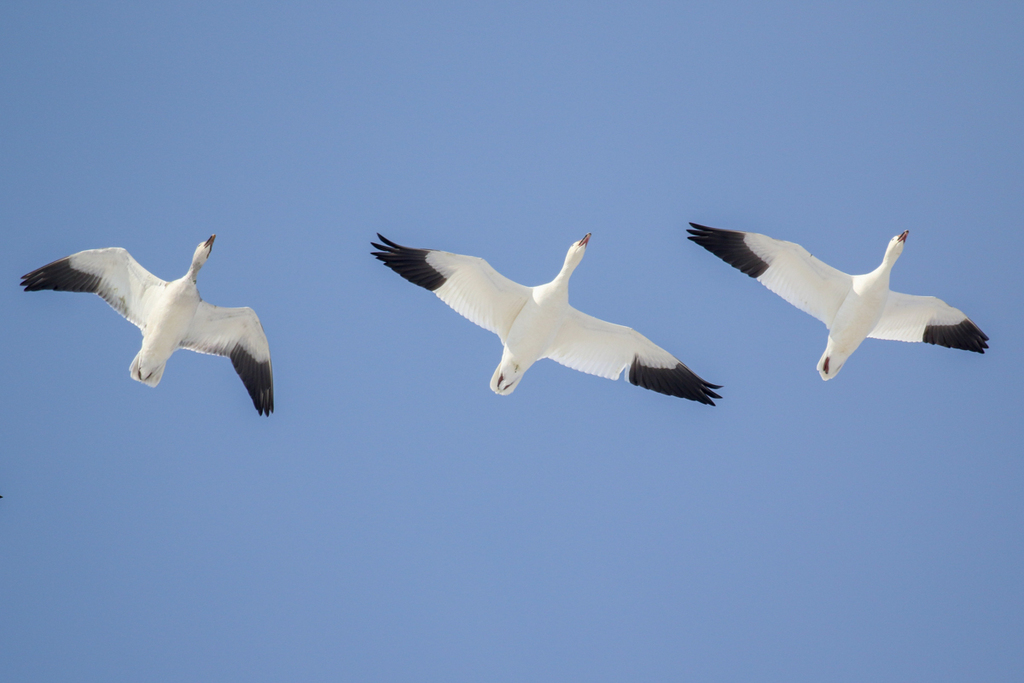
(c) Tom Field, some rights reserved (CC BY) · licence
Family: Anatidae · Class: Aves · Order: Anseriformes
Anser caerulescens (Snow Goose) is a California animal in the Anatidae family.
The Snow Goose is a medium-sized waterfowl species measuring 64-79 cm (25-31 inches) in length with a wingspan of 135-165 cm (53-65 inches). Adults weigh 2.05-2.7 kg (4.5-6.0 pounds). Two distinct color morphs occur: the white morph displays entirely white plumage except for black wingtips, while the blue morph exhibits a white head and neck with a dark grayish-blue body and wings. Both morphs have pink bills with black cutting edges, pink legs and feet, and dark eyes. Juveniles are duller with grayish plumage and dark bills, lacking the distinctive pink coloration of adults. Snow Geese breed across the Arctic tundra of Alaska, northern Canada, and northeastern Siberia. During migration and winter, they utilize Pacific, Central, and Atlantic flyways. In California, Snow Geese are abundant winter visitors from October through March, concentrating in the Central Valley, particularly the Sacramento Valley and San Joaquin Valley. Major wintering areas include the Sacramento National Wildlife Refuge, Colusa National Wildlife Refuge, and surrounding agricultural lands. Smaller numbers winter along the coast and in southern California coastal wetlands. This species inhabits shallow wetlands, agricultural fields, and coastal marshes during winter. In California, Snow Geese primarily utilize flooded rice fields, managed wetlands, and seasonal pools. They prefer areas with water depths of 5-25 cm (2-10 inches) for feeding and roosting. During breeding season, they nest on Arctic tundra near ponds and lakes, typically on elevated areas with good visibility for predator detection. Snow Geese are highly gregarious, forming flocks of thousands during migration and winter. They are primarily grazers, feeding on roots, shoots, and leaves of aquatic plants, as well as waste grain in agricultural fields. In California, they extensively utilize harvested rice fields, gleaning remaining grain and feeding on young green shoots. Breeding occurs from May through July on Arctic nesting grounds, with females laying 3-5 white eggs in ground nests lined with down and vegetation. Incubation lasts 22-25 days, and young fledge after 40-45 days. Snow Goose populations experienced dramatic increases during the latter half of the 20th century, leading to concerns about overabundance rather than conservation. The North American population exceeded 15 million birds by 2015, according to the North American Bird Conservation Initiative. This population growth has resulted in habitat degradation on Arctic breeding grounds and conflicts with agriculture in wintering areas. In response, hunting regulations have been liberalized in many jurisdictions to reduce population size and minimize agricultural damage. The species is not federally or state listed and is classified as Least Concern by the International Union for Conservation of Nature. Climate change poses potential future threats through alterations to Arctic breeding habitat and shifting precipitation patterns affecting wetland availability in wintering areas.
Classification
Class: Aves · Order: Anseriformes · Family: Anatidae
Frequently asked questions
How is Anser caerulescens classified?
Anser caerulescens belongs to class Aves, order Anseriformes, family Anatidae.
What family does Anser caerulescens belong to?
Anser caerulescens is in the Anatidae family.
What is Anser caerulescens?
The Snow Goose is a medium-sized waterfowl species measuring 64-79 cm (25-31 inches) in length with a wingspan of 135-165 cm (53-65 inches).
Is Anser caerulescens found in California?
Yes. Anser caerulescens is recorded in California in The California Species Project's catalogue.
Related species
Other California species in the same genus, family, or bioregion.
Data from The California Species Project — 14,000+ California species with verified data from CNPS, CDFW, USFWS, and more.