Anser fabalis
Taiga Bean-Goose
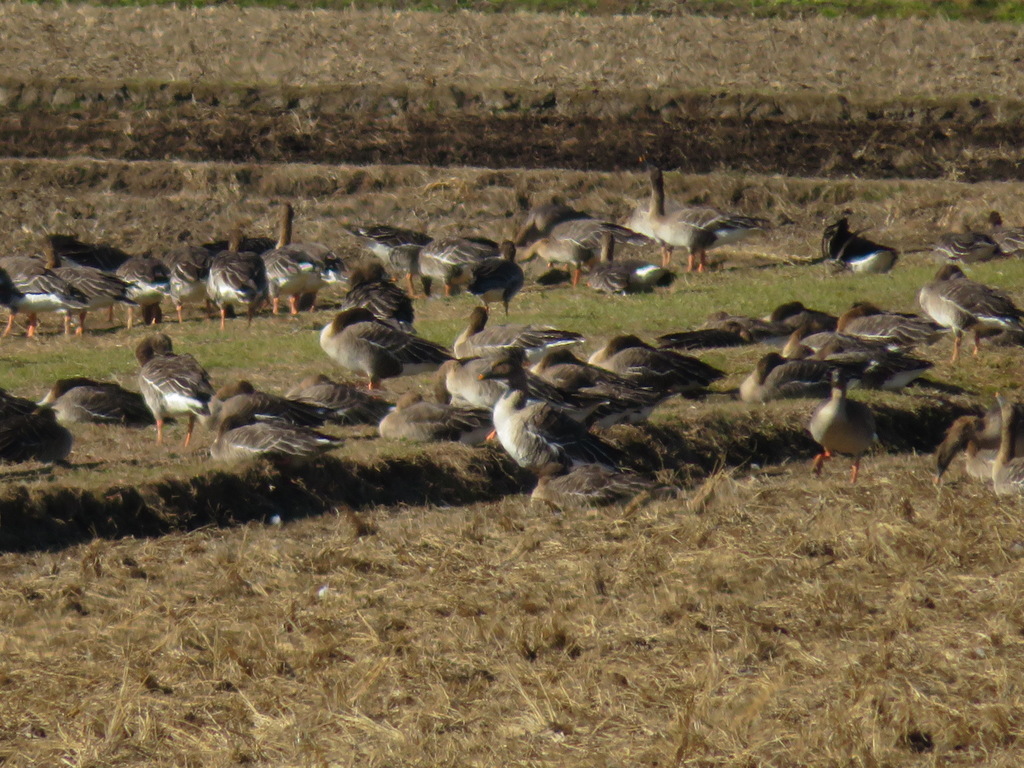
(c) Marco Mussita, some rights reserved (CC BY) · licence
Family: Anatidae · Class: Aves · Order: Anseriformes
Anser fabalis (Taiga Bean-Goose) is a California animal in the Anatidae family.
The Taiga Bean-Goose (Anser fabalis) is a large waterfowl species and one of two subspecies groups collectively known as bean geese. Adults measure 68 to 90 cm (27 to 35 inches) in length with a wingspan of 147 to 175 cm (58 to 69 inches). Body weight ranges from 2.5 to 4.0 kg (5.5 to 8.8 pounds), with males typically larger than females. The species displays brownish-gray plumage with darker brown head and neck, and a distinctive orange-yellow bill marked by a black nail and variable black banding. The legs and feet are orange-yellow. In flight, the species shows dark brown wings with pale gray wing coverts and a distinctive white rump patch. The Taiga Bean-Goose breeds across the boreal forests of northern Eurasia, from Scandinavia east through Siberia to the Pacific coast. During winter, populations migrate to temperate regions of Europe and Asia. In North America, the species occurs as a rare vagrant, with documented sightings in Alaska, primarily in the western Aleutian Islands and Bering Sea region. California records are extremely rare, with fewer than five documented occurrences in the state, primarily along the central and northern coast during winter months. Breeding habitat consists of wooded tundra, forest-tundra ecotone, and northern boreal forests near wetlands, lakes, and rivers. The species prefers areas with scattered trees and open water for foraging and nesting. During migration and winter, Taiga Bean-Geese utilize agricultural fields, grasslands, coastal mudflats, and freshwater marshes. Wintering birds show strong preference for grain fields, particularly those containing wheat, barley, and corn stubble. Taiga Bean-Geese are primarily grazers, feeding on grasses, sedges, and aquatic vegetation during the breeding season. Winter diet shifts to include agricultural grains, roots, and tubers. The species exhibits strong social behavior, forming large flocks during migration and winter that may contain hundreds to thousands of individuals. Breeding occurs from May to July, with pairs constructing ground nests lined with down and vegetation near water. Females lay 3 to 6 eggs with an incubation period of 27 to 29 days. Goslings fledge after 56 to 63 days and remain with parents through their first winter. The global population is estimated at 600,000 to one million individuals, with the species classified as Least Concern by the International Union for Conservation of Nature. However, some regional populations face pressure from habitat loss, hunting, and climate change effects on breeding grounds. In North America, the species' rarity makes it a noteworthy vagrant, with sightings typically generating significant interest among the birding community. California occurrences are documented through citizen science platforms and rare bird alert systems, though confirmed records require careful documentation due to potential confusion with other goose species.
Classification
Class: Aves · Order: Anseriformes · Family: Anatidae
Frequently asked questions
How is Anser fabalis classified?
Anser fabalis belongs to class Aves, order Anseriformes, family Anatidae.
What family does Anser fabalis belong to?
Anser fabalis is in the Anatidae family.
What is Anser fabalis?
The Taiga Bean-Goose (Anser fabalis) is a large waterfowl species and one of two subspecies groups collectively known as bean geese.
Is Anser fabalis found in California?
Yes. Anser fabalis is recorded in California in The California Species Project's catalogue.
Related species
Other California species in the same genus, family, or bioregion.
Data from The California Species Project — 14,000+ California species with verified data from CNPS, CDFW, USFWS, and more.