Anstenoptilia marmarodactyla
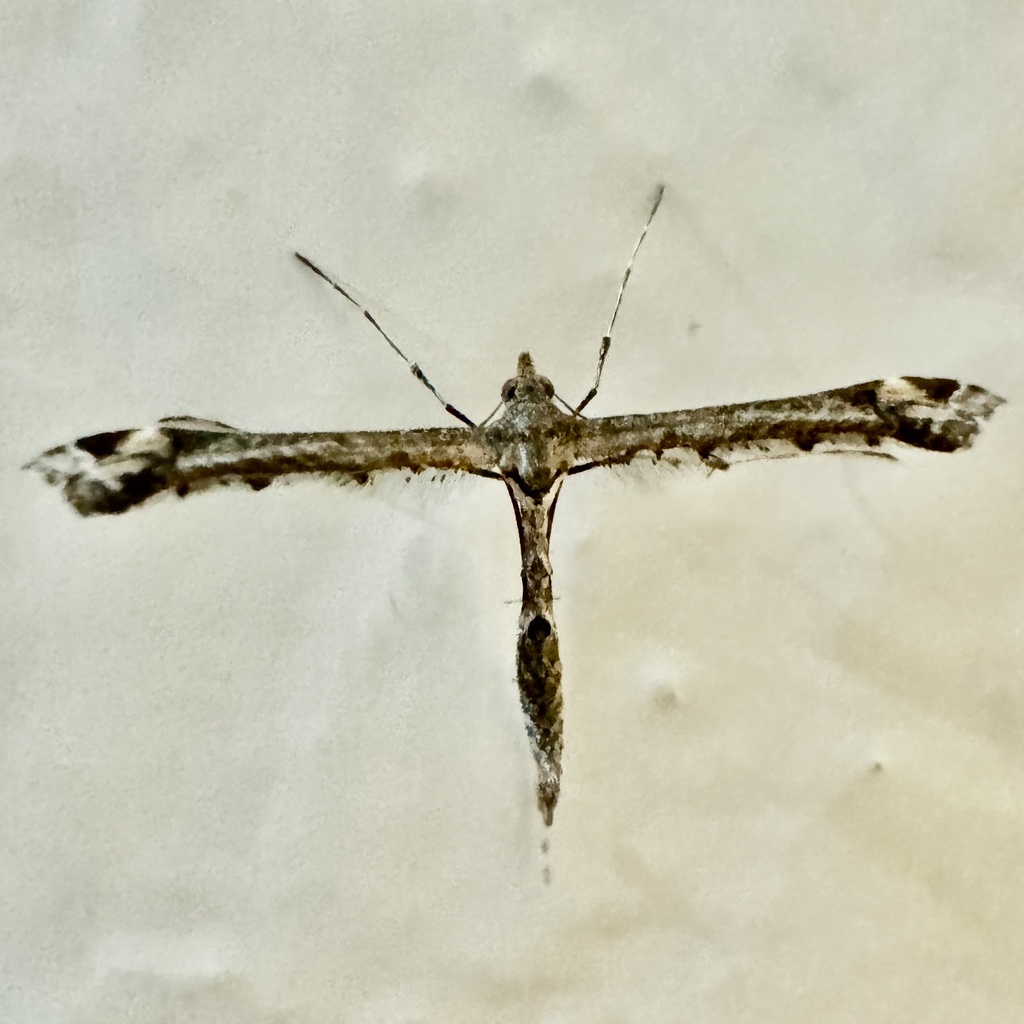
(c) Karen Offereins, some rights reserved (CC BY) · licence
Family: Pterophoridae · Class: Insecta · Order: Lepidoptera
Anstenoptilia marmarodactyla is a California animal in the Pterophoridae family.
Anstenoptilia marmarodactyla is a plume moth in the family Pterophoridae, characterized by the deeply divided wings typical of this family. Like other pterophorid moths, the forewings are split into two distinct plumes and the hindwings into three plumes, giving the appearance of multiple feathery segments rather than solid wing surfaces. The moth displays mottled grayish-brown coloration with darker markings that provide effective camouflage when resting on plant surfaces. Adult wingspan typically ranges from 15 to 20 millimeters (0.6 to 0.8 inches), consistent with other North American Anstenoptilia species. This species occurs in California, where it is associated with native mint family plants in the Lamiaceae. The moth's distribution likely corresponds to the ranges of its documented host plants, Monardella villosa (coyote mint) and Salvia spathacea (hummingbird sage), which occur in coastal sage scrub, chaparral, and oak woodland habitats throughout much of California. Monardella villosa is found from sea level to 2,100 meters (6,900 feet) elevation in the Coast Ranges, Sierra Nevada foothills, and southern California mountains, while Salvia spathacea occurs primarily in coastal areas from Santa Barbara County south to Baja California. The species inhabits areas where its host plants grow naturally, including coastal sage scrub, chaparral, oak woodlands, and mixed evergreen forests. These environments typically feature Mediterranean climate conditions with dry summers and wet winters. The moth likely occupies elevations from near sea level to approximately 2,100 meters, corresponding to the altitudinal range of its primary host plants. Microhabitat preferences probably include areas with partial shade and moderate moisture where mint family plants thrive. Larvae of A. marmarodactyla feed exclusively on native California members of the mint family (Lamiaceae). The HOSTS Caterpillar Hostplant Database documents only two confirmed foodplants: Monardella villosa and Salvia spathacea. However, the species could potentially utilize other native Lamiaceae species within its range, as many pterophorid moths show some flexibility in host plant selection within their preferred plant families. Adult moths are likely active during evening and night hours, as is typical for most plume moths. Specific details regarding flight periods, mating behavior, and overwintering stages have not been well documented for this species. The conservation status of Anstenoptilia marmarodactyla has not been formally assessed at federal or state levels. The species does not appear on current California or federal endangered species lists. However, like many specialized herbivorous insects, it may face threats from habitat loss and fragmentation in areas where coastal sage scrub and chaparral communities have been converted to urban development or agriculture. The continued availability of its native host plants is crucial for population persistence, making conservation of California's native plant communities important for this species' long-term survival.
Classification
Class: Insecta · Order: Lepidoptera · Family: Pterophoridae
Frequently asked questions
How is Anstenoptilia marmarodactyla classified?
Anstenoptilia marmarodactyla belongs to class Insecta, order Lepidoptera, family Pterophoridae.
What family does Anstenoptilia marmarodactyla belong to?
Anstenoptilia marmarodactyla is in the Pterophoridae family.
What is Anstenoptilia marmarodactyla?
Anstenoptilia marmarodactyla is a plume moth in the family Pterophoridae, characterized by the deeply divided wings typical of this family.
Is Anstenoptilia marmarodactyla found in California?
Yes. Anstenoptilia marmarodactyla is recorded in California in The California Species Project's catalogue.
Related species
Other California species in the same genus, family, or bioregion.
Data from The California Species Project — 14,000+ California species with verified data from CNPS, CDFW, USFWS, and more.