Antaeotricha manzanitae
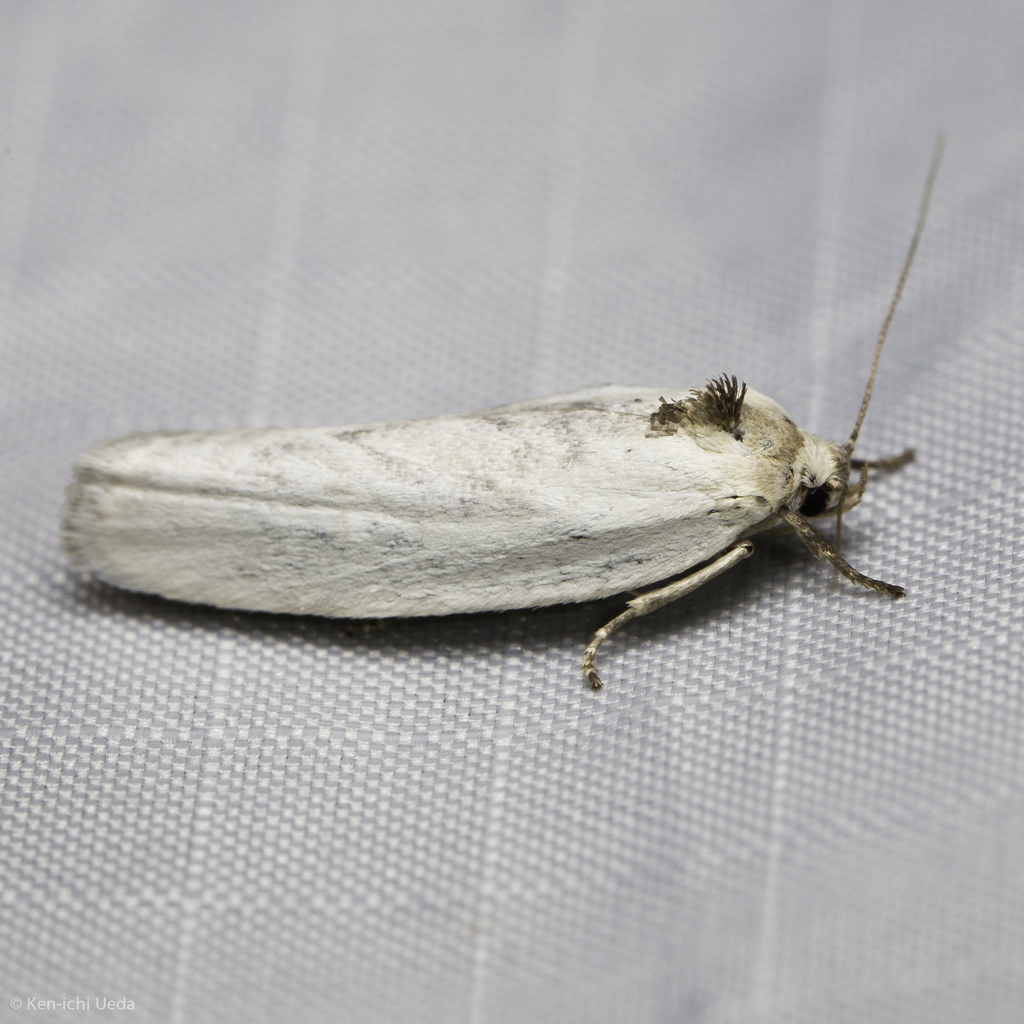
(c) Ken-ichi Ueda, some rights reserved (CC BY) · licence
Family: Depressariidae · Class: Insecta · Order: Lepidoptera
Antaeotricha manzanitae is a California animal in the Depressariidae family.
Antaeotricha manzanitae is a small moth species in the family Depressariidae, one of the microlepidoptera groups characterized by narrow forewings and reduced hindwings. Adults typically measure 8 to 12 mm in wingspan, with forewings displaying muted earth tones ranging from gray-brown to reddish-brown. The forewings often exhibit subtle patterns of darker scaling or faint longitudinal streaks, though coloration can vary among individuals. The hindwings are typically paler, appearing whitish to light gray with long fringes characteristic of the family. Antennae are simple in both sexes, and the head bears a covering of scales that may contrast with the forewing coloration. The species is endemic to California, where it appears to have a limited distribution associated with its host plant requirements. Based on its scientific name and taxonomic placement within Antaeotricha, this moth likely occurs in regions where manzanita species are prevalent, including foothill and montane areas of the Coast Ranges and Sierra Nevada. The genus Antaeotricha contains numerous species with specialized host plant relationships, many of which have restricted ranges corresponding to their host plant distributions. Antaeotricha manzanitae inhabits chaparral and woodland ecosystems where manzanita shrubs are dominant or co-dominant vegetation components. These habitats typically occur at elevations ranging from 300 to 1,800 meters, in areas characterized by Mediterranean climate patterns with dry summers and mild, wet winters. The species likely requires intact chaparral communities with mature manzanita stands, as host plant quality and availability directly influence population viability in specialized herbivorous insects. As with other members of the genus, Antaeotricha manzanitae likely exhibits a close ecological relationship with manzanita species (Arctostaphylos spp.). Larvae probably develop as leaf miners or stem borers within manzanita tissues, following feeding patterns typical of elachistid moths. Adult flight periods are presumably synchronized with optimal host plant phenology and may occur during spring or early summer months when manzanita produces new growth. Development likely requires one year to complete, with larvae overwintering in host plant tissues or pupae in soil or plant debris. The conservation status of Antaeotricha manzanitae remains poorly documented, with no federal or state listing designations currently assigned. However, the species' apparent dependence on manzanita ecosystems may render it vulnerable to habitat loss and fragmentation. Chaparral communities face ongoing threats from urban development, altered fire regimes, invasive plant species, and climate change impacts. The conversion of native chaparral to residential or agricultural uses has eliminated substantial manzanitae habitat throughout California's coastal and inland regions. Additionally, fire suppression policies may alter natural succession patterns that maintain optimal manzanita community structure. Climate change poses long-term risks through altered precipitation patterns and increased drought stress on host plants, potentially affecting both plant vigor and moth reproductive success.
Classification
Class: Insecta · Order: Lepidoptera · Family: Depressariidae
Frequently asked questions
How is Antaeotricha manzanitae classified?
Antaeotricha manzanitae belongs to class Insecta, order Lepidoptera, family Depressariidae.
What family does Antaeotricha manzanitae belong to?
Antaeotricha manzanitae is in the Depressariidae family.
What is Antaeotricha manzanitae?
Antaeotricha manzanitae is a small moth species in the family Depressariidae, one of the microlepidoptera groups characterized by narrow forewings and reduced hindwings.
Is Antaeotricha manzanitae found in California?
Yes. Antaeotricha manzanitae is recorded in California in The California Species Project's catalogue.
Related species
Other California species in the same genus, family, or bioregion.
Data from The California Species Project — 14,000+ California species with verified data from CNPS, CDFW, USFWS, and more.