Anteaeolidiella chromosoma
Colorful Aeolid
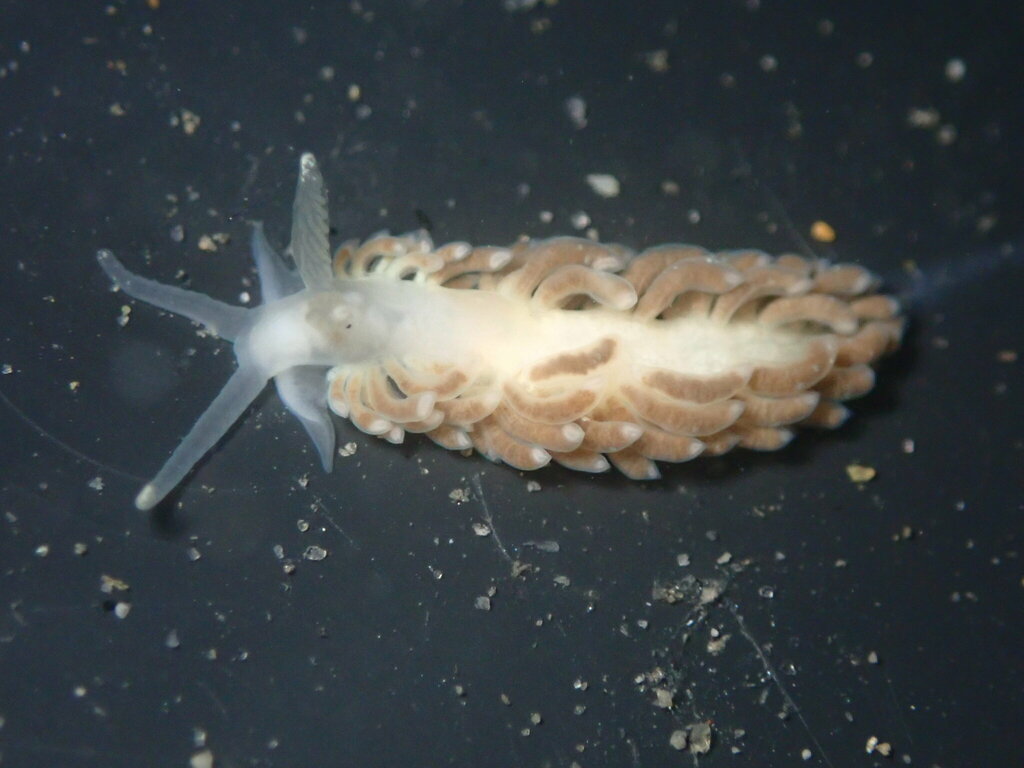
(c) Cricket Raspet, some rights reserved (CC BY) · licence
Family: Aeolidiidae · Class: Gastropoda · Order: Nudibranchia
Anteaeolidiella chromosoma (Colorful Aeolid) is a California animal in the Aeolidiidae family.
The colorful aeolid (Anteaeolidiella chromosoma) is a small marine nudibranch gastropod mollusk in the family Aeolidiidae. This sea slug exhibits the characteristic elongated body form typical of aeolid nudibranchs, with numerous finger-like projections called cerata extending from the dorsal surface. The cerata contain extensions of the digestive system and typically display vibrant coloration patterns that give this species its common name, though specific morphological details and size measurements have not been well documented in the scientific literature. The range and distribution of Anteaeolidiella chromosoma remain poorly documented. As a member of the diverse nudibranch fauna found along the Pacific Coast, this species likely occurs in California's marine waters, though specific geographic boundaries and population distributions have not been thoroughly surveyed. The limited taxonomic and ecological research on this species reflects the broader challenge of documenting the region's rich but understudied nudibranch diversity. Habitat preferences for this colorful aeolid have not been extensively studied. Like other aeolid nudibranchs, the species likely inhabits rocky intertidal and subtidal environments where it can access its preferred prey items. Many aeolids are found among algae, hydroids, and other marine organisms that serve as both habitat structure and food sources. The specific depth range, substrate preferences, and microhabitat requirements for A. chromosoma remain undocumented. Behavioral and ecological information for Anteaeolidiella chromosoma is extremely limited. Most aeolid nudibranchs are carnivorous, feeding primarily on cnidarians such as hydroids, anemones, and other soft-bodied invertebrates. Some species can sequester stinging cells (nematocysts) from their cnidarian prey into specialized structures in their cerata, using them for defense. Reproductive behavior likely follows the typical nudibranch pattern of being simultaneous hermaphrodites that engage in reciprocal mating, depositing eggs in gelatinous ribbons or masses. However, specific dietary preferences, feeding behavior, reproductive timing, and larval development patterns for this species have not been documented. Anteaeolidiella chromosoma does not appear on any federal or state endangered species lists, and its conservation status has not been formally assessed. The lack of population data, distribution information, and ecological studies makes it impossible to determine whether this species faces any conservation concerns. As with many marine invertebrates, potential threats could include habitat degradation, pollution, climate change effects on ocean chemistry and temperature, and coastal development impacts. The species' apparent rarity in collections and limited scientific documentation may reflect either genuine scarcity, cryptic behavior, or insufficient survey effort in appropriate habitats. Detailed ecological studies of this species are lacking. The above information synthesizes available taxonomic data and general knowledge of aeolid biology. We welcome contributions of verified scientific data, photographs, or field observations to enhance this species account.
Classification
Class: Gastropoda · Order: Nudibranchia · Family: Aeolidiidae
Frequently asked questions
How is Anteaeolidiella chromosoma classified?
Anteaeolidiella chromosoma belongs to class Gastropoda, order Nudibranchia, family Aeolidiidae.
What family does Anteaeolidiella chromosoma belong to?
Anteaeolidiella chromosoma is in the Aeolidiidae family.
What is Anteaeolidiella chromosoma?
The colorful aeolid (Anteaeolidiella chromosoma) is a small marine nudibranch gastropod mollusk in the family Aeolidiidae.
Is Anteaeolidiella chromosoma found in California?
Yes. Anteaeolidiella chromosoma is recorded in California in The California Species Project's catalogue.
Related species
Other California species in the same genus, family, or bioregion.
Data from The California Species Project — 14,000+ California species with verified data from CNPS, CDFW, USFWS, and more.