Anteaeolidiella oliviae
Olive's Aeolid
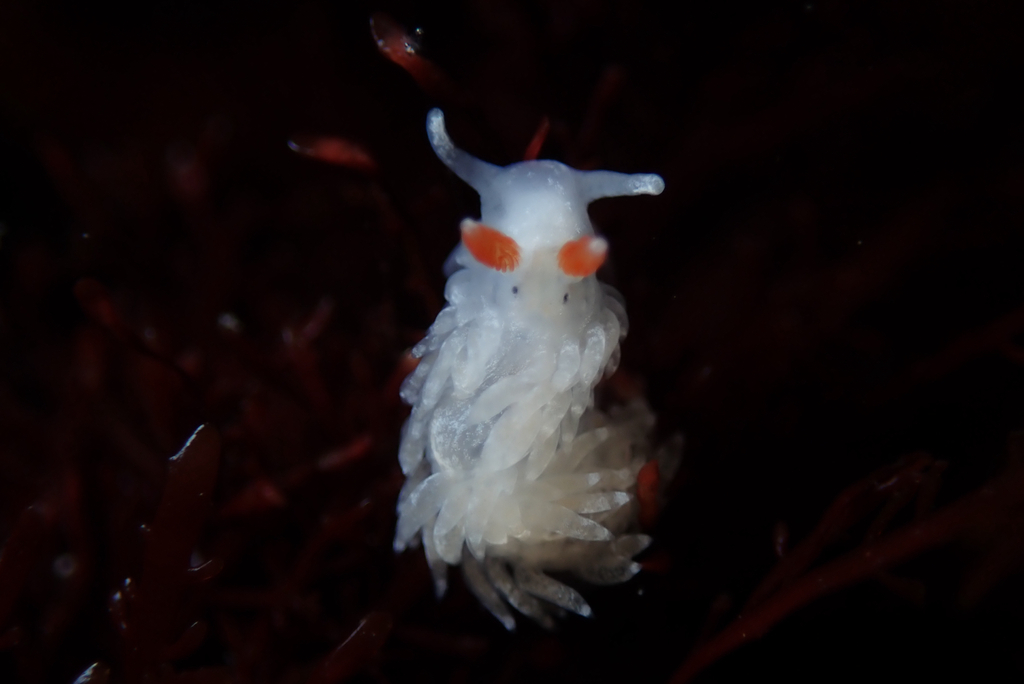
(c) Eric Klug, some rights reserved (CC BY) · licence
Family: Aeolidiidae · Class: Gastropoda · Order: Nudibranchia
Anteaeolidiella oliviae (Olive's Aeolid) is a California animal in the Aeolidiidae family.
Anteaeolidiella oliviae, commonly known as Olive's Aeolid, is a small marine nudibranch mollusk belonging to the family Aeolidiidae. This sea slug species exhibits the characteristic body plan of aeolidiid nudibranchs, with an elongated body bearing numerous finger-like projections called cerata along the dorsal surface. The cerata contain extensions of the digestive system and are used for both digestion and gas exchange. Like other members of its family, this species lacks a shell as an adult and possesses two pairs of tentacles on the head region: oral tentacles near the mouth and rhinophores that serve as chemosensory organs. The distribution and range of Anteaeolidiella oliviae have not been comprehensively documented in the scientific literature. Based on available taxonomic records, this species appears to occur in marine waters along the California coast, though specific localities and the full extent of its range remain poorly characterized. The species was described as part of the diverse nudibranch fauna found in California's marine ecosystems, which support numerous endemic and specialized gastropod species. Like other aeolidiid nudibranchs, Olive's Aeolid likely inhabits rocky intertidal and subtidal environments where its prey organisms are abundant. These sea slugs typically occur on hard substrates including rocky surfaces, kelp holdfasts, and other marine structures that support cnidarian communities. The specific depth range and microhabitat preferences of this species have not been well documented in the available literature. Aeolidiid nudibranchs are specialized predators that feed primarily on cnidarians, particularly hydroids and small anemones. They possess a specialized ability to sequester undischarged nematocysts (stinging cells) from their cnidarian prey and transfer them to the tips of their cerata for defensive purposes. This kleptocnidae behavior allows them to use their prey's own defensive weapons for protection against potential predators. The feeding behavior, reproductive biology, and life cycle details of Anteaeolidiella oliviae specifically have not been extensively studied. The conservation status of Anteaeolidiella oliviae has not been formally assessed by federal or state agencies. The species does not appear on current endangered species lists or state species of special concern designations as of December 2025. However, like many marine invertebrates with limited distribution data, the species may face threats from coastal development, pollution, and climate change impacts on marine ecosystems. Ocean acidification and warming waters pose particular concerns for calcifying marine organisms and their associated prey communities. Detailed ecological studies of this species are lacking. The above information synthesizes available taxonomic and general aeolidiid biology from scientific databases. Additional field research is needed to better understand the distribution, habitat requirements, and conservation needs of Olive's Aeolid. We welcome contributions of verified scientific data, photographs, or field observations to enhance this species account.
Classification
Class: Gastropoda · Order: Nudibranchia · Family: Aeolidiidae
Frequently asked questions
How is Anteaeolidiella oliviae classified?
Anteaeolidiella oliviae belongs to class Gastropoda, order Nudibranchia, family Aeolidiidae.
What family does Anteaeolidiella oliviae belong to?
Anteaeolidiella oliviae is in the Aeolidiidae family.
What is Anteaeolidiella oliviae?
Anteaeolidiella oliviae, commonly known as Olive's Aeolid, is a small marine nudibranch mollusk belonging to the family Aeolidiidae.
Is Anteaeolidiella oliviae found in California?
Yes. Anteaeolidiella oliviae is recorded in California in The California Species Project's catalogue.
Related species
Other California species in the same genus, family, or bioregion.
Data from The California Species Project — 14,000+ California species with verified data from CNPS, CDFW, USFWS, and more.