Anthanassa texana
Texan Crescent
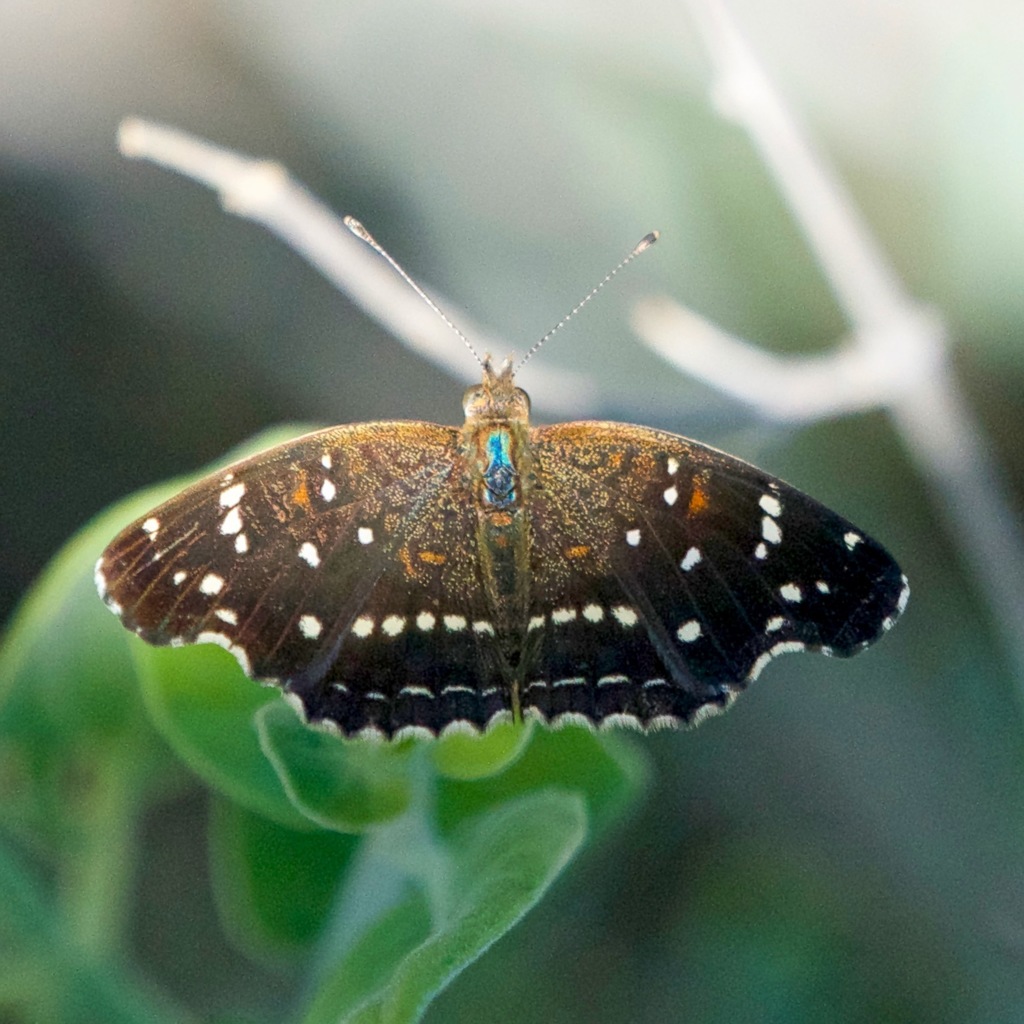
(c) Bill Levine, some rights reserved (CC BY) · licence
Family: Nymphalidae · Class: Insecta · Order: Lepidoptera
Anthanassa texana (Texan Crescent) is a California animal in the Nymphalidae family.
The Texan Crescent (Anthanassa texana) is a small to medium-sized butterfly in the family Nymphalidae. Adults have a wingspan of 32-44 mm (1.3-1.7 inches). The dorsal wing surfaces are predominantly orange-brown with distinctive black markings, including a prominent black border along the wing margins and irregular black patches across the forewings. The ventral surfaces display a pale orange to cream coloration with intricate patterns of dark lines and white crescents that give the species its common name. Males typically show more vibrant coloration than females, with darker, more contrasted markings. The species ranges from Guatemala north through Mexico to southern California, extending east across the southern United States to northern Florida, Georgia, and South Carolina. Strays have been recorded as far north as Arkansas, Missouri, Illinois, South Dakota, and central Nevada. In California, the Texan Crescent occurs primarily in the southern regions, including the Sonoran Desert areas of Imperial and Riverside counties, with occasional records extending north along the Colorado River valley. Texan Crescents inhabit arid and semi-arid regions, including desert washes, riparian areas, gardens, and disturbed habitats where their host plants grow. The species occupies elevations from sea level to approximately 1,500 meters (4,900 feet). They prefer areas with scattered vegetation and are commonly found in urban and suburban environments where ornamental acanthus family plants are cultivated. Adults are active year-round in warmer climates, with multiple generations occurring annually. In California's desert regions, peak activity typically occurs during spring months when temperatures are moderate and host plants are most abundant. Males are territorial and establish perching sites on low shrubs or other vegetation, from which they patrol for females and chase away intruders. The species feeds primarily on flower nectar, favoring lantana, desert willow, and other desert-adapted flowering plants. Reproduction involves females laying eggs singly on young shoots and leaves of host plants in the acanthus family (Acanthaceae), including Ruellia, Jacobina, Beloperone, and Siphonoglossa species. Larvae are dark-colored with rows of branched spines and feed exclusively on these host plants. Development from egg to adult takes approximately 30-35 days under optimal conditions, allowing for multiple generations per year in suitable climates. The Texan Crescent is not federally or state-listed and appears to maintain stable populations throughout most of its range. The species benefits from urban development in some areas due to the cultivation of ornamental acanthus family plants in gardens and landscaping. However, habitat modification and the removal of native host plants in desert regions may impact local populations. Climate change and prolonged drought conditions could affect the availability of host plants and suitable breeding habitat in marginal areas of the species' range.
Classification
Class: Insecta · Order: Lepidoptera · Family: Nymphalidae
Frequently asked questions
How is Anthanassa texana classified?
Anthanassa texana belongs to class Insecta, order Lepidoptera, family Nymphalidae.
What family does Anthanassa texana belong to?
Anthanassa texana is in the Nymphalidae family.
What is Anthanassa texana?
The Texan Crescent (Anthanassa texana) is a small to medium-sized butterfly in the family Nymphalidae.
Is Anthanassa texana found in California?
Yes. Anthanassa texana is recorded in California in The California Species Project's catalogue.
Related species
Other California species in the same genus, family, or bioregion.
Data from The California Species Project — 14,000+ California species with verified data from CNPS, CDFW, USFWS, and more.