Anthicus antiochensis
Antioch Dunes Anthicid Beetle
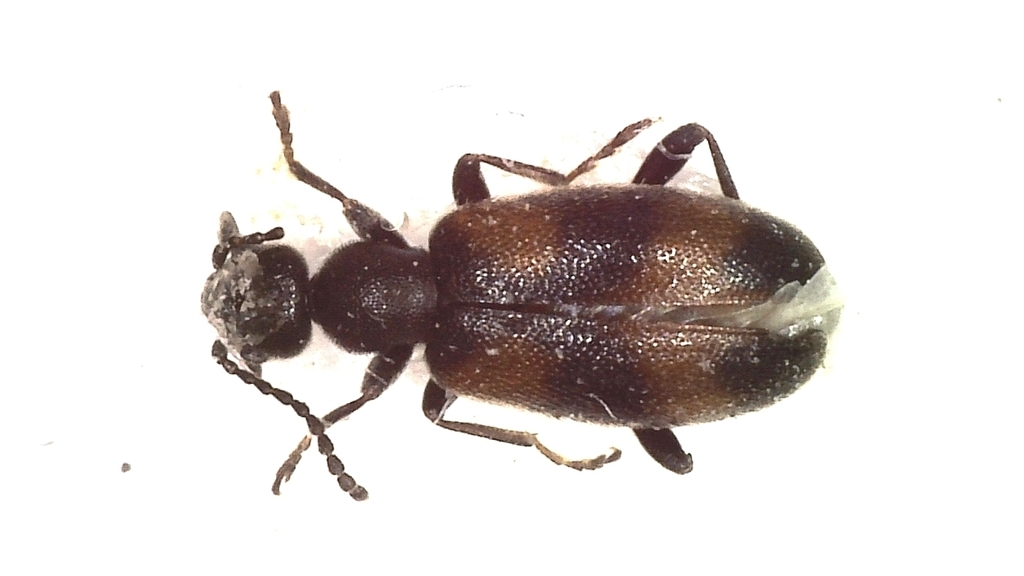
(c) Олег Кудров, some rights reserved (CC BY) · licence
Family: Anthicidae · Class: Insecta · Order: Coleoptera
Conservation status: G3 S3
Anthicus antiochensis (Antioch Dunes Anthicid Beetle) is a California animal in the Anthicidae family.
The Antioch Dunes anthicid beetle (Anthicus antiochensis) is a small ground-dwelling beetle endemic to the San Francisco Bay Delta region of California. Adult beetles measure approximately 2-4 millimeters in length and exhibit the characteristic elongated thorax typical of the Anthicidae family. The species displays a dark brown to black coloration with a somewhat metallic sheen, and possesses the distinctive "ant-like" appearance common to anthicid beetles, with a constricted connection between the thorax and abdomen. Historically, this species was thought to be restricted to the Antioch Dunes area in Contra Costa County, but subsequent surveys have revealed a broader distribution. The beetle now occurs at several locations along the Sacramento and San Joaquin Rivers and throughout the San Francisco Bay Delta region (NatureServe). Recent documentation includes observations from the Sacramento River near Grand Island in Solano County, where it occurs on upland sandy areas alongside the Sacramento anthicid beetle (CDFW). The species inhabits loose, drifting sand deposits between dunes and sandy areas adjacent to tidal marshes and riverine systems. According to historical surveys, the beetles specifically occupy troughs of loose drifting sand between dunes, suggesting a preference for dynamic sand environments (USFWS 1978). These sandy substrates are typically found in proximity to estuarine and riverine habitats throughout the Delta region, where wind and water action create the shifting sand conditions the species requires. Detailed ecological information for this species remains limited in the scientific literature. As members of the Anthicidae family, these beetles are likely predatory or scavenging in nature, feeding on small arthropods, organic debris, or fungal material within their sandy habitat. The species' reproductive biology, seasonal activity patterns, and specific dietary preferences have not been well documented in available research. Their occurrence in sandy substrates suggests they may be adapted to the temperature extremes and moisture fluctuations characteristic of exposed sand environments. The Antioch Dunes anthicid beetle currently holds a conservation status of Species of Concern with the U.S. Fish and Wildlife Service, indicating that while not federally listed, the species faces potential conservation challenges (USFWS ECOS database). The species carries a global and state rank of G3 S3, indicating it is vulnerable both globally and within California. Primary threats likely include habitat loss and modification of Delta ecosystems, sand mining activities, and urban development pressures in the San Francisco Bay area. The dynamic nature of sandy habitats makes this species particularly vulnerable to human disturbance and alterations to natural sediment transport processes. Conservation efforts for Delta ecosystems may provide indirect benefits, though species-specific management strategies have not been well developed.
Classification
Class: Insecta · Order: Coleoptera · Family: Anthicidae
Conservation status
G3 S3
Frequently asked questions
How is Anthicus antiochensis classified?
Anthicus antiochensis belongs to class Insecta, order Coleoptera, family Anthicidae.
What family does Anthicus antiochensis belong to?
Anthicus antiochensis is in the Anthicidae family.
Is Anthicus antiochensis protected or of conservation concern?
Anthicus antiochensis carries the following status: G3 S3.
What is Anthicus antiochensis?
The Antioch Dunes anthicid beetle (Anthicus antiochensis) is a small ground-dwelling beetle endemic to the San Francisco Bay Delta region of California.
Is Anthicus antiochensis found in California?
Yes. Anthicus antiochensis is recorded in California in The California Species Project's catalogue.
Related species
Other California species in the same genus, family, or bioregion.
Data from The California Species Project — 14,000+ California species with verified data from CNPS, CDFW, USFWS, and more.