Anthicus sacramento
Sacramento Anthicid Beetle
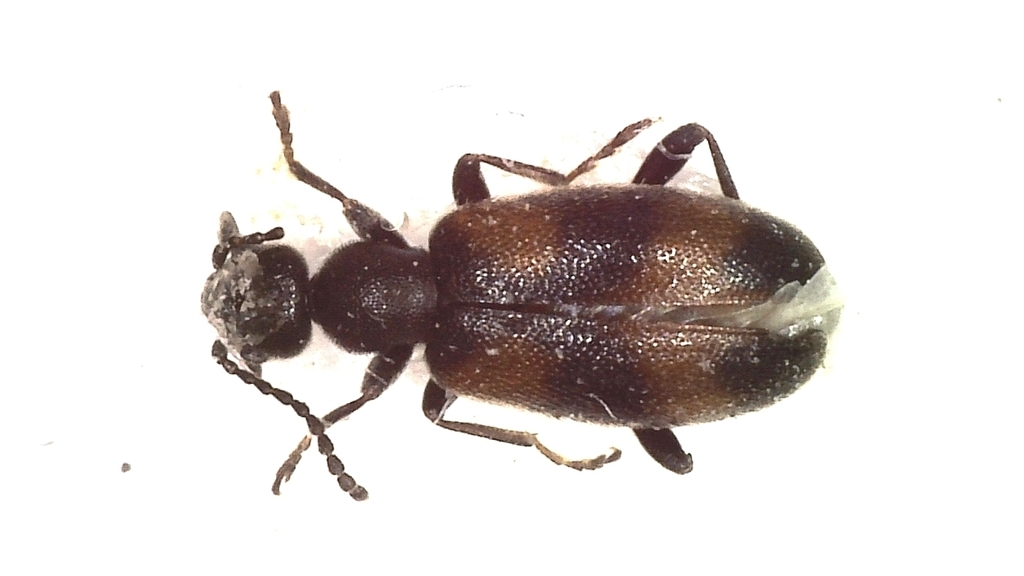
(c) Олег Кудров, some rights reserved (CC BY) · licence
Family: Anthicidae · Class: Insecta · Order: Coleoptera
Conservation status: G4 S4
Anthicus sacramento (Sacramento Anthicid Beetle) is a California animal in the Anthicidae family.
The Sacramento anthicid beetle (Anthicus sacramento) is a small terrestrial beetle belonging to the family Anthicidae, commonly known as ant-like flower beetles. Members of this genus are typically characterized by a constricted pronotum that creates a distinct neck-like appearance between the head and thorax, giving them their ant-like resemblance. The species exhibits the typical anthicid body plan with elongated antennae and legs adapted for surface locomotion. Anthicus sacramento is endemic to California, with its distribution centered in the Central Valley region, particularly associated with the Sacramento River system. According to the U.S. Fish and Wildlife Service, the species occurs "wherever found" within its limited range, suggesting a patchy or localized distribution pattern. The species has been documented from areas including Grand Island in the Sacramento-San Joaquin Delta, where it inhabits specific microhabitat conditions along leveed waterways. The beetle's habitat requirements appear closely tied to riparian and wetland edge environments within the Sacramento Valley. Based on site documentation from the California Department of Fish and Wildlife, the species occurs in areas characterized by thick riparian vegetation and emergent marsh habitats along major waterways. These sites typically feature complex moisture gradients between terrestrial and aquatic environments, with the species likely occupying the transition zones where organic matter accumulates. The habitat is confined between leveed banks, creating specialized conditions that may be critical for the species' survival. Like other anthicid beetles, A. sacramento is presumed to be primarily predaceous, feeding on small arthropods, mites, and possibly organic detritus within its riparian habitat. The species likely follows a seasonal activity pattern common to many Central Valley insects, with peak activity during moderate temperature periods when moisture conditions are optimal. Reproductive biology remains poorly documented, though anthicids typically lay eggs in soil or organic matter where larvae develop as predators or scavengers. The Sacramento anthicid beetle currently holds a global rank of G4 (apparently secure globally) and state rank of S4 (apparently secure in California), indicating stable populations despite its restricted range. However, the species is listed as a Species of Concern by the U.S. Fish and Wildlife Service, reflecting concerns about habitat threats and limited distribution. The beetle appears on the USFWS list of eligible unlisted species for traditional conservation grants, suggesting ongoing conservation attention. Primary threats to the species include habitat modification and loss of riparian corridors along Central Valley waterways. Urban development, agricultural conversion, and water management operations that alter natural flow regimes and riparian vegetation structure pose significant risks. The species' apparent association with specific microhabitat conditions within leveed waterway systems makes it particularly vulnerable to hydrological changes and habitat fragmentation. Oil spills and other contaminants could pose additional risks to localized populations within the Sacramento-San Joaquin Delta system.
Classification
Class: Insecta · Order: Coleoptera · Family: Anthicidae
Conservation status
G4 S4
Frequently asked questions
How is Anthicus sacramento classified?
Anthicus sacramento belongs to class Insecta, order Coleoptera, family Anthicidae.
What family does Anthicus sacramento belong to?
Anthicus sacramento is in the Anthicidae family.
Is Anthicus sacramento protected or of conservation concern?
Anthicus sacramento carries the following status: G4 S4.
What is Anthicus sacramento?
The Sacramento anthicid beetle (Anthicus sacramento) is a small terrestrial beetle belonging to the family Anthicidae, commonly known as ant-like flower beetles.
Is Anthicus sacramento found in California?
Yes. Anthicus sacramento is recorded in California in The California Species Project's catalogue.
Related species
Other California species in the same genus, family, or bioregion.
Data from The California Species Project — 14,000+ California species with verified data from CNPS, CDFW, USFWS, and more.