Anthocharis julia
Southern Rocky Mountain Orangetip
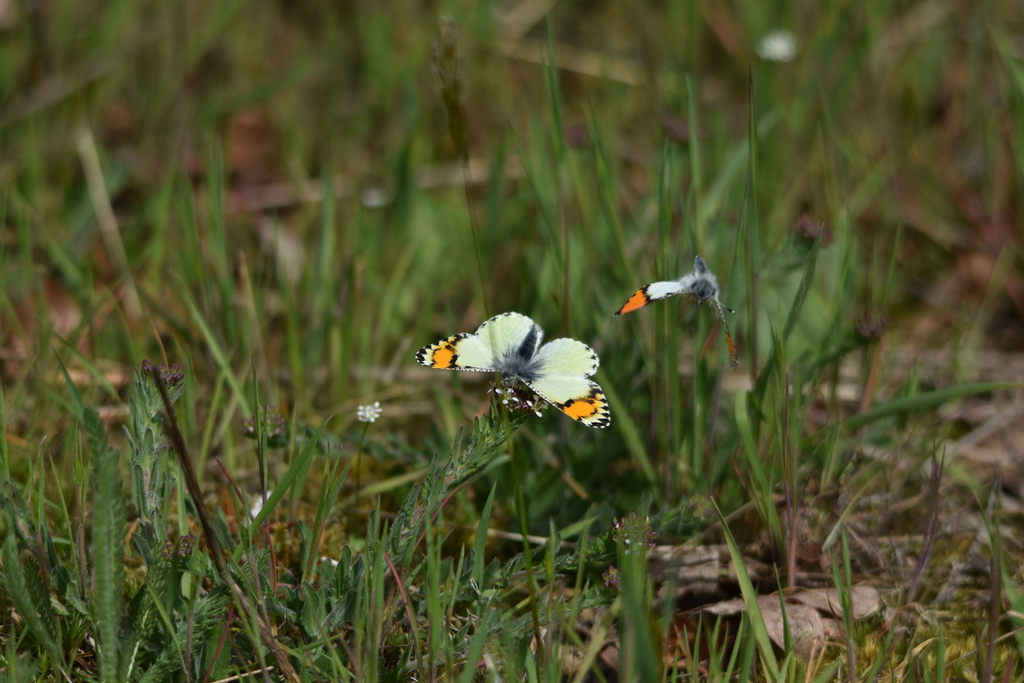
no rights reserved · CC0
Family: Pieridae · Class: Insecta · Order: Lepidoptera
Anthocharis julia (Southern Rocky Mountain Orangetip) is a California animal in the Pieridae family.
The Southern Rocky Mountain Orangetip is a small to medium-sized butterfly endemic to the high elevation regions of the western United States. Adults have a wingspan of 32 to 44 mm (1.3 to 1.7 inches). Males display bright white forewings with distinctive orange patches on the wing tips, bordered by black markings. The hindwings are white with greenish-yellow marbling on the undersides. Females lack the orange wing tips and appear predominantly white with subtle gray markings and the characteristic mottled green underwing pattern that provides effective camouflage when at rest. This species ranges from southeastern Wyoming south through the Colorado Rockies into New Mexico. The distribution follows the Rocky Mountain corridor, with populations documented in the Front Range, Sangre de Cristo Mountains, and other high-elevation ranges within this region. Historical records indicate the species was more widely distributed but has become increasingly localized to specific mountain systems. Southern Rocky Mountain Orangetips inhabit montane and subalpine environments, typically occurring at elevations between 1,800 and 3,400 meters (5,900 to 11,150 feet). The species is associated with rocky slopes, alpine meadows, and forest clearings where host plants are abundant. These butterflies prefer south-facing slopes and areas with partial shade, often found in proximity to streams or seeps that support lush vegetation growth. The species is univoltine, producing one generation per year with a brief flight period typically lasting from late May through July, depending on elevation and seasonal conditions. Adults emerge shortly after snowmelt when host plants begin active growth. Females deposit single eggs on flower buds or young leaves of rock cresses (Arabis species), which serve as the primary larval food source. Caterpillars feed on developing seeds, flowers, and young foliage before pupating in late summer. The species overwinters in the pupal stage, with pupae remaining dormant through the long mountain winter. Adults are active during warm, sunny days and are strong fliers despite their relatively small size. Males engage in hilltopping behavior, establishing territories on prominent ridges and peaks where they patrol for receptive females. Both sexes nectar on various wildflowers including paintbrush, lupine, and members of the mustard family. The Southern Rocky Mountain Orangetip faces conservation challenges due to its specialized habitat requirements and limited distribution. Climate change poses a significant threat through altered precipitation patterns, earlier snowmelt, and upward shifts in suitable habitat zones. Recreational activities, mining, and development in montane areas can fragment populations and degrade habitat quality. The species' dependence on specific Arabis host plants makes it vulnerable to changes in plant community composition. Population monitoring is limited due to the remote nature of many occupied sites and the species' brief flight period.
Classification
Class: Insecta · Order: Lepidoptera · Family: Pieridae
Frequently asked questions
How is Anthocharis julia classified?
Anthocharis julia belongs to class Insecta, order Lepidoptera, family Pieridae.
What family does Anthocharis julia belong to?
Anthocharis julia is in the Pieridae family.
What is Anthocharis julia?
The Southern Rocky Mountain Orangetip is a small to medium-sized butterfly endemic to the high elevation regions of the western United States.
Is Anthocharis julia found in California?
Yes. Anthocharis julia is recorded in California in The California Species Project's catalogue.
Related species
Other California species in the same genus, family, or bioregion.
Data from The California Species Project — 14,000+ California species with verified data from CNPS, CDFW, USFWS, and more.