Anthocharis lanceolata
Gray Marble
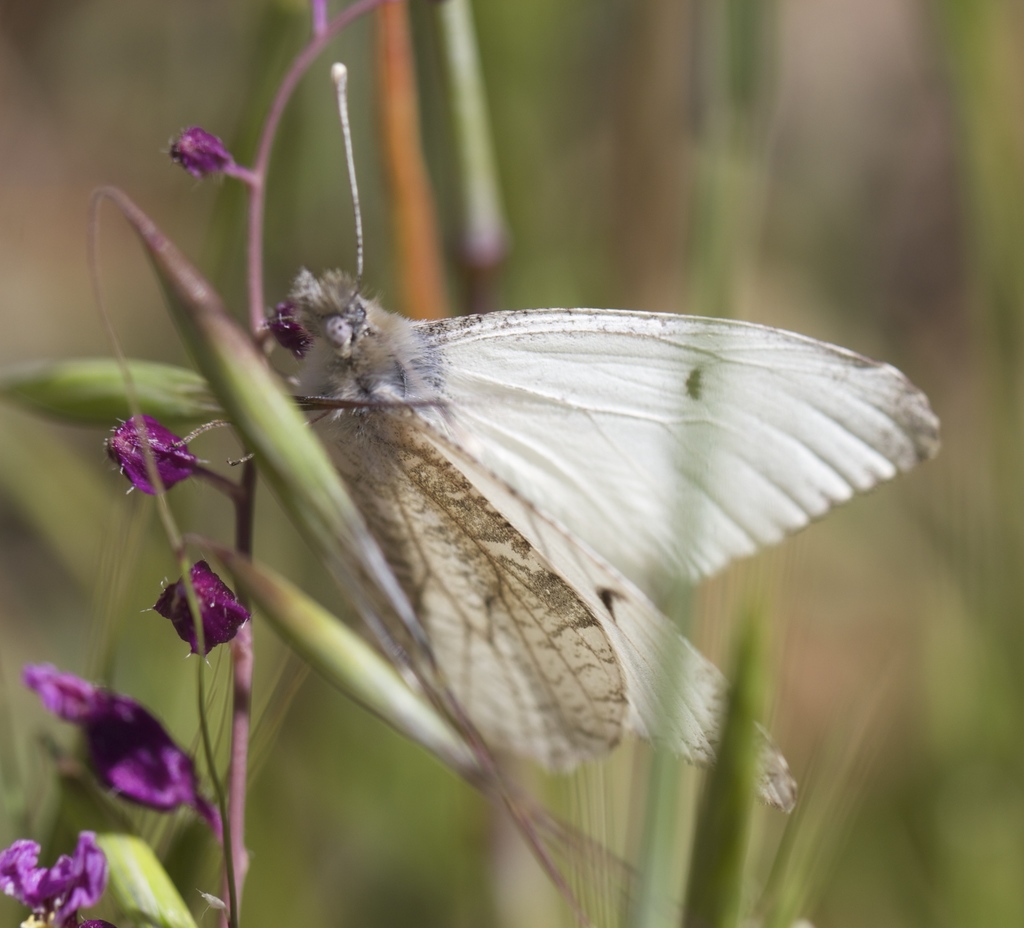
(c) John Hibbard, some rights reserved (CC BY) · licence
Family: Pieridae · Class: Insecta · Order: Lepidoptera
Anthocharis lanceolata (Gray Marble) is a California animal in the Pieridae family.
The Gray Marble (Anthocharis lanceolata) is a small white butterfly in the family Pieridae, also known by the synonym Sara's Orangetip. Adults typically display white wings with gray marbling patterns on the undersides, giving the species its common name. Males often show orange patches on the forewings, while females may exhibit more subdued coloration. The species belongs to a genus of spring-flying butterflies characterized by their distinctive wing patterns and relatively small size. The Gray Marble ranges from southwest Oregon south to northern Baja California and extends to the western edge of Nevada. This distribution encompasses much of California's diverse landscapes, from coastal regions to inland valleys and foothills. The species shows considerable variation across its range, with multiple recognized subspecies including the Southern Gray Marble (A. l. australis) and Desert Gray Marble (A. l. desertolimbus), reflecting adaptation to different regional conditions. This butterfly inhabits a variety of open habitats including hillsides, valleys, rocky areas, and disturbed sites where its host plants thrive. The species shows a preference for areas with abundant Brassicaceae vegetation, particularly in locations with adequate sunlight and moderate moisture. Gray Marbles can be found from sea level to moderate elevations throughout their California range, adapting to both coastal and interior climatic conditions. As a member of the Pieridae, Gray Marbles are closely associated with plants in the mustard family (Brassicaceae). Larvae feed primarily on rock cress (Arabis species) and other related mustard family plants. Adults are active during spring months, typically flying from March through June depending on elevation and local conditions. Females seek out appropriate host plants for egg-laying, depositing eggs singly on young leaves or flower buds. The species likely produces one generation per year, with larvae developing through summer and pupating to overwinter. Mating behavior involves males patrolling territories near host plant patches, where they encounter receptive females. Adults nectar on various wildflowers, contributing to pollination of native plant communities. The butterfly's flight period coincides with the blooming period of many spring wildflowers, creating important ecological relationships within California's diverse ecosystems. According to NatureServe, the Gray Marble has a conservation ranking of G3, indicating the species is very rare or local throughout its range (Butterflies and Moths of North America). While not currently listed under federal or state endangered species acts, this ranking suggests the species faces some conservation concerns. Habitat loss due to development, agricultural conversion, and invasive plant species may impact local populations. Climate change could also affect the timing of adult emergence relative to host plant availability. The species' dependence on native Brassicaceae plants makes it vulnerable to ecosystem changes that reduce these critical resources. Conservation efforts should focus on protecting native plant communities and maintaining habitat connectivity across the species' range to ensure long-term population stability.
Classification
Class: Insecta · Order: Lepidoptera · Family: Pieridae
Frequently asked questions
How is Anthocharis lanceolata classified?
Anthocharis lanceolata belongs to class Insecta, order Lepidoptera, family Pieridae.
What family does Anthocharis lanceolata belong to?
Anthocharis lanceolata is in the Pieridae family.
What is Anthocharis lanceolata?
The Gray Marble (Anthocharis lanceolata) is a small white butterfly in the family Pieridae, also known by the synonym Sara's Orangetip.
Is Anthocharis lanceolata found in California?
Yes. Anthocharis lanceolata is recorded in California in The California Species Project's catalogue.
Related species
Other California species in the same genus, family, or bioregion.
Data from The California Species Project — 14,000+ California species with verified data from CNPS, CDFW, USFWS, and more.