Anthomyia oculifera
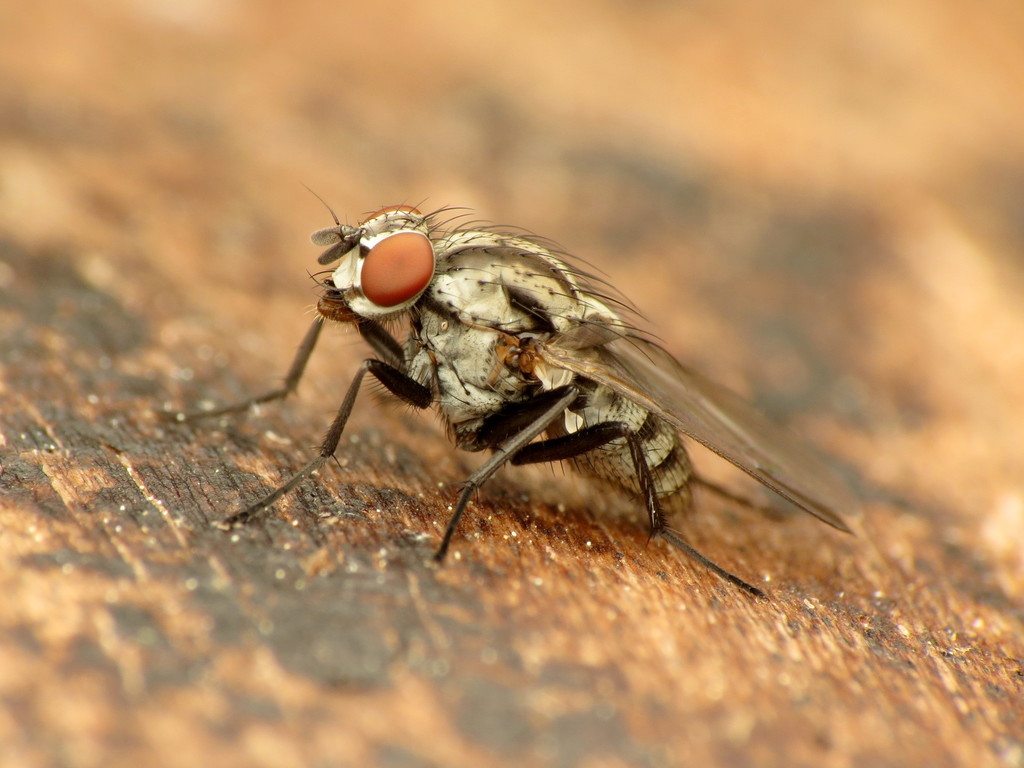
(c) Katja Schulz, some rights reserved (CC BY) · licence
Family: Anthomyiidae · Class: Insecta · Order: Diptera
Anthomyia oculifera is a California animal in the Anthomyiidae family.
Anthomyia oculifera is a species of root maggot fly in the family Anthomyiidae, a diverse group of small to medium-sized flies found throughout North America. This dipteran species belongs to a genus known for its association with various plant hosts, though specific morphological and ecological details for A. oculifera remain poorly documented in the scientific literature. The physical characteristics of A. oculifera have not been comprehensively described in accessible taxonomic sources. Like other members of the family Anthomyiidae, this species likely measures 3-8 millimeters in length with typical fly morphology including a single pair of functional wings, compound eyes, and segmented antennae. Adult flies in this family are generally dark-colored with relatively inconspicuous appearance, distinguishing them from more colorful dipteran families. The geographic distribution of A. oculifera includes eastern North America, with documented occurrences in Massachusetts (BugGuide). The species has been recorded from the Fitzgerald Lake Conservation Area in Hampshire County, Massachusetts, indicating its presence in New England habitats. However, the full extent of its range, including any potential occurrence in California, remains undocumented in current literature. The U.S. Fish and Wildlife Service maintains taxonomic records for the species but provides no specific distributional data. Habitat preferences for A. oculifera have not been well characterized. Based on the Massachusetts collection record from a conservation area, the species may occur in mixed woodland or wetland edge environments typical of New England landscapes. Many Anthomyiidae species are associated with decaying organic matter, plant roots, or specific host plants during their larval development, but the specific habitat requirements for A. oculifera larvae remain unknown. The ecology and life history of A. oculifera are poorly understood. Adult anthomyiid flies are typically active during warmer months, with the Massachusetts specimen collected in July suggesting summer activity periods. Larvae of related species often develop in soil, plant tissues, or organic debris, but the developmental biology and host relationships of A. oculifera have not been studied. Adult flies likely feed on nectar, organic liquids, or other readily available food sources, following patterns typical of the family. Anthomyia oculifera currently lacks any formal conservation status designation at federal or state levels. The species does not appear on threatened or endangered species lists, nor is it included in species of conservation concern databases. This absence from conservation frameworks likely reflects both the limited research attention the species has received and the general assumption that it is not immediately threatened. However, the paucity of distribution records and ecological data makes it difficult to assess the species' true conservation needs. Scientific documentation for this species remains extremely limited. The information presented here synthesizes available records from taxonomic databases and specimen collections. Additional field surveys, taxonomic research, and ecological studies are needed to better understand the distribution, habitat requirements, and conservation status of A. oculifera throughout its range.
Classification
Class: Insecta · Order: Diptera · Family: Anthomyiidae
Frequently asked questions
How is Anthomyia oculifera classified?
Anthomyia oculifera belongs to class Insecta, order Diptera, family Anthomyiidae.
What family does Anthomyia oculifera belong to?
Anthomyia oculifera is in the Anthomyiidae family.
What is Anthomyia oculifera?
Anthomyia oculifera is a species of root maggot fly in the family Anthomyiidae, a diverse group of small to medium-sized flies found throughout North America.
Is Anthomyia oculifera found in California?
Yes. Anthomyia oculifera is recorded in California in The California Species Project's catalogue.
Related species
Other California species in the same genus, family, or bioregion.
Data from The California Species Project — 14,000+ California species with verified data from CNPS, CDFW, USFWS, and more.