Anthophora bomboides
Bumblebee-like Digger Bee
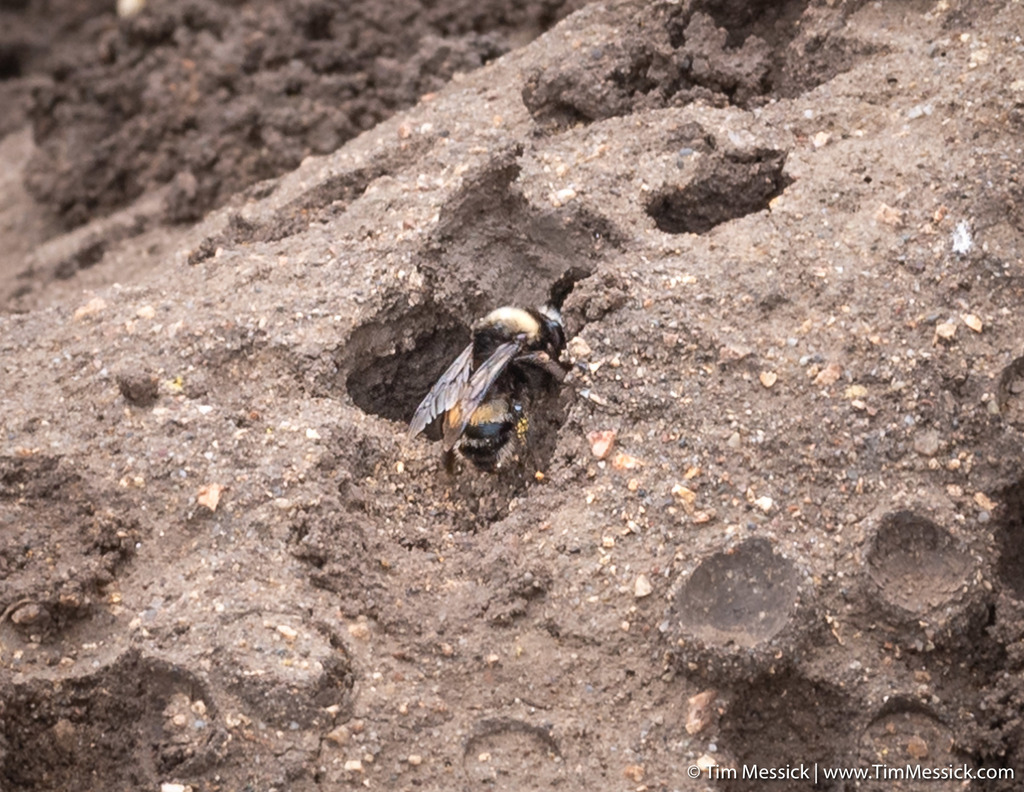
(c) Tim Messick, some rights reserved (CC BY) · licence
Family: Apidae · Class: Insecta · Order: Hymenoptera
Anthophora bomboides (Bumblebee-like Digger Bee) is a California animal in the Apidae family.
Anthophora bomboides is a large, robust solitary bee measuring 8-20 mm in length, distinguished by its extremely dense body hair and bumblebee-like appearance. The species exhibits pronounced sexual dimorphism, with females being substantially larger and more heavily built than males. The body coloration is typically black with dense, pale yellowish to silvery-gray hairs covering the thorax and abdomen, creating distinct banded patterns that contribute to its bumblebee mimicry. The legs are particularly robust and heavily haired, adapted for their ground-dwelling lifestyle. Anthophora bomboides occurs across much of North America, with populations distributed throughout the western United States including California, Oregon, Washington, and extending eastward through the Rocky Mountain region. The species ranges from sea level to moderate elevations, with documented occurrences in diverse geographic regions from coastal areas to inland mountain valleys. This species inhabits a variety of open habitats including grasslands, meadows, scrublands, and disturbed areas with exposed or sparsely vegetated soil suitable for nest construction. Anthophora bomboides demonstrates a preference for sandy or loose soils where females can excavate their characteristic ground nests. The species is commonly found in areas with abundant spring and early summer flowering plants, particularly in regions with Mediterranean climate patterns that support extended blooming periods. Anthophora bomboides exhibits typical digger bee behavior, with females constructing individual nest burrows in the ground. Digger bees can make up to 80 water-collecting trips daily when excavating their nests, collecting water in their crops to soften the soil during burrow construction (Xerces Society 2018). The species is active during spring and early summer months, coinciding with peak flowering periods of preferred nectar and pollen sources. Females are solitary nesters, provisioning individual brood cells with pollen balls mixed with nectar before laying single eggs. Males are typically observed patrolling territories near nesting areas and floral resources, engaging in mate-seeking behavior. Anthophora bomboides currently maintains a secure conservation status, with NatureServe assigning it a Global Status of G5 (Secure) (NatureServe 2019). Unlike many other native bee species experiencing population declines, this species appears to have stable populations across its range. The robust status may be attributed to its generalist foraging behavior and adaptability to various habitat types, including some tolerance for habitat modification. However, like other ground-nesting bees, the species faces potential threats from habitat loss, intensive agricultural practices, and urban development that eliminate suitable nesting sites. Climate change may also impact the species through altered flowering phenology and precipitation patterns affecting soil moisture conditions necessary for nest excavation.
Classification
Class: Insecta · Order: Hymenoptera · Family: Apidae
Frequently asked questions
How is Anthophora bomboides classified?
Anthophora bomboides belongs to class Insecta, order Hymenoptera, family Apidae.
What family does Anthophora bomboides belong to?
Anthophora bomboides is in the Apidae family.
What is Anthophora bomboides?
Anthophora bomboides is a large, robust solitary bee measuring 8-20 mm in length, distinguished by its extremely dense body hair and bumblebee-like appearance.
Is Anthophora bomboides found in California?
Yes. Anthophora bomboides is recorded in California in The California Species Project's catalogue.
Related species
Other California species in the same genus, family, or bioregion.
Data from The California Species Project — 14,000+ California species with verified data from CNPS, CDFW, USFWS, and more.