Anthophora californica
California Digger Bee
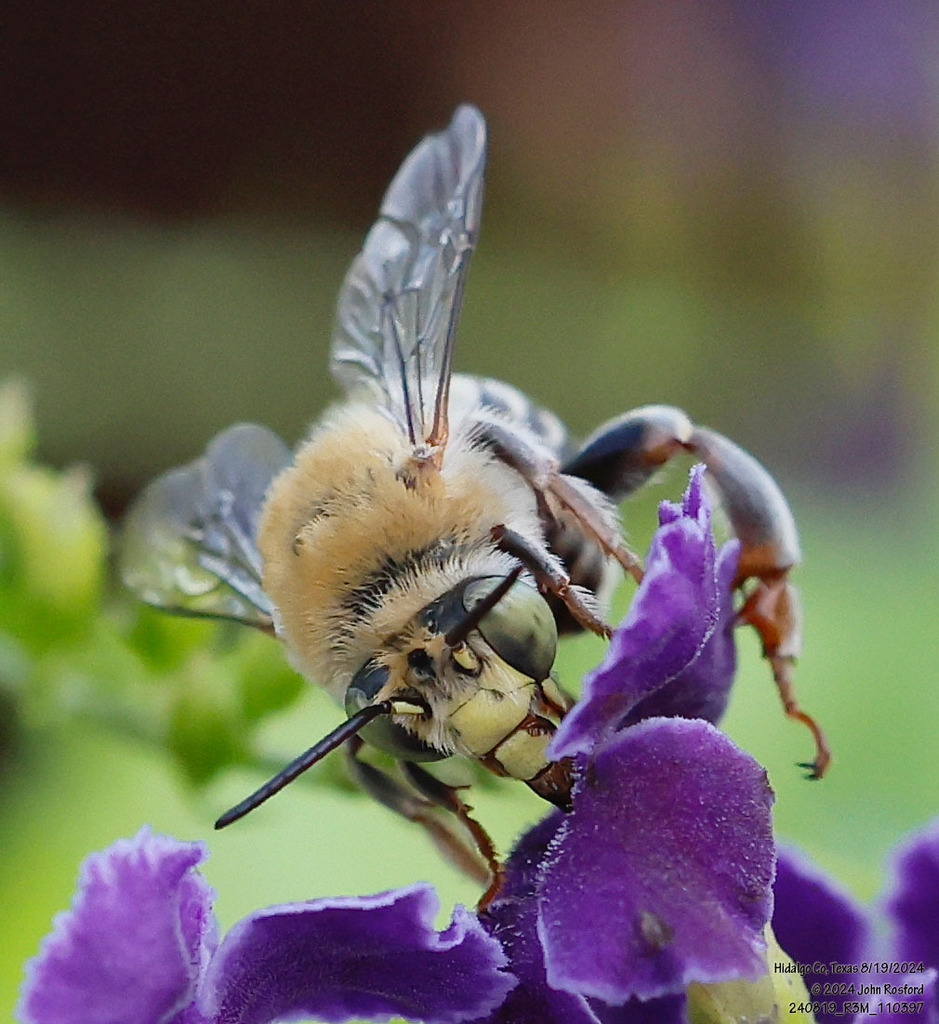
(c) John Rosford, some rights reserved (CC BY) · licence
Family: Apidae · Class: Insecta · Order: Hymenoptera
Anthophora californica (California Digger Bee) is a California animal in the Apidae family.
The California digger bee is a robust, solitary bee species in the family Apidae. Adults are medium to large-sized bees, typically measuring 12-16 mm in length. Females are generally larger than males and possess strong mandibles and specialized structures for excavating nest burrows. The body is densely covered with branched hairs (plumose setae) that aid in pollen collection, with coloration ranging from dark brown to black with lighter-colored hair bands on the abdomen. Anthophora californica occurs throughout much of California, with documented populations from the Central Valley to coastal regions. The species' range extends from northern California south through the state, though specific distribution limits require further documentation. Historical records suggest the species was more widespread, but current population status and range boundaries are not well-established. This species inhabits diverse California ecosystems, including oak woodlands, chaparral, grasslands, and disturbed areas such as road cuts and embankments. California digger bees prefer well-drained soils, particularly loam or sandy loam substrates suitable for excavating nest burrows (Xerces Society 2010). They are commonly found in areas with abundant spring and early summer flowering plants. Elevation ranges and specific microhabitat requirements have not been comprehensively studied. As a solitary species, California digger bees do not form colonies. Females excavate individual nest burrows in suitable soil, creating branched tunnels where they provision cells with pollen and nectar for their developing larvae. The species is active primarily during spring and early summer months, coinciding with peak flowering periods of their preferred plant species. Adults are polylectic, visiting flowers of multiple plant families for nectar and pollen resources. According to pollinator conservation literature, Anthophora species typically forage within 300-500 meters of their nest sites (Xerces Society 2010). Mating occurs near nesting areas, with males often establishing territories around emergence sites. The California digger bee lacks formal state or federal conservation status designations. However, like many native bee species, it faces potential threats from habitat loss, urban development, agricultural intensification, and pesticide use. The conversion of natural habitats to urban and agricultural landscapes has likely reduced available nesting sites and floral resources. Climate change may also affect the timing of bee emergence and flowering periods of host plants, potentially disrupting reproductive cycles. Detailed ecological studies of this species are limited, and much of its basic biology, including specific host plant preferences, population trends, and distribution boundaries, requires further research. The species' role as a native pollinator makes it ecologically important for California's plant communities, but comprehensive population assessments have not been conducted. Conservation efforts focused on maintaining diverse native plant communities and protecting suitable nesting habitats would benefit this species and other ground-nesting bees.
Classification
Class: Insecta · Order: Hymenoptera · Family: Apidae
Frequently asked questions
How is Anthophora californica classified?
Anthophora californica belongs to class Insecta, order Hymenoptera, family Apidae.
What family does Anthophora californica belong to?
Anthophora californica is in the Apidae family.
What is Anthophora californica?
The California digger bee is a robust, solitary bee species in the family Apidae.
Is Anthophora californica found in California?
Yes. Anthophora californica is recorded in California in The California Species Project's catalogue.
Related species
Other California species in the same genus, family, or bioregion.
Data from The California Species Project — 14,000+ California species with verified data from CNPS, CDFW, USFWS, and more.