Anthophora curta
Short Sun-digger Bee
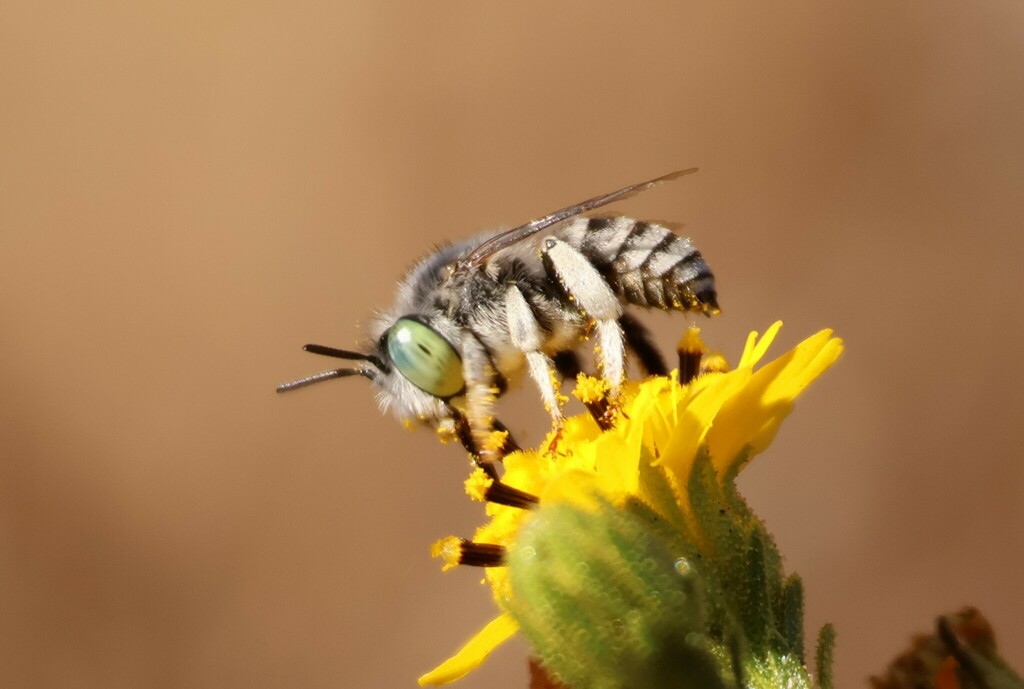
(c) Millie Basden, some rights reserved (CC BY) · licence
Family: Apidae · Class: Insecta · Order: Hymenoptera
Anthophora curta (Short Sun-digger Bee) is a California animal in the Apidae family.
The Short Sun-digger Bee (Anthophora curta) is a medium-sized solitary bee in the family Apidae. Like other Anthophora species, this bee exhibits the characteristic robust build and dense body hair typical of the genus. Adults typically measure 10-15 mm in length, with females slightly larger than males. The body is generally dark brown to black with pale hair bands across the abdomen and thorax. Males can be distinguished by their longer antennae and more slender build compared to females. Anthophora curta occurs throughout much of western North America, with documented populations in California extending from coastal areas to inland valleys. According to NatureServe, this species is widespread and known from many localities (NatureServe 2025). Historical records from southern California indicate the species was present in coastal dune systems, including the Ballona Wetlands region and Playa del Rey area, though some populations in these heavily developed areas have declined. The species inhabits diverse habitats ranging from coastal dunes to chaparral and oak woodland environments. Adults are commonly found in areas with abundant flowering plants, particularly during peak flight periods in spring and early summer. The species demonstrates fairly good tolerance of habitat disturbance compared to more specialized native bees, allowing it to persist in suburban and agricultural landscapes with adequate floral resources. Anthophora curta exhibits typical solitary bee behavior, with females excavating nesting burrows in sandy or loose soil. The common name "sun-digger" reflects their preference for nesting in sunny, well-drained locations. Females provision individual brood cells with pollen and nectar masses before laying a single egg per cell. Adults are active foragers, visiting a variety of flowering plants for nectar and pollen. Males establish territories around prime nesting areas and flowering patches, engaging in aerial displays to court females and defend resources from competing males. The species is univoltine, with a single generation per year, typically active from March through June depending on local climate conditions. Flight activity peaks during warm, sunny days when temperatures exceed 15°C (59°F). Females demonstrate strong site fidelity, often returning to the same general nesting areas year after year. The species serves as an important pollinator for native plant communities, particularly spring-blooming shrubs and wildflowers. Currently, Anthophora curta lacks formal conservation status at federal or state levels. According to NatureServe, the species maintains stable populations across much of its range due to its adaptability and broad habitat tolerance (NatureServe 2025). However, local populations in highly urbanized coastal areas of southern California have experienced declines due to habitat conversion and development pressure. The species benefits from habitat restoration efforts that incorporate native flowering plants and maintain suitable nesting substrates in sandy soils.
Classification
Class: Insecta · Order: Hymenoptera · Family: Apidae
Frequently asked questions
How is Anthophora curta classified?
Anthophora curta belongs to class Insecta, order Hymenoptera, family Apidae.
What family does Anthophora curta belong to?
Anthophora curta is in the Apidae family.
What is Anthophora curta?
The Short Sun-digger Bee (Anthophora curta) is a medium-sized solitary bee in the family Apidae.
Is Anthophora curta found in California?
Yes. Anthophora curta is recorded in California in The California Species Project's catalogue.
Related species
Other California species in the same genus, family, or bioregion.
Data from The California Species Project — 14,000+ California species with verified data from CNPS, CDFW, USFWS, and more.