Anthophora urbana
Urbane Digger Bee
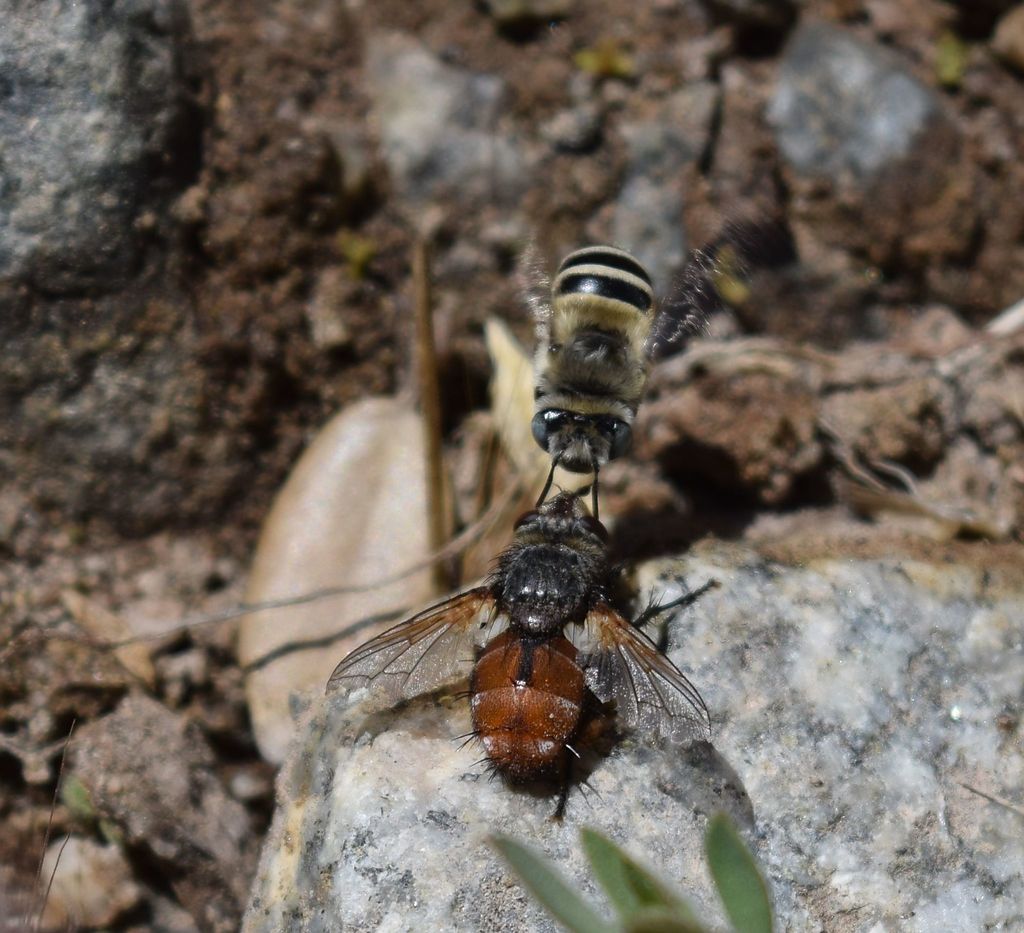
(c) velodrome, some rights reserved (CC BY) · licence
Family: Apidae · Class: Insecta · Order: Hymenoptera
Anthophora urbana (Urbane Digger Bee) is a California animal in the Apidae family.
The Urbane Digger Bee (Anthophora urbana) is a medium-sized anthophorine bee in the family Apidae. Adults typically measure 10-15 mm in length, with robust bodies characteristic of the genus Anthophora. Females are generally larger than males and possess specialized scopal hairs on their hind legs for pollen collection. The species exhibits sexual dimorphism, with males often displaying lighter coloration and more pronounced facial markings. Anthophora urbana occurs across a broad range spanning Central America and North America (iNaturalist). The species includes several recognized subspecies with distinct distributions: A. u. urbana (the nominate subspecies), A. u. clementina (San Clemente Digger Bee found on San Clemente Island), A. u. nicolai, and A. u. catalinae (found on Santa Catalina Island). This subspecific diversity reflects the species' adaptation to various geographic regions, including California's Channel Islands where endemic populations have evolved in isolation. The species inhabits diverse habitats across its range, from coastal areas to inland regions. Channel Island subspecies occupy specialized island ecosystems, while mainland populations utilize a variety of habitats including chaparral, coastal sage scrub, and urban environments that provide suitable nesting sites and floral resources. Like other Anthophora species, A. urbana constructs nests by excavating burrows in exposed soil, clay banks, or sandy substrates, earning them the common name "digger bees." Female Urbane Digger Bees are solitary nesters that provision their brood cells with pollen and nectar collected from various flowering plants. They are polylectic, meaning they visit multiple plant families for resources, though specific host plant preferences vary among subspecies and geographic populations. The species likely exhibits typical Anthophora behavior patterns, with females creating branched burrow systems where they construct individual cells for egg-laying. Each cell is provisioned with a pollen ball mixed with nectar, upon which a single egg is laid before the cell is sealed. While Anthophora urbana as a species is not federally listed, some subspecies face conservation concerns. The San Clemente Island subspecies (A. u. clementina) occurs within a restricted island environment that has experienced significant ecological changes due to introduced species and habitat modification. Island endemic subspecies are particularly vulnerable to extinction due to their limited distributions and small population sizes. The species serves as an important pollinator within its various ecosystems, contributing to plant reproduction and maintaining ecological relationships. Limited scientific documentation exists regarding specific population trends, detailed ecological requirements, and conservation status for most subspecies of A. urbana. The taxonomic complexity of this species group, with multiple subspecies across diverse habitats, requires further research to fully understand conservation needs and ecological roles. If you have additional verified information about this species' biology, distribution, or ecology, please contact us to help improve this species account.
Classification
Class: Insecta · Order: Hymenoptera · Family: Apidae
Frequently asked questions
How is Anthophora urbana classified?
Anthophora urbana belongs to class Insecta, order Hymenoptera, family Apidae.
What family does Anthophora urbana belong to?
Anthophora urbana is in the Apidae family.
What is Anthophora urbana?
The Urbane Digger Bee (Anthophora urbana) is a medium-sized anthophorine bee in the family Apidae.
Is Anthophora urbana found in California?
Yes. Anthophora urbana is recorded in California in The California Species Project's catalogue.
Related species
Other California species in the same genus, family, or bioregion.
Data from The California Species Project — 14,000+ California species with verified data from CNPS, CDFW, USFWS, and more.