Anthopleura elegantissima
Aggregating Anemone
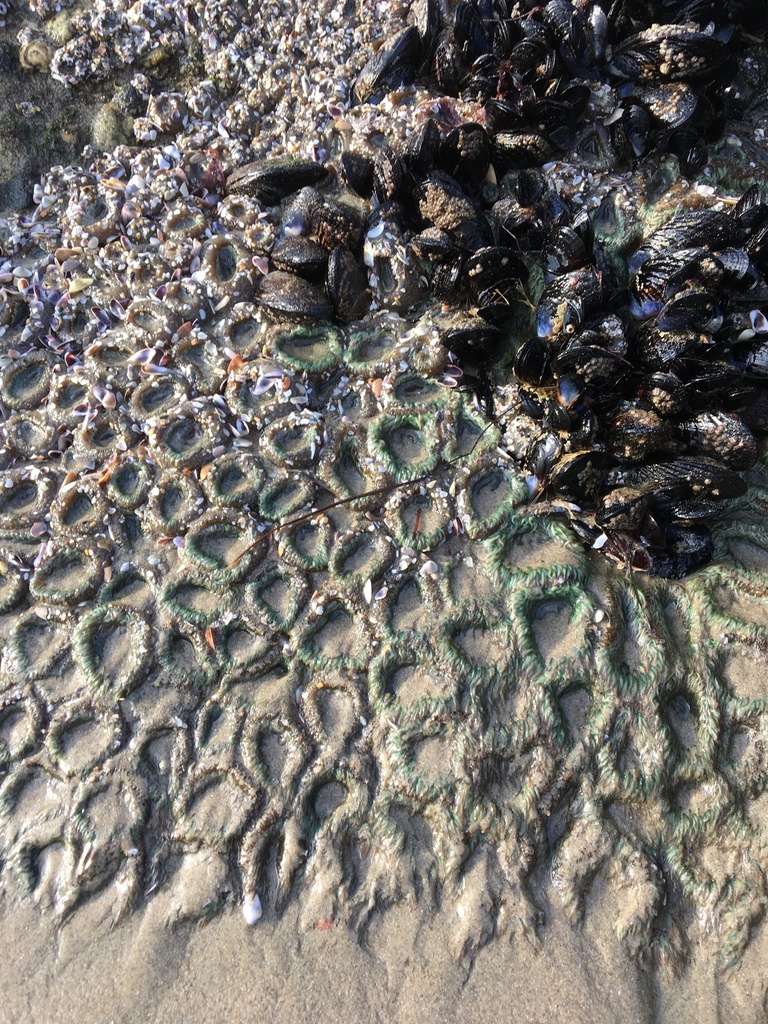
(c) redrovertracy, some rights reserved (CC BY) · licence
Family: Actiniidae · Class: Anthozoa · Order: Actiniaria
Anthopleura elegantissima (Aggregating Anemone) is a California animal in the Actiniidae family.
The aggregating anemone is a medium-sized sea anemone measuring 5 to 7 centimeters (2.0 to 2.8 inches) in diameter when fully expanded. The column is typically green or olive-green, often with distinct vertical stripes or solid coloration. The oral disc displays radiating patterns of green, brown, or reddish hues, with up to 96 tentacles arranged in concentric circles around the central mouth. When contracted during low tide exposure, the anemone appears as a rounded, often sand-covered mound. A distinctive characteristic is the presence of specialized cells called acrorhagi around the column margin, which contain stinging nematocysts used for territorial defense. Aggregating anemones occur along the Pacific coast from southeastern Alaska to Baja California, Mexico. In California, they are found along the entire coastline from the Oregon border south to the Mexican border. The species is abundant on rocky intertidal shores and is one of the most commonly encountered anemones in California's marine protected areas and tide pool environments. This species inhabits rocky intertidal zones, typically in the mid to high intertidal range. Aggregating anemones attach firmly to hard substrates including granite, sandstone, and artificial structures such as pier pilings and breakwaters. They demonstrate significant tolerance to environmental fluctuations, withstanding temperature changes from 5°C to 25°C, varying salinity levels, and periods of aerial exposure during low tides that can exceed six hours (Ricketts et al. 1985). The species thrives in areas with moderate to high wave action and is often found in crevices, tide pools, and on vertical rock faces. Aggregating anemones exhibit two distinct reproductive strategies and corresponding morphologies. Solitary individuals reproduce sexually, releasing eggs and sperm into the water column during spawning events. Clonal individuals reproduce asexually through longitudinal fission, a process that creates genetically identical colonies that can cover several square meters of substrate (Francis 1973). These clonal aggregations display territorial behavior, with individuals from different clones engaging in aggressive interactions using their acrorhagi to sting neighboring non-clones (Francis 1973). The species is carnivorous, feeding primarily on mussels, barnacles, small crustaceans, and fish. Prey capture occurs through the coordinated action of tentacles armed with cnidocysts that inject paralyzing toxins. The aggregating anemone maintains a symbiotic relationship with unicellular algae (zooxanthellae) that live within its tissues (Muscatine & Hand 1958). These photosynthetic partners contribute significantly to the anemone's nutrition, particularly in well-lit intertidal environments. During periods of stress, such as prolonged aerial exposure or elevated temperatures, anemones may expel their zooxanthellae, causing temporary bleaching (Shick 1991). The species currently has no federal or state conservation listing status. Aggregating anemones remain abundant throughout their range and show resilience to moderate human disturbance. However, populations in heavily visited areas may experience trampling impacts from recreational tide pooling activities. Climate change poses potential long-term threats through ocean acidification, rising sea levels, and increased frequency of marine heat waves that can cause bleaching events and alter prey availability.
Classification
Class: Anthozoa · Order: Actiniaria · Family: Actiniidae
Frequently asked questions
How is Anthopleura elegantissima classified?
Anthopleura elegantissima belongs to class Anthozoa, order Actiniaria, family Actiniidae.
What family does Anthopleura elegantissima belong to?
Anthopleura elegantissima is in the Actiniidae family.
What is Anthopleura elegantissima?
The aggregating anemone is a medium-sized sea anemone measuring 5 to 7 centimeters (2.0 to 2.8 inches) in diameter when fully expanded.
Is Anthopleura elegantissima found in California?
Yes. Anthopleura elegantissima is recorded in California in The California Species Project's catalogue.
Related species
Other California species in the same genus, family, or bioregion.
Data from The California Species Project — 14,000+ California species with verified data from CNPS, CDFW, USFWS, and more.