Anthopleura sola
Sunburst Anemone
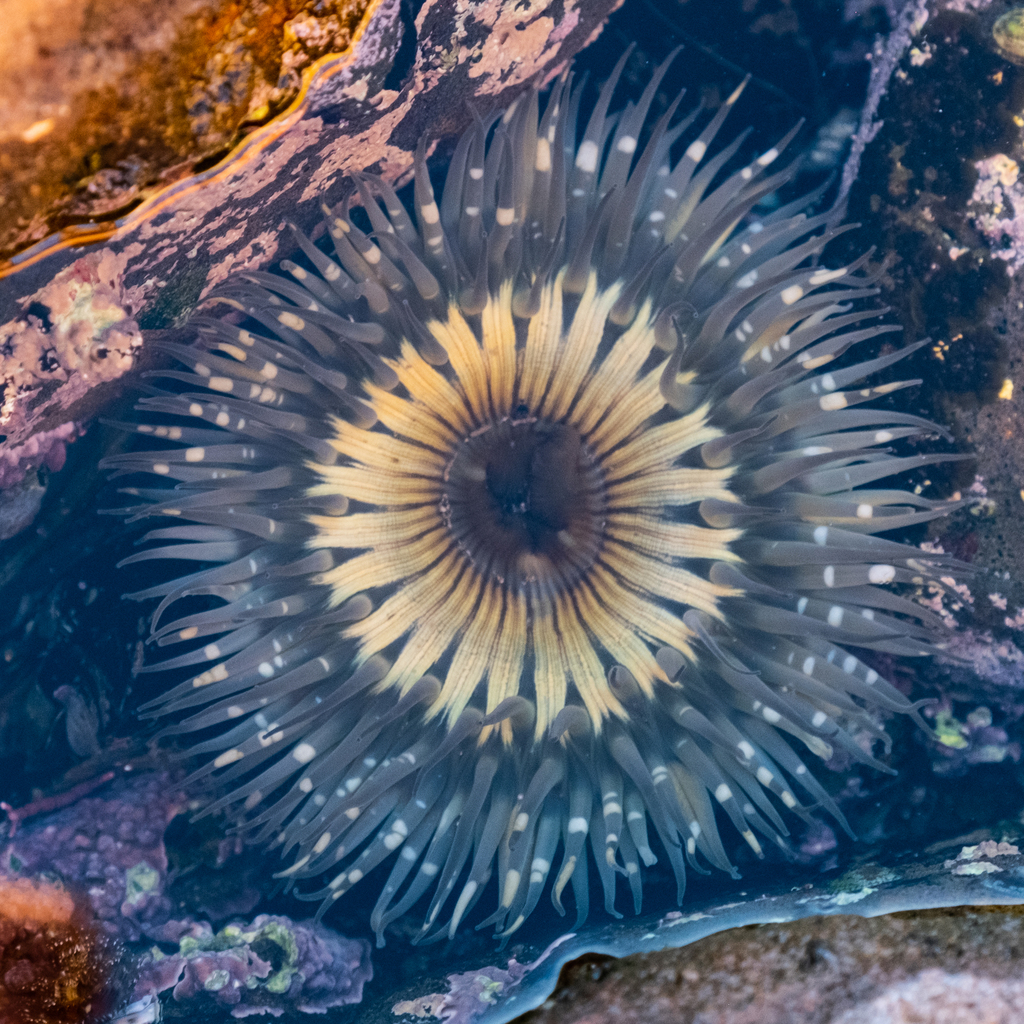
no rights reserved · CC0
Family: Actiniidae · Class: Anthozoa · Order: Actiniaria
Anthopleura sola (Sunburst Anemone) is a California animal in the Actiniidae family.
The sunburst anemone (Anthopleura sola) is a large, solitary sea anemone found along the Pacific coast. This species displays a distinctive radial pattern of coloration that gives it its common name, with tentacles arranged in concentric circles around a central oral disc. The body column is typically robust and can expand considerably when feeding or when water conditions are favorable. The sunburst anemone's geographic range extends from Baja California, Mexico, north to central California (CCGP). The species is abundant in suitable rocky intertidal and subtidal habitats throughout this range. In California, it has been documented in marine protected areas including Point Lobos State Marine Reserve and Kashtayit State Marine Conservation Area, indicating its presence along both central and southern California coastlines. This species inhabits rocky substrates in marine environments, with a depth range from the intertidal zone to approximately 408 feet (124 meters) deep (CDFW). The sunburst anemone shows a strong preference for hard surfaces where it can securely attach its pedal disc. It is commonly associated with areas containing coralline algae and other encrusting organisms that characterize healthy rocky reef communities. The species thrives in areas with adequate water circulation that brings planktonic prey within reach of its tentacles. Sunburst anemones are carnivorous cnidarians that capture prey using stinging cells (nematocysts) located in their tentacles. They feed opportunistically on small fish, crustaceans, and other marine invertebrates that come within striking distance. The species exhibits both sexual and asexual reproductive strategies. Asexual reproduction occurs primarily from September to March and may be triggered by reduced food availability (Animal Diversity Web). This reproductive timing suggests the species has adapted to seasonal variations in prey abundance along the Pacific coast. During asexual reproduction, individuals can produce clones through pedal laceration or longitudinal fission. Like many marine invertebrates, sunburst anemones are sensitive to changes in water quality, temperature, and ocean chemistry. While the species lacks formal conservation status listings, it faces potential threats from coastal development, water pollution, and climate change impacts such as ocean acidification and warming temperatures. The species' presence in multiple marine protected areas along the California coast provides some level of habitat protection. Their role as predators in rocky intertidal and subtidal communities makes them important components of marine ecosystem food webs. Scientific documentation for this species remains limited compared to more extensively studied marine organisms. Continued monitoring within marine protected areas and research on population dynamics would enhance understanding of this species' conservation needs and ecological role in Pacific coast marine communities.
Classification
Class: Anthozoa · Order: Actiniaria · Family: Actiniidae
Frequently asked questions
How is Anthopleura sola classified?
Anthopleura sola belongs to class Anthozoa, order Actiniaria, family Actiniidae.
What family does Anthopleura sola belong to?
Anthopleura sola is in the Actiniidae family.
What is Anthopleura sola?
The sunburst anemone (Anthopleura sola) is a large, solitary sea anemone found along the Pacific coast.
Is Anthopleura sola found in California?
Yes. Anthopleura sola is recorded in California in The California Species Project's catalogue.
Related species
Other California species in the same genus, family, or bioregion.
Data from The California Species Project — 14,000+ California species with verified data from CNPS, CDFW, USFWS, and more.