Anthopleura xanthogrammica
Giant Green Anemone
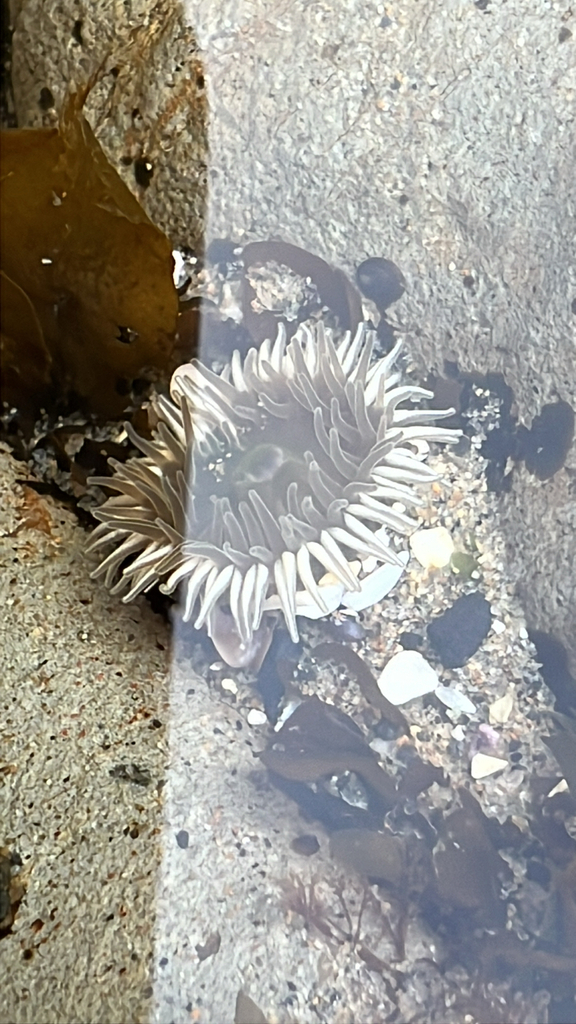
no rights reserved · CC0
Family: Actiniidae · Class: Anthozoa · Order: Actiniaria
Anthopleura xanthogrammica (Giant Green Anemone) is a California animal in the Actiniidae family.
The Giant Green Anemone (Anthopleura xanthogrammica) is a large, solitary sea anemone belonging to the family Actiniidae. This species can reach diameters of up to 25 centimeters (10 inches) when fully expanded, making it one of the largest anemones in the Pacific Northwest. The column is typically green due to symbiotic zooxanthellae algae living within its tissues, though coloration can vary from bright green to brownish-green depending on light exposure and algal density. The oral disc features numerous thick tentacles arranged in concentric circles around a central mouth. When contracted during low tide or when threatened, the anemone appears as a rounded, olive-green mass with a distinctive knobby texture created by adherent shell fragments and sand grains. The Giant Green Anemone ranges from Alaska south to Baja California, Mexico, representing one of the most widely distributed anemone species along the Pacific Coast. In California, populations occur throughout the state's rocky intertidal zones, with documented presence in multiple Marine Protected Areas including Natural Bridges State Marine Reserve near Santa Cruz, Bodega Head State Marine Reserve, Del Mar Landing State Marine Reserve, Duxbury Reef State Marine Conservation Area, and Point Lobos State Marine Reserve. The species maintains stable populations along California's extensive rocky coastline. This species inhabits rocky intertidal zones from the high tide line to subtidal depths, though it is most abundant in mid to low intertidal areas. Giant Green Anemones attach firmly to rock surfaces in tidepools, crevices, and along exposed rocky shores. They demonstrate high tolerance for temperature fluctuations, desiccation, and wave action that characterize the intertidal environment. The species shows strong site fidelity, with individuals remaining in the same location for years when undisturbed. Giant Green Anemones are opportunistic predators that capture prey using stinging nematocysts in their tentacles. Their diet consists of mussels, barnacles, sea urchins, crabs, fish, and other invertebrates that venture within reach of their tentacles. The species exhibits both sexual and asexual reproduction. Sexual reproduction occurs through broadcast spawning during warmer months. Asexual reproduction happens through longitudinal fission, where individuals split to create genetically identical clones. This clonal reproduction often results in aggregations of identical anemones clustered together. The symbiotic relationship with zooxanthellae algae provides supplemental nutrition through photosynthesis, particularly important during periods when prey is scarce. The Giant Green Anemone currently holds no federal or state conservation listing status and appears to maintain stable populations throughout its range. The species benefits from protection within California's Marine Protected Area network, where take is prohibited. Primary threats include habitat degradation from coastal development, pollution, ocean acidification, and climate change effects on intertidal ecosystems. Trampling by recreational tidepooling activities can cause localized impacts. However, the species' wide distribution, reproductive flexibility, and tolerance for environmental variation suggest resilience to many anthropogenic pressures affecting intertidal communities.
Classification
Class: Anthozoa · Order: Actiniaria · Family: Actiniidae
Frequently asked questions
How is Anthopleura xanthogrammica classified?
Anthopleura xanthogrammica belongs to class Anthozoa, order Actiniaria, family Actiniidae.
What family does Anthopleura xanthogrammica belong to?
Anthopleura xanthogrammica is in the Actiniidae family.
What is Anthopleura xanthogrammica?
The Giant Green Anemone (Anthopleura xanthogrammica) is a large, solitary sea anemone belonging to the family Actiniidae.
Is Anthopleura xanthogrammica found in California?
Yes. Anthopleura xanthogrammica is recorded in California in The California Species Project's catalogue.
Related species
Other California species in the same genus, family, or bioregion.
Data from The California Species Project — 14,000+ California species with verified data from CNPS, CDFW, USFWS, and more.