Anthus spragueii
Sprague's Pipit
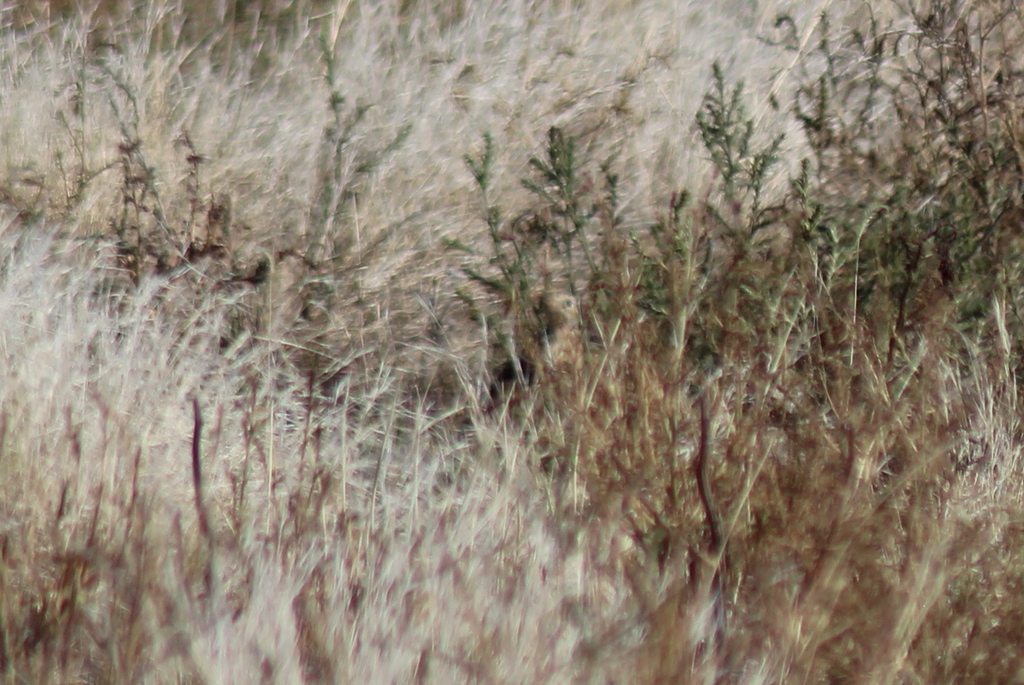
(c) Archer Silverman, some rights reserved (CC BY) · licence
Family: Motacillidae · Class: Aves · Order: Passeriformes
Anthus spragueii (Sprague's Pipit) is a California animal in the Motacillidae family.
Sprague's Pipit is a medium-sized grassland songbird measuring 15-17 cm (6-6.7 inches) in length with a wingspan of 25-27 cm (10-10.6 inches). Adults weigh 20-25 grams. The species exhibits cryptic plumage with streaked brown upperparts featuring darker brown and black streaking on a buff-brown background. The underparts are pale buff to whitish with fine dark streaking on the breast and flanks. The crown shows distinctive dark and light striping, and the face displays a pale eyering and dark eyeline. The bill is thin and pointed, typical of insectivorous birds, measuring 11-13 mm in length. The legs are pale pink to yellowish. Males and females appear similar, though males may show slightly more distinct markings during breeding season. Sprague's Pipit breeds primarily in the northern Great Plains of Canada and the north-central United States. The breeding range extends from southern Alberta and Saskatchewan south through Montana, North Dakota, and portions of South Dakota and Minnesota. In California, the species occurs as an uncommon to rare migrant and winter visitor, primarily in the Central Valley and southern coastal regions. Historical records from California span from September through April, with peak occurrence from October through March. The species inhabits native mixed-grass and shortgrass prairie during the breeding season, preferring areas with 10-60% grass cover and minimal shrub encroachment. Optimal breeding habitat consists of grasslands with moderate grazing pressure that maintain a heterogeneous structure of varying grass heights. In California, wintering individuals utilize agricultural fields, particularly those with short stubble, as well as grasslands, pastures, and occasionally golf courses and airports. The species typically selects areas with sparse to moderate vegetation cover, avoiding dense or tall grass stands. Sprague's Pipit feeds primarily on insects during the breeding season, including beetles, grasshoppers, caterpillars, and flies, supplemented by spiders and other small arthropods. During winter, the diet shifts to include seeds from grasses and forbs. Males perform distinctive aerial courtship displays, ascending to heights of 100-300 meters while delivering continuous flight songs that can last 2-3 hours. The species nests on the ground in grass clumps or slight depressions, with females constructing cup-shaped nests of grass lined with finer materials. Clutch size ranges from 3-6 eggs, typically 4-5, with incubation lasting 13-14 days. The species is generally solitary outside the breeding season, though loose flocks may form during migration. Sprague's Pipit has experienced significant population declines across its range, with Breeding Bird Survey data indicating a 65% decline between 1966 and 2019. The species is considered a Bird of Continental Conservation Concern by the U.S. Fish and Wildlife Service and is listed as Vulnerable by the IUCN. Primary threats include habitat loss due to agricultural conversion of native grasslands, grassland fragmentation, altered fire regimes, and encroachment by woody vegetation. Climate change poses additional risks through altered precipitation patterns affecting grassland ecosystems. Conservation efforts focus on grassland preservation and restoration through programs such as the Conservation Reserve Program and partnerships with ranchers to maintain appropriate grazing regimes.
Classification
Class: Aves · Order: Passeriformes · Family: Motacillidae
Frequently asked questions
How is Anthus spragueii classified?
Anthus spragueii belongs to class Aves, order Passeriformes, family Motacillidae.
What family does Anthus spragueii belong to?
Anthus spragueii is in the Motacillidae family.
What is Anthus spragueii?
Sprague's Pipit is a medium-sized grassland songbird measuring 15-17 cm (6-6.7 inches) in length with a wingspan of 25-27 cm (10-10.6 inches).
Is Anthus spragueii found in California?
Yes. Anthus spragueii is recorded in California in The California Species Project's catalogue.
Related species
Other California species in the same genus, family, or bioregion.
Data from The California Species Project — 14,000+ California species with verified data from CNPS, CDFW, USFWS, and more.