Antigone canadensis
Sandhill Crane
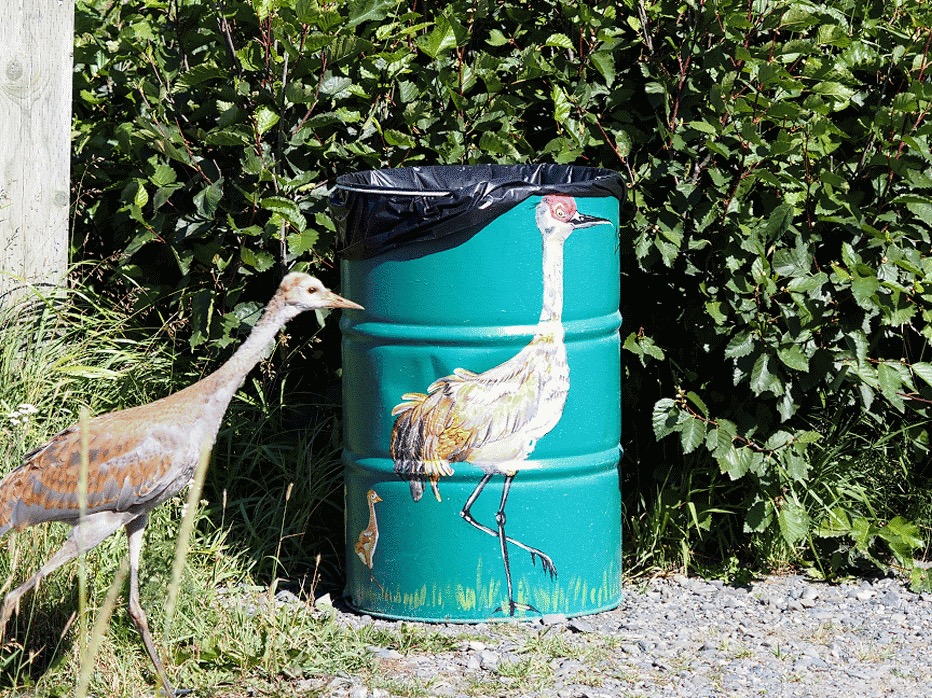
(c) Matt Muir, some rights reserved (CC BY) · licence
Family: Gruidae · Class: Aves · Order: Gruiformes
Antigone canadensis (Sandhill Crane) is a California animal in the Gruidae family.
The Sandhill Crane is a large, long-legged wading bird measuring 91 to 122 cm (36 to 48 inches) in height with a wingspan of 152 to 213 cm (60 to 84 inches). Adults weigh 3.2 to 6.4 kg (7 to 14 pounds), with females typically smaller than males. The species displays predominantly gray plumage with a distinctive bright red crown patch of bare skin extending from the forehead to the back of the head. The long, straight bill is dark olive to blackish, and the legs are black. During breeding season, adults often appear rusty-brown on their back and sides due to iron-stained mud applied during preening. Sandhill Cranes breed across much of North America, from Alaska and northern Canada south to California, Colorado, and the Great Lakes region. In California, breeding populations are found primarily in the northeastern counties, including Modoc, Lassen, and Siskiyou counties, with smaller numbers in the Sierra Nevada. The species winters in California's Central Valley, particularly the Sacramento and San Joaquin valleys, with major concentrations at locations such as the Cosumnes River Preserve and Staten Island. Breeding habitat consists of shallow wetlands, wet meadows, and marshy areas within grasslands, prairies, and agricultural fields. Nests are constructed on small islands, mounded vegetation, or dry ground near water. Wintering birds utilize agricultural fields, particularly corn and grain stubble, roosting in shallow water areas including flooded fields, ponds, and river channels. The species shows preference for areas with water depths of 10 to 30 cm (4 to 12 inches). Sandhill Cranes are omnivorous, feeding on roots, tubers, grains, small mammals, reptiles, amphibians, fish, and invertebrates. During migration and winter, agricultural grains comprise up to 90% of their diet. Breeding occurs from April through July, with pairs performing elaborate courtship dances involving jumping, wing-flapping, and calling. Females typically lay 1 to 3 eggs, most commonly 2, in ground nests lined with vegetation. Incubation lasts 28 to 32 days, with both parents sharing duties. Young fledge at 65 to 75 days but remain with parents through their first winter. The species produces distinctive loud, rattling calls that carry over long distances, particularly during migration when flocks coordinate their movements. Sandhill Cranes are highly social outside the breeding season, forming flocks of hundreds to thousands of individuals. Globally, Sandhill Crane populations are considered stable to increasing, with North American populations estimated at 650,000 to 700,000 individuals according to the North American Bird Conservation Initiative. The species is not federally listed and is classified as Least Concern by the International Union for Conservation of Nature. In California, populations have recovered from historical lows, though habitat loss from agricultural conversion and urban development remains a concern. The California Department of Fish and Wildlife manages the species as a game bird with regulated hunting seasons in designated zones.
Classification
Class: Aves · Order: Gruiformes · Family: Gruidae
Frequently asked questions
How is Antigone canadensis classified?
Antigone canadensis belongs to class Aves, order Gruiformes, family Gruidae.
What family does Antigone canadensis belong to?
Antigone canadensis is in the Gruidae family.
What is Antigone canadensis?
The Sandhill Crane is a large, long-legged wading bird measuring 91 to 122 cm (36 to 48 inches) in height with a wingspan of 152 to 213 cm (60 to 84 inches).
Is Antigone canadensis found in California?
Yes. Antigone canadensis is recorded in California in The California Species Project's catalogue.
Related species
Other California species in the same genus, family, or bioregion.
Data from The California Species Project — 14,000+ California species with verified data from CNPS, CDFW, USFWS, and more.